My Childhood with Rhys McClenaghan: I was the type of kid who’d try to climb the tallest tree

The Olympic gymnastics champion on the years of gruelling training and his gratitude for all the long hours and many miles his parents spent supporting his career
My Childhood with Rhys McClenaghan: I was the type of kid who’d try to climb the tallest tree

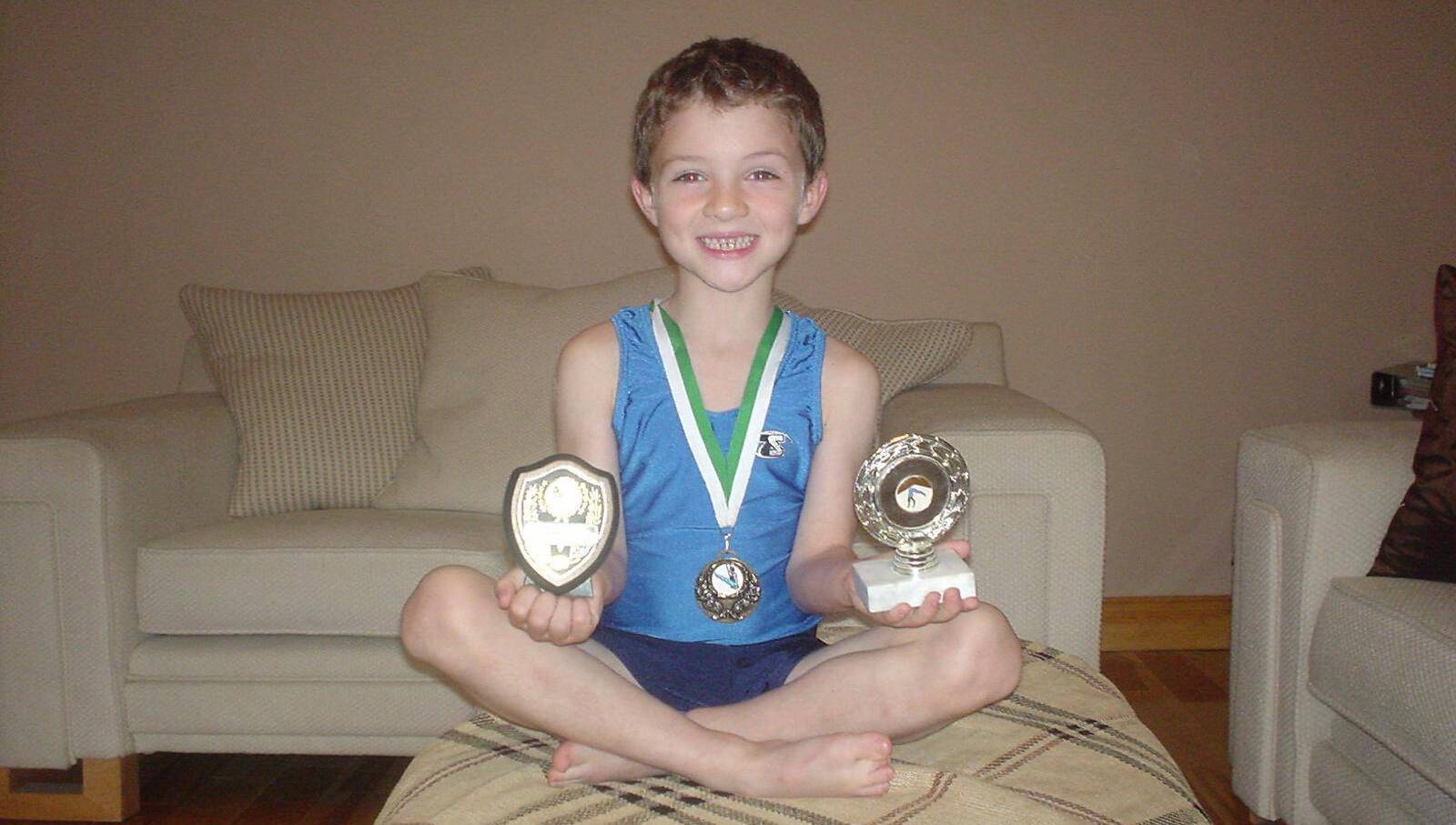
Rhys with trophies and medals from an underage gymnastics competition.

Olympic champion Rhys McClenaghan can pinpoint the moment he realised he had what it took to achieve the pinnacle of sporting success. It was 2016. He was 16 and he had just placed third in the British Artistic Gymnastics Championships senior pommel horse final.

“Max Whitlock had won gold, and Louis Smith had won silver,” says the now 26-year-old. “The two people who were the best in the world at my sport were standing right beside me. There might have been 0.9 of a mark between us — which is a big gap in gymnastics — but it suddenly hit me that all I had to do was close that gap to become the best in the world.”

From Newtownards, Co Down, McClenaghan went on to represent Ireland.

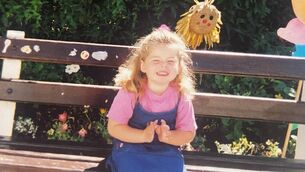
Rhys at a swimming race as a young child.

He always had a competitive streak. He laughs as he shares a memory of a swimming race he entered at age five. “I pictured myself in the Olympic Games final as I waited for the race to start,” he says. “That’s how ambitious I was.”

McClenaghan thinks he gets that trait from his father, Danny: “Dad used to push me as a child to see how good I could get. He used to be impressed whenever I beat him at a game of golf or darts.”

McClenaghan was also competitive with his brother, Elliot, who is four years older. The pair spent a lot of time playing together as children.

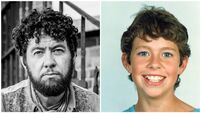
The McClenaghan family.

“We’d climb trees, bounce on the trampoline in the garden, or explore the old lead mines behind our house,” says McClenaghan. “We’d also play table tennis on the kitchen table. He’d get frustrated when he lost, but I wouldn’t. I’d want to go again and try to do better. Maybe that’s why I stuck with sports, and he leaned into academia. He’s now studying for a PhD.”

McClenaghan’s interest in sport began early. He swam and played rugby, field hockey, and roller hockey and says he “wanted to be good at them all”.

He was six when his parents signed him up for gymnastics. “Because I was the type of kid who’d try to climb the tallest tree, jump highest on the trampoline, or see how long I could walk along the top of a wall, they thought gymnastics would be a good fit for me,” he says. “I went to lessons in the local leisure centre and immediately loved it.”

Gymnastics soon became his passion. He enjoys the ongoing challenge and the opportunity to improve his performance.

In other sports, that progress can plateau, but in gymnastics, there’s always another skill or routine to learn. It’s the ultimate challenge.

By the time he was 10, McClenaghan was training for four hours a day, six days a week, in a gym a 45-minute drive from home. His mother, Tracy, drove him there and back on weekdays. She would pick him up from school. He would change and do his homework in the car, train for four hours, and then fall asleep in the car on the way home. Saturdays were a day off, and his father took over the driving duties on Sundays.

Though the training was constant and demanding, he never flinched. “All those hours of training, the calloused hands and the occasional tears, might make it sound like a military regime, but our coach — a man called Vlad — was very good at turning everything into a competitive game. I loved being there and just wanted more and more.”

Rhys McClenaghan with his gold medal after winning the men's pommel final at the 2024 Olympic Games in Paris. Picture: David Fitzgerald/Sportsfile

McClenaghan had a close circle of four friends as a teenager. “Those four understood how important gymnastics were to me,” he says. “They never showed frustration if I wasn’t able to do something with them in the evenings. They only ever showed support.”

They occasionally got up to mischief on his Saturdays off. “We might have some drinks or do some of the fun things teenagers do, but I never went too far with it,” says McClenaghan. “I was disciplined and focused. Saturday was a day to let my hair down, but you’ve got such a short career in sports. Things need to happen at an early age. So I knew not to go overboard.”

He moved out of home at 18 to train at the Sport Ireland Institute in Dublin. For the next five years, he would spend weekdays in Dublin and weekends at home.

“It was an odd time,” he says. “I was living with my coach, but several nights a week he’d go home to be with his wife and kids. So I’d spend the day in the gym, then come home, eat, sleep, and repeat. It did wonders for my gymnastics, but I felt quite isolated as a person.”

He now lives back in Newtownards, where he spends more quality time with his parents than he ever did when he lived in the family home. “What with school and training, we’d only see each other in passing, but now we make time to do things, like taking Sunday walks,” he says.

He is grateful for all his parents did for him. “My positive outlook and the ambitious drive I bring to everything I do was sparked by, or supported by, them,” he says. “And when I think of the miles they covered, driving me to and from training, and them spending those four hours waiting for me… I know I wouldn’t be the gymnast I am if they hadn’t done that for me.”

McClenaghan held a party after his gold medal win at the Paris Olympics in 2024 and invited his family and close friends. “It was to say thanks,” he says. “I wanted them to know I appreciated the part they had all played in my journey.”

More in this section

Cookie Policy Privacy Policy Brand Safety FAQ Help Contact Us Terms and Conditions

© Examiner Echo Group Limited