Schools seeing ‘alarming rates of absences’ in post-pandemic years
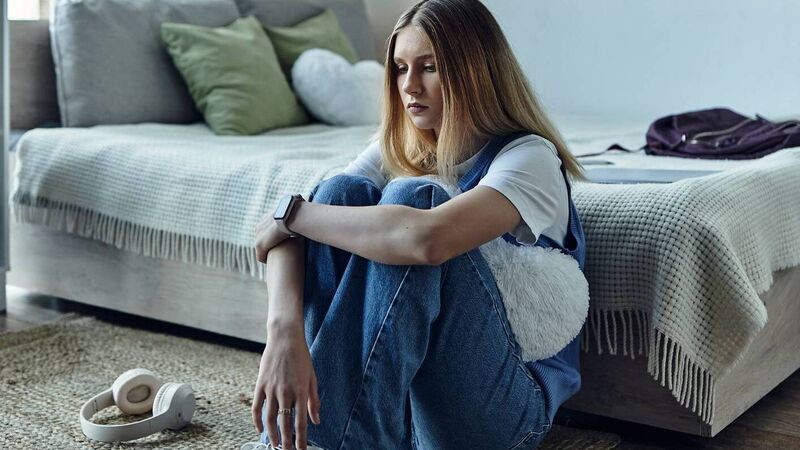
In 2024-2025, Tusla's educational welfare officers worked with 8,259 individual children around school avoidance. This is compared to 6,291 in 2018-2019 (pre-covid). Picture: iStock
“One day, she got down the road to the traffic lights and had a panic attack. I had to come get her.”
From the Kerry mum’s perspective, her daughter’s school avoidance happened overnight 18 months ago.
“Like my happy child went to bed one day and woke up a different child. She had no confidence, was in a little shell of her own.
“She’d just say: ‘I can’t go in, I don’t like it.’ She came out with every physical symptom — anything not to go. She’d break down, sobbing so much she’d make herself sick.”
Feeling powerless, Sharon quickly told the school.
“The home school liaison officer came out, tried to find out why. She wouldn’t say.”
Through another pupil, Sharon eventually learned the likely reason: her “lovely friendship group” had broken up.
Her daughter has had psychological support, and been diagnosed with anxiety and panic attacks. Now repeating third year, she’s happier and attends school whenever she can walk with a friend who lives nearby. At school, they meet another friend.
“But those girls don’t go in every day — when they don’t, mine won’t either. About two days a week, she doesn’t go in.
“But because she’s attending [somewhat], the school says she’s grand. She’s not, she needs more help.”
The whole experience has hugely impacted Sharon’s daughter. “She’s clever, she used to like learning — her attitude to school has completely changed.”

In 2024-2025, the service’s educational welfare officers worked with 8,259 individual children around school avoidance. This is compared to 6,291 in 2018-2019 (pre-covid).
“Post-pandemic, we’re seeing alarming rates of absence. It’s every school, every community,” says service development manager Sheila Clarke.
“It’s happening internationally — it’s not just an Irish problem.”
The Department of Education describes it as “reluctant attendance and school avoidance behaviour’, saying this term “strives to be respectful and inclusive of various types of school reluctance”.
While some might consider “avoidance” to “suggest intentionality”, a department spokesperson says “avoidance” in psychology “is a well-understood self-preservation mechanism in response to… anxiety”.
Listowel Family Resource Centre has been hosting talks for parents struggling with school avoidance to help them understand what may be “bubbling underneath” their child’s school-avoidant behaviour — and also to let them know they are not alone.
Community development support worker Morgan Armstrong says: “Parents were coming in, struggling with their child suddenly not wanting to go to school, talking about really heightened anxiety in the mornings, a bit of chaos — the child can’t find their uniform, schoolbag, just creating delay tactics. The child experiencing physical symptoms — preemptively saying even the night before: ‘I feel a bit sick, I don’t know if I will be able to go tomorrow.’ Parents didn’t know where to turn.”

She describes this as very different to truancy, adding: “Truancy is dossing — doing more pleasurable activities elsewhere, like gaming down the park. It’s usually kept hidden from parents.
“With school avoidance, children are coming from a genuinely emotionally distressed place.”
Gilbert cites 2012 research that found four reasons for emotionally-based school avoidance:
- Avoiding negative feelings provoked by school-related stimuli;
- Escaping social aversion and evaluation (bullying, rejection, being disliked);
- Gaining attention from significant others;
- Seeking tangible outside-school reinforcers during school-time (shopping, playing computer games).
“It used to be put down to ‘mitching’. Now it’s different. It’s gone from being bold to just not being able.”
She sees parents who are under intense morning pressure, having to leave their school-avoidant child at home because they need to get to work or drop off other children at school.
“We’ve many parents who drive children to school and can’t get them out of the car to cross the threshold.”
Visiting homes, she tries to coax a child to return to school with her — or at least find out why.
“They often can’t verbalise it. Mostly it’s social anxiety — exclusion, inclusion, being in [with the group] one week, out the next.
“Social media plays a part, something happening outside school spills into their not wanting to go in.”
Antoinette has seen “school can’t” play out in her office.
“I’ve had students with me — door closed, blinds down, nobody can see them. The minute the bell goes, and they hear the movement in the corridor, you can see the anxiety.”
When parents override their gut instinct — which tells them their child is genuinely distressed — and try to “force” them into school, they risk fracturing the parent-child relationship, says Gilbert.
“Their loving relationship disappears under arguments about school — all the talk is about ‘you have to go to school’.
“If children are to be able to go to school, they need a good solid relationship at home with their parents.”
If struggling with school avoidance, she recommends:
- Learn about your own emotions, your own self-regulation.
“The child’s looking to the parent for support — mirroring back our distress isn’t helpful.
“Do a parenting programme that looks at parent-child relationship.
“If we role model calm, our children will borrow calm from us.”
Your child is in their emotional brain.
“They’re not reasoning — stop lecturing, giving advice, nagging.”
- “I can see you’re feeling really anxious this morning trying to get up for school.
“This helps your child connect their feelings, thoughts, and physiological symptoms to their behaviour. Our job isn’t to quickly take our child away from their strong feelings — it’s to help them stay with their feelings, and know they can manage them.”
With younger children, ask if they’d like an extra 10 minutes lie-in, or to jump on the trampoline.
“You’re teaching them anxiety is a strong feeling that just needs to be managed.”
- No fixing, sorting, or giving advice. Asking, “What would help you right now?” gives them personal responsibility for managing their emotions.
“With a supporting statement, you’re more likely to get them to go rather than diverting it to a struggle with you, where it keeps them from feeling the anxiety, it’s a fight with you — you become the problem.”
- “I know you can handle this.”
They may continue to lie in bed. “They’re letting you know ‘right now, today, I can’t go in’.
“Sometimes we have to accept that.”
- Follow usual school routines. “Knock gently and call them, in the hope they’re emotionally well enough to go in.”
- Determine what’s driving it. “Anxiety’s driven by fear, threat, feeling unsafe. What supportive accommodations can the school make? Agree lateness doesn’t matter? Can a child do fewer subjects? Or leave class early if noisy corridors [upset them]?”
- “Wellbeing isn’t dependent on school, college education or a good job, but on being emotionally intelligent, being able to manage feelings day-to-day, so we feel well, capable and comfortable in ourselves.”
Both had loved primary school and to this day — one is now studying law while the other’s doing a PLC — they can’t say why they suddenly couldn’t go to school.
“I tried everything from bribery to promising to stay outside the school gate for an hour — nothing worked,” says the Kerry mother.
“My advice: Mind your own mental health first. I was at breaking point. Keep communication lines open, keep telling them you love them — ask for their suggestions.”
Clarke says covid accelerated an attitude change to everyday school attendance, illustrated by absences due to holidays or celebrations.
“Years ago, we didn’t take a day off because of a birthday or long weekend. Our message is, if you can be in school, you should be in school.”
- gov.ie/en/department-of-education/campaigns/school-attendance/
- jigsaw.ie/neart/
- listowelfrc.ie/ for info on further talks
*Name changed.

CONNECT WITH US TODAY



Be the first to know the latest news and updates