Everything new mums need to know about returning to work while breastfeeding
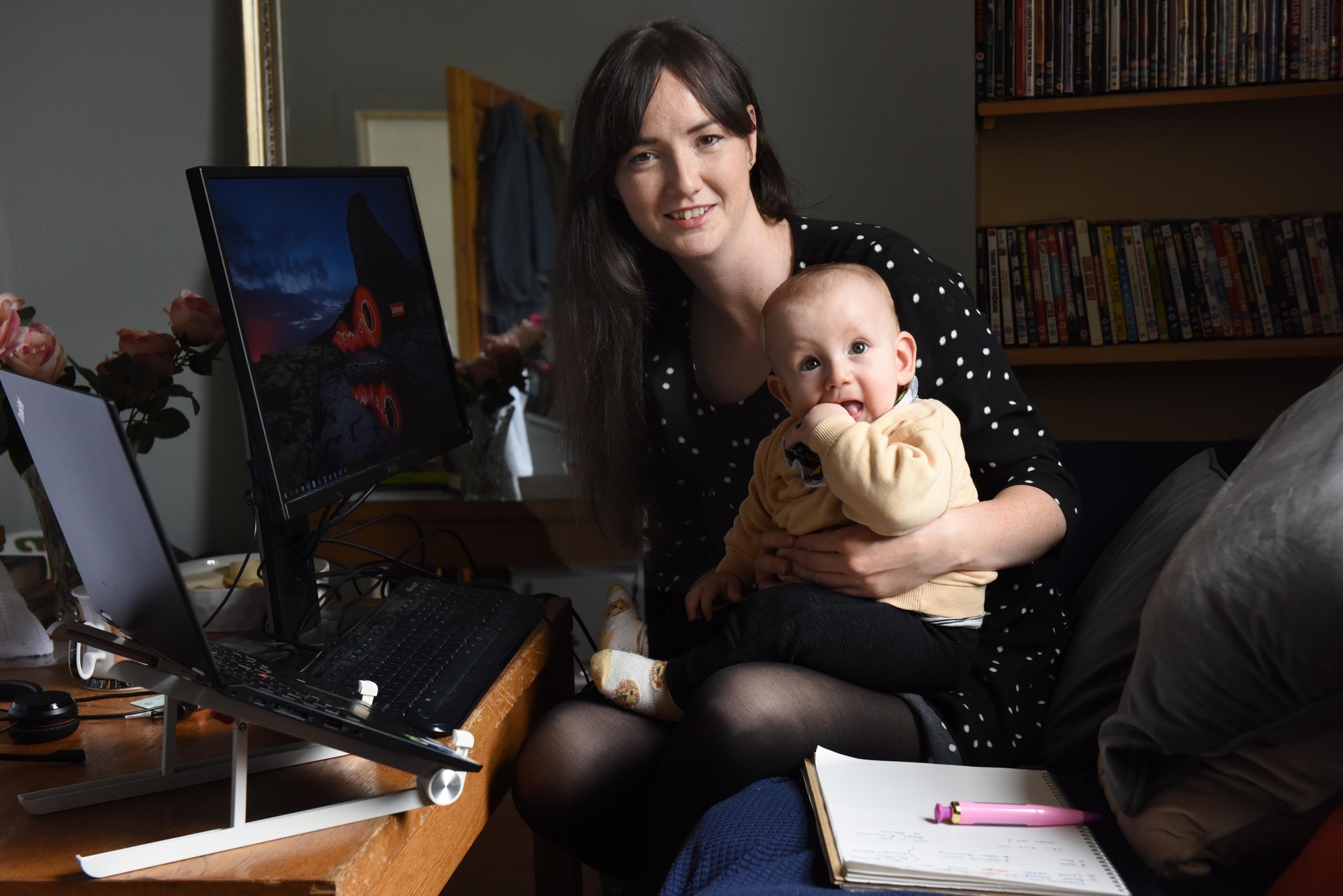
Eleanor Hession, with her eight-month-old son Gruffydd, is continuing to breastfeed after returning to the office. Picture: Moya Nolan
About a month before returning to work after maternity leave, Eleanor Hession rang her public health nurse.
The 34-year-old Dublin mum had been breastfeeding her firstborn, eight-month-old Gruffydd, and she was worried she’d have to stop when she returned to her job in property management services. Eleanor was going back to a hybrid work situation – in the office two days a week, working from home two further days.
“I never put pressure on myself to breastfeed. From the start I didn’t give myself an end date – I said I’d take my lead from Gruffydd. But he’s come on great, so ideally I’d like to breastfeed for the year.”
Describing herself as “very organised and determined”, Eleanor wanted to persevere with breastfeeding. “I was going to try everything before I’d give up.”
On the phone, Hession’s PHN recommended she start expressing milk so as to get Gruffydd used to the bottle. “At first, he resisted. He wouldn’t take the bottle from me.” She got her childminder to come to the home she shares with her partner, Doug, for about two weeks before her office return.
“It took us a week and a half to get it up and running. With about a month, he’s taking the bottle from me too.”
Hession keeps the same feeding routine when she’s working from home or off. “Just so he’s not confused. So I breastfeed first thing in the morning and before he goes to bed at night. After the morning feed, I express, and he has that bottle at 11am and then another at 1pm that I expressed the night before.”
Gruffydd, she says, “now knows that during the day he has bottles”. She’d begun weaning him ahead of returning to work and he’s “a good eater”.
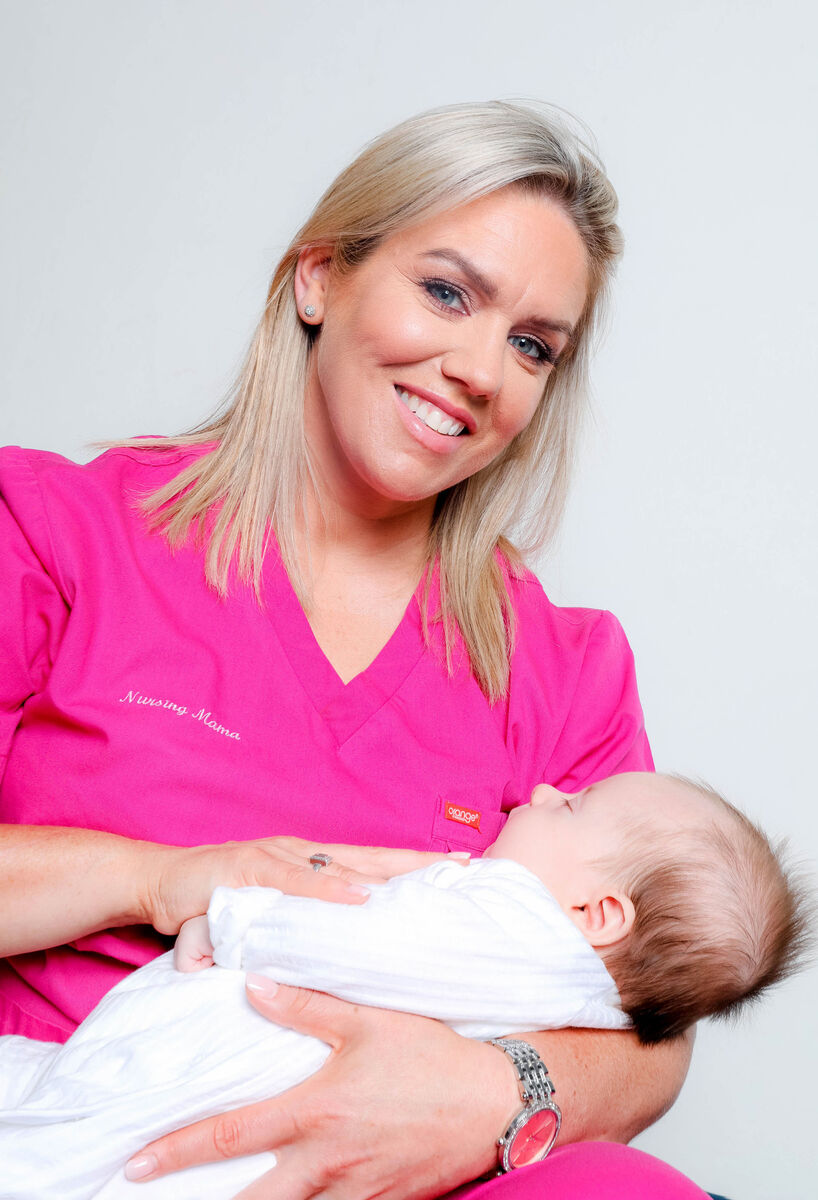
Paediatric nurse and lactation consultant Katie Mugan (nursingmama.ie) says bottle refusal is very common in the older breastfed infant – and it can be a big worry for returning-to-work mums. “It can lead to a lot of anxiety if the baby won’t take milk from another source.
“The biggest issue is if baby doesn’t feed while mum is at work and holds out for feeds from her. She may find she is doing a lot more feeds in the evening – and that feeds increase during the night – which can be tiring.”
Cuidiú breastfeeding counsellor and lactation consultant Niamh Cassidy says it’s important to allay mum’s concerns – nutrition can be provided in other ways. “Either through solids – and you can also use expressed breast milk in your baby’s potatoes, cereal, soup. And catch up on breastfeeding when you’re home.”
She says managing breastfeeding in a hybrid work situation is easier than if you’re full-time back in the workplace. “It can be a little tricky in the settling-in phase, but babies are very adaptable and over a short time they adapt well, particularly if your days are consistent – the same three days in the workplace, the same two days at home. Whereas if you’re on call to come into work, that can be more difficult for everybody.”
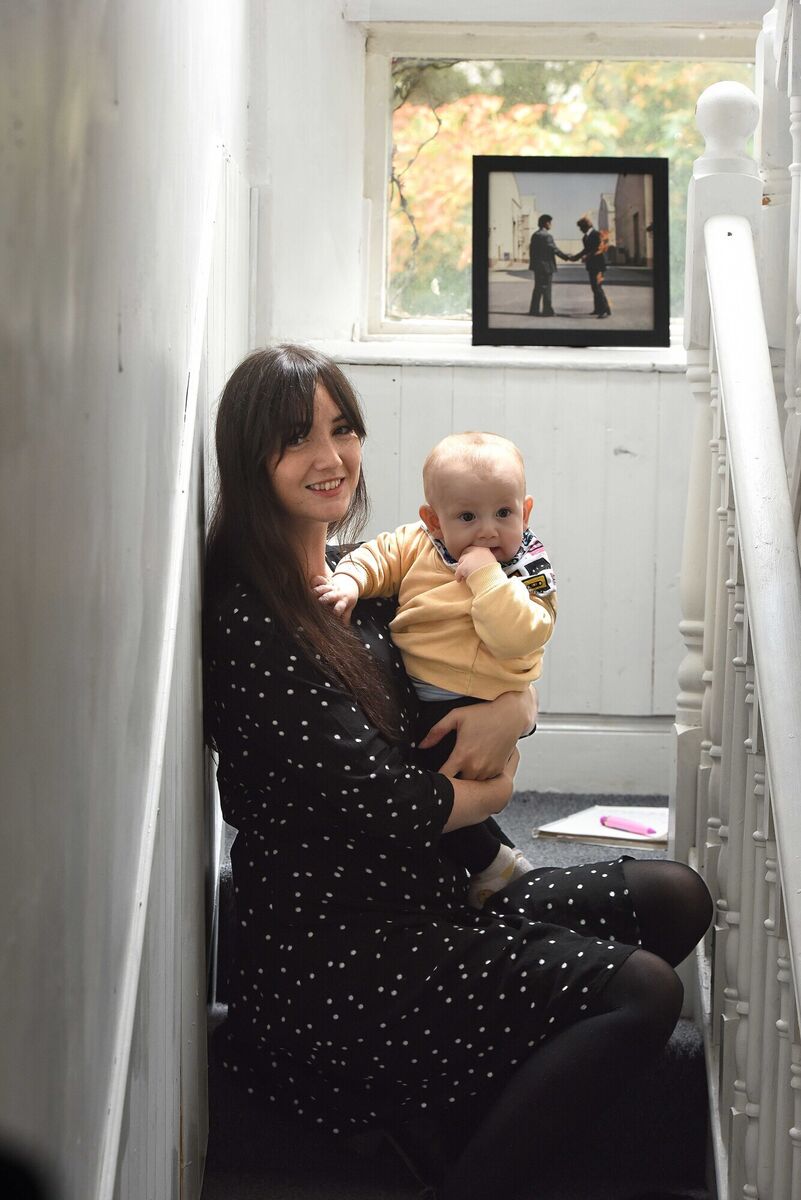
While Hession has never used her breast pump at work (“I’m lucky I don’t have a huge commute, just a 15-minute walk”), her employers have been very supportive. “They’ve let me know that I can take additional breaks if I need to pump.”
Current law provides for workers to take breaks to breastfeed or express for 26 weeks after the baby’s birth. Some career areas – teachers, civil servants, nurses – can take such breaks for up to two years. Mugan says returning to work can be one of the most stressful times in a parent’s breastfeeding journey.
“Mums can be almost afraid to ask for breastfeeding breaks. They don’t want to bring it up with their employer for fear of comeback.”
As a result, she says many women either finish breastfeeding before returning to work – or wait to return until their baby is a bit older and can do without breastfeeds during the day.
This will hopefully change when the new Work Life Balance Bill passes into law. Introduced as part of an EU directive, it will entitle workers to take breaks to breastfeed/express for up to two years after the birth of a child.
Employees will be entitled to take those breaks in one block of 60 minutes, two blocks of 30 minutes or three blocks of 20 minutes in an eight-hour working day. They can also take one hour at end of their working day.
Damien McCarthy, CEO and founder of HR Buddy, an outsource HR consultancy, works largely with SME businesses. He says that up to now breastfeeding in the workplace hasn’t been at the forefront of a lot of employers’ minds. He’s concerned there are little, if any, supports to help employers implement the proposed legislation.
“A lot of employers don’t have the know-how. For this to be successful logistically, the right facilities and the right environment need to be available in workplaces.”
Employers, he says, need advice, guidance, support and perhaps also financial assistance to put facilities in place – such as a comfortable, private space in which to breastfeed/express and also fridge facilities. He’d like to see an education programme rolled out in workplaces before the bill comes into law and he sees a place for employee education too.
“There can be ignorance on the part of some colleagues, who see this as an extra break as opposed to being essential for the child.”
Without a level of preparatory work, he worries mothers won’t ask for the breaks they’re entitled to, knowing the work environment isn’t conducive. “You don’t want there to be deterrents that would stop good legislation being acted upon by people who can use it.”
Cassidy has heard mums worry about the logistics of breastfeeding in the workplace. “They’re wondering where they can pump. A lot of offices are open-plan with glass walls, so it can be hard to find a private place to pump. And if you’re in a small company, there mightn’t be the extra room available.”
Mugan says it’s an issue if mums have to request a space to pump. Some who don’t have access to their own office “just find an office and lock it – or a colleague may offer their office for 20 minutes”.
Keeping breast-milk refrigerated until it’s needed can be another challenge. “Mothers can be anxious about keeping it in the staff fridge – because how will others feel about it? Some store it in a lunch bag so it isn’t visible. Or there might not be a fridge available, so a woman might buy a cool pack and keep it near her desk.”
When Mugan returned to work after her last child’s birth, she pumped in her car. “I was able to, because I was working my own caseload so it was easy to arrange around my time schedule.”
While the degree of support for women managing breastfeeding in the workplace can vary from one company to another, Cassidy says in general it’s easier in admin-type jobs. “Many of the big multinationals would be more accommodating because managers would have worked in the US where it’s very common to pump.”
She says teachers and nurses struggle more because of the nature of their work. “If a teacher takes a break to pump, someone else has to take her class – the SNA, the principal. That can cause a bit of tension for some. Nurses, if they’re working in an acute setting, find it difficult to take the break.”
For mums nervous about broaching the topic with their employer, Cassidy suggests talking to their direct line supervisor – rather than going to HR, which can feel a bit formal. And to try and have the conversation ahead of returning to work to minimise stress.
“Say: ‘I need to express milk when I go back because my baby needs the milk’. Be confident. Say ‘this is what I need’ rather than asking for permission.”
Ahead of National Breastfeeding Week (October 1 to 7), the HSE is reporting a 5% increase in the number of babies breastfed at the first PHN visit between 2019 and 2021, bringing the overall figureto 59%.
The HSE also encourages parents to take up free expert help: live chat and e-mail breastfeeding support is available on exa.mn/Ask-Our-Breastfeeding-Expert.
Meanwhile, 100 in-person breastfeeding support groups have resumed post-COVID: exa.mn/Breastfeeding-Support.
Also see www.cuidiu.ie

CONNECT WITH US TODAY



Be the first to know the latest news and updates