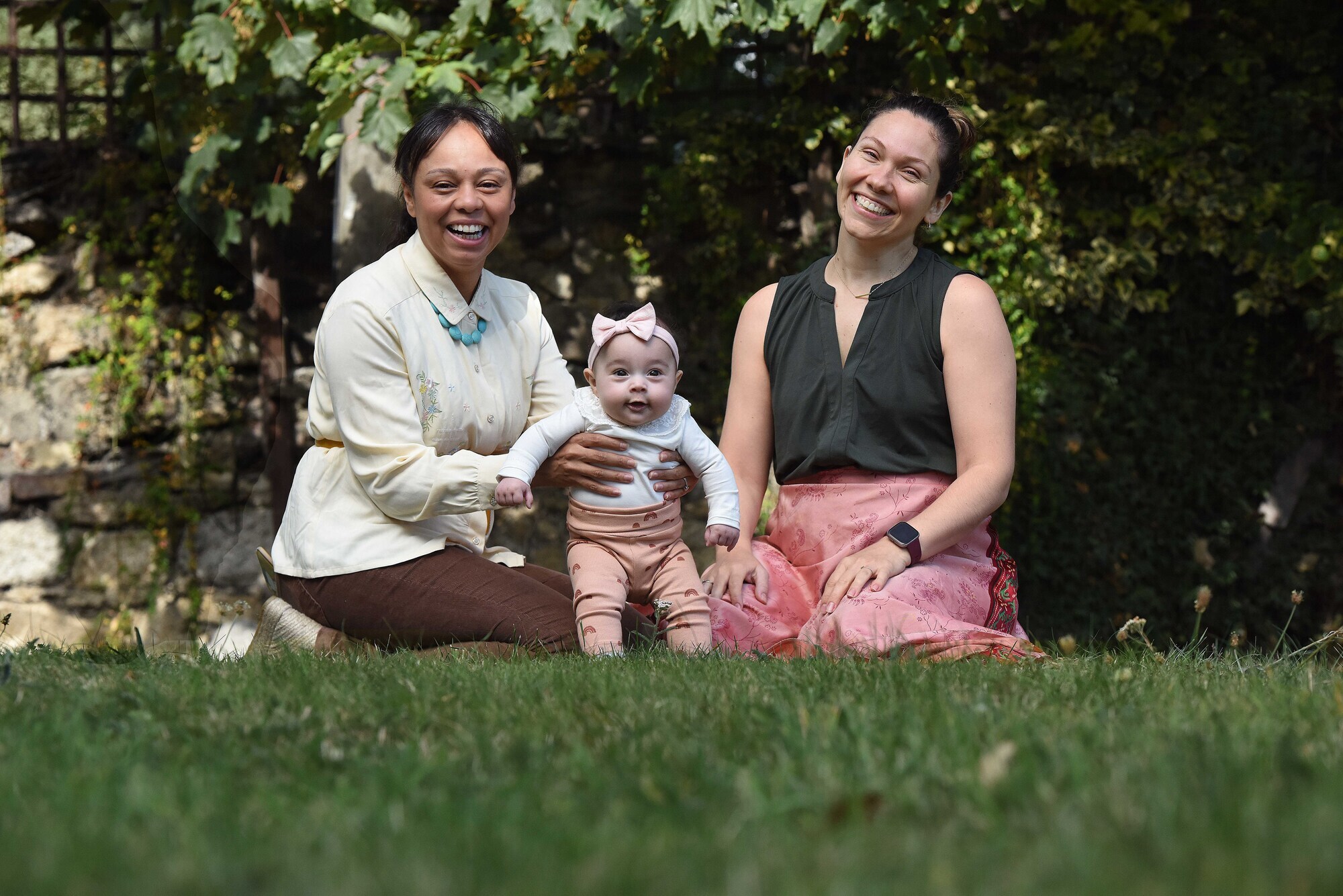
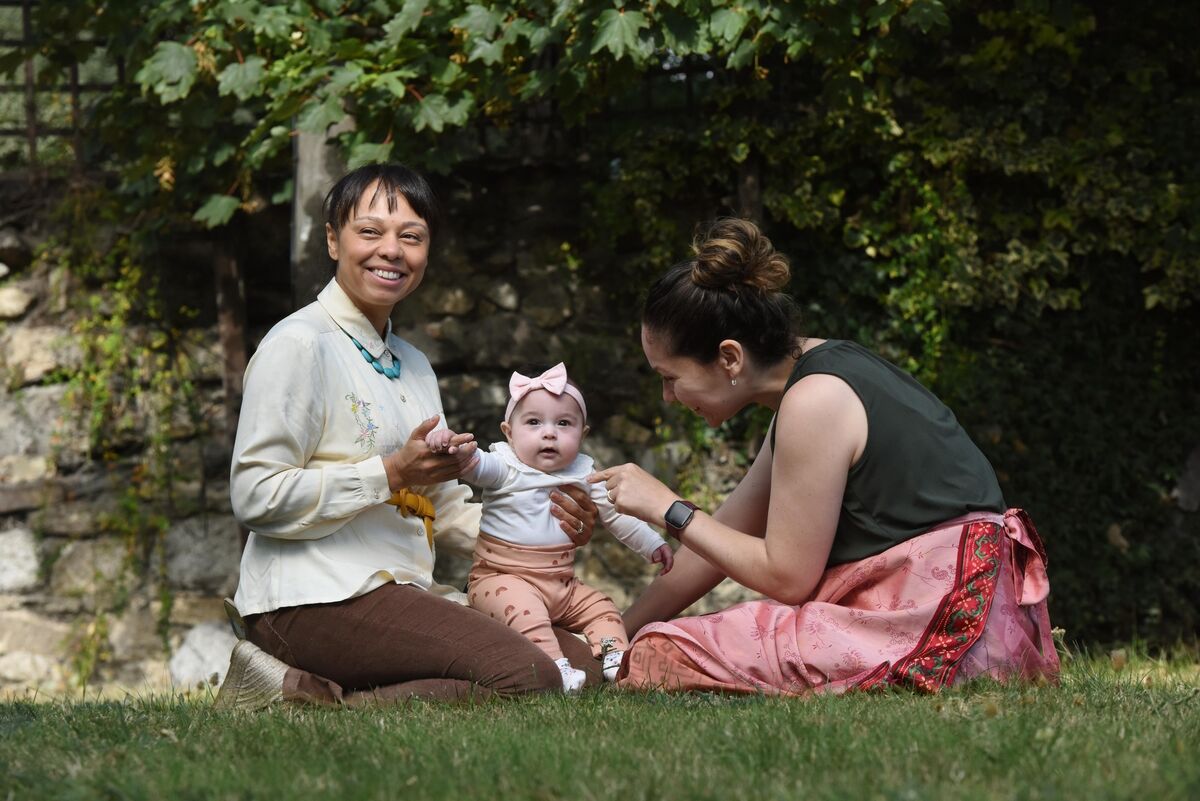
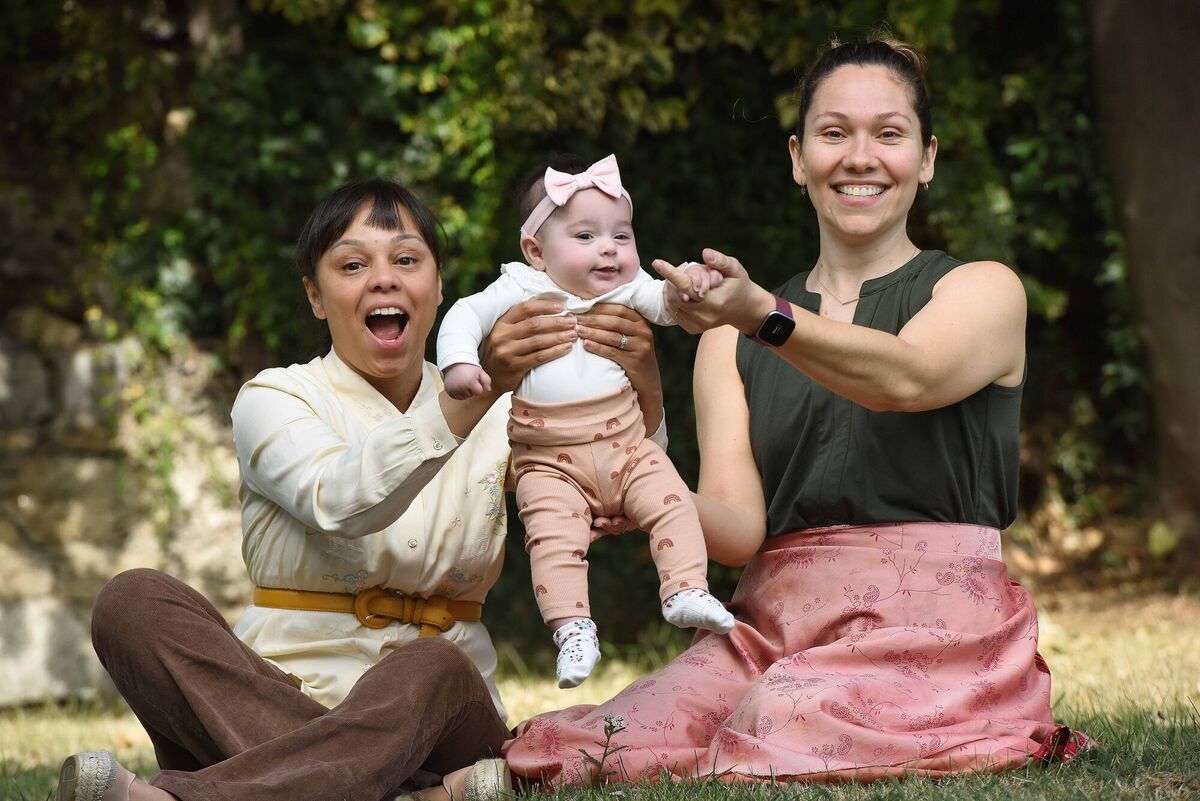
When Caroene Santos was 15 weeks pregnant, she did a Zoom call with the doula she was considering hiring to guide her through pregnancy and the birth of her firstborn.
“My husband was with us on the call. I liked the way Anita Petry worked so we agreed she’d be my doula,” says the Brazilian native who’s based in Dublin and married to Galway man, Niall Murphy.
As a perinatal psychologist, the 39-year-old knew how invaluable a doula’s assistance would be. “She’d be there to help and guide me, to hold my hand and make sure everything was fine.”
For Santos, it was important that her doula spoke Portuguese and English. “I knew in the birth situation I’d go completely into Portuguese and she could translate for the midwife and Niall.”
At 22 weeks, Santos panicked when she discovered she had a short cervix. “It [meant] the baby could arrive early. I was thinking: How did this happen? What can I do? Anita made sure I stayed calm. She showed me articles about the condition and reassured me I’d be OK if I followed the doctor’s prescription to take progesterone and to take it easy around movement.”
When Santos went into labour in April this year, her doula felt “like a guardian”. Her waters broke at 6am and her daughter Elena arrived at 2pm. “The plan was to stay home as long as I could after Anita arrived, but the contractions started coming fast and regularly and at a certain point we said, ‘Yes, we need to go’.
“In hospital, Anita knew my wishes, history, and birth plan. She explained it all to the midwife. When the midwife needed to tell me something, Anita explained. She did massages, made sure I was using the Tens (transcutaneous electrical nerve stimulation) machine. She was with me when I went to the birthing ball, to the shower, putting patches on my back, talking with me, telling me, ‘You can’.”
Santos had a vaginal birth, needing no interventions and no epidural. “With long, heavy contractions, I used gas. Anita guiding me to breathe really helped.
“It would have been very difficult without her. Niall was with me, hugging me — you have that attachment with your husband — but my doula was my right arm.”

Doulas as a support
A doula doesn’t give medical advice. Nor is she involved in the pregnant/birthing woman’s clinical care. Instead, the doula provides emotional and informational support through pregnancy, labour, and in the immediate postpartum period.
And while A-listers including Nicole Kidman, Anne Hathaway, and Gigi Hadid have all used doulas, awareness of doulas is spreading through the general population. Irish data on numbers of families hiring doulas is sketchy, but those working in the area say numbers are rising.
“The pandemic was a big driver,” says doula and chair of the Doula Association of Ireland, Anita Petry, explaining that many women felt very fearful about lack of support during the restrictions. “At one stage partners could come into the hospital when the woman was in active labour, so — often supported by a doula — women tried to wait at home until then.”
Dr Krysia Lynch, chair of Association for Improvements in the Maternity Services (Aims), is herself a doula and trains doulas. Since 2019, she has trained 51 birth and 17 post-natal doulas. “Demand is definitely growing, and it became very prevalent during the pandemic to hire a doula. Women weren’t getting one-to-one care in hospital and many GP practices limited appointments. A doula offered companionship, a chance to bounce questions back and forth, to discuss how you were feeling, any concerns you had,” says Lynch.
Doula support is invaluable in helping women communicate with caregivers, points out Lynch. “The doula might say, ‘You need to ask about that blood sample’ or, ‘You know you can avail of free physio in the hospital because you’re a public patient?’. So women get the most out of the short time they have with the care team.”
This communication continues during labour with the doula helping the woman to understand what’s going on, what questions to ask, how to make informed decisions and how to ask for alternatives. “A doula enables the woman to use her voice effectively,” says Lynch.
Aims Ireland points to research that finds midwives and nurses are only able to give 10% of their time in “supportive roles” in labour and birth. Yet a 2017 Cochrane review found people who have continuous support during childbirth have shorter labours — by 41 minutes on average. “Doulas have a lot of hands-on skills. They know how to help someone keep going during a long labour,” says Lynch.
“They enable a woman to find her strength. They physically support — they know what kind of position works better at a particular stage, when to use the birthing ball, when to lean on the bed, when to use the shower/pool. They know how to massage to help with discomfort, how to put pressure around pelvis and hips to enable contractions to be more effective.”
Research dating from the 1990s found women using a doula have a 50% reduction rate in Caesarean section, a 40% reduction in rate of forceps deliveries, and a 60% reduction in requests for epidural. “Having a doula doesn’t guarantee you won’t have an unexpected or unwished-for experience — but, if you do, a doula’s presence will help you cope much better because she will listen and validate your experience,” says Lynch.

Protecting your space
For Petry, a doula has four roles: To provide educational, emotional, physical, and practical/logistical support. Doula support usually involves two prenatal home visits, she explains.
“You get to see the home dynamics, have a cup of tea together, learn the couple’s sense of humour, how they deal with difficult situations. You educate about choices, interventions, and do a birth plan. Everyone has a birth plan, even if it’s not on paper, even if it’s just, ‘I’m going to Holles Street and I’m going to trust the doctors and let them take the lead’.”
Before a woman goes into labour, Petry will have established what kind of touch she likes. “I ask, ‘Do you like massage? Is it something you do together as a couple?’ We practice massage for the labour. I ask, ‘Is this too hard, too soft? How do you like it?’ One client said, ‘Don’t touch my head’, which was great because I knew if her hair was falling into her face during labour, I’d hand her a hair tie — I wouldn’t tie it back for her.
“That’s the kind of relationship between doula and client — intimate, detailed, allowing us to create a comfortable, safe environment when the time comes.”
Petry emphasises that doulas don’t believe every woman needs to birth in the same way. “I provide quality information. The woman makes an informed decision on how she wants to proceed, and I support her to get there.”
The doula profession isn’t regulated in Ireland, and training courses come in all shapes and sizes. While Lynch’s course runs over six months, comprising 100 in-person hours, other courses are online, over a weekend. While not a regulatory body, the Doula Association of Ireland reviews doula courses available in Ireland and assesses them (under set criteria) for acceptability to the association.
Doula fees vary depending on location and services/packages offered. A basic birth doula package (usually includes at least one prenatal home visit, phone/text communication through pregnancy, in-person labour support and one postpartum visit) ranges from €800-€1,200. The hourly rate for postpartum support varies from €25-€40, with nightly hours sometimes rising to €50.
Doulas come with different experiences and skill sets, and there’s much that’s individual and unique about each doula. Ultimately, choosing one depends on what feels like a good match between client and doula. It’s a very special relationship, says Petry.
“For the woman, it’s like, ‘Here is this person whose sole purpose is to support me, care for me, see me’. We often say doulas hold the space for experiences — a doula protects your space.”
- Visit doula.ie, irishdouladirectory.com and dublindoula.com
CONNECT WITH US TODAY
Be the first to know the latest news and updates