Skin Nerd: How to protect your child’s skin in the sun

Skin Nerd: Incorporating the application of sunscreen into your child's daily summer routine can help them build healthy habits for later in life.
Whether you are sunbathing in the back garden or heading off to the beach, it is important to protect your little one’s delicate skin. Research suggests that approximately 25% of the UV damage suffered by our skin during our lives occurs before the age of 20. This increases the risk of skin cancer later in life. Incorporating the application of good sunscreen into your daily routines from a young age will not only shield your child’s skin from harmful UV rays but will also help them to develop healthy habits for the future.
A child’s ability to heal is likely to be better than your own, and your little one’s skin has an increased vulnerability to the sun. A baby’s skin is more susceptible to sun damage because babies produce less melanin, which means they have less protection against damage from UV rays. Therefore, they are more likely to get sunburned. This makes it even more crucial that you not only apply SPF to your child’s delicate skin regularly but also take further precautions — get them to wear -a hat and sunglasses, and keep them out of direct midday sunshine.
It is a scene all parents can relate to — the struggle of trying to apply sun lotion to a wriggling child who wants to do anything but stand still. While your little hooman is unlikely to be aware of the dangers of sun damage, we adults are hyper-aware and want to protect our precious ones, but how do we do it without tears from both parties?
Distractions (for them, not you) such as reading a story or applying lotion while watching TV tend to work with younger children. If they are old enough, encourage them to help you apply the sunscreen — just remember to check that they cover all areas exposed to the sun.
For adequate protection, you need to apply two tablespoons of SPF and, unless your sunscreen says it offers immediate protection, apply it at least 20-30 minutes before your children go outside.
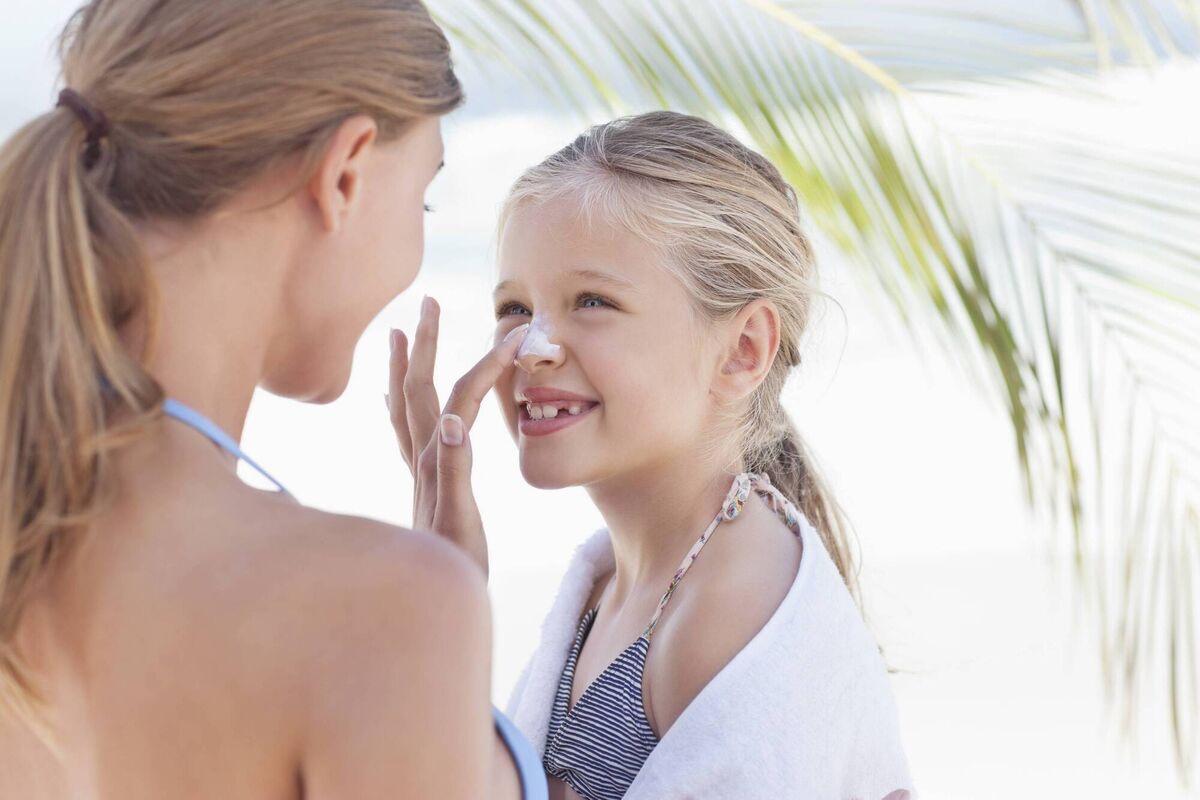
The Skin Cancer Foundation recommends that children use sunscreen with an SPF of 30 or higher. Also look for a broad-spectrum formula, which means that it protects from both UVA and UVB rays.
You should top up at least every two hours. Re-application is particularly important after swimming or sweating so remember to pack your SPF in your beach bag.
Children’s skin is more prone to irritation as the stratum corneum is thinner and natural moisturising factors and lipid production are reduced. This means that a baby’s skin barrier will be more permeable than an adult’s, allowing substances to seep into a baby’s skin more easily. Because of this, infants and young children are more likely to experience inflammation and increased sensitivity to products applied to the skin.
Avoid any ingredients that have the potential to dry or irritate. This includes those often found within chemical sunscreens. Mineral sunscreens (those containing zinc oxide or titanium dioxide) don’t invite as much heat to the skin and are therefore a better option for delicate skin.
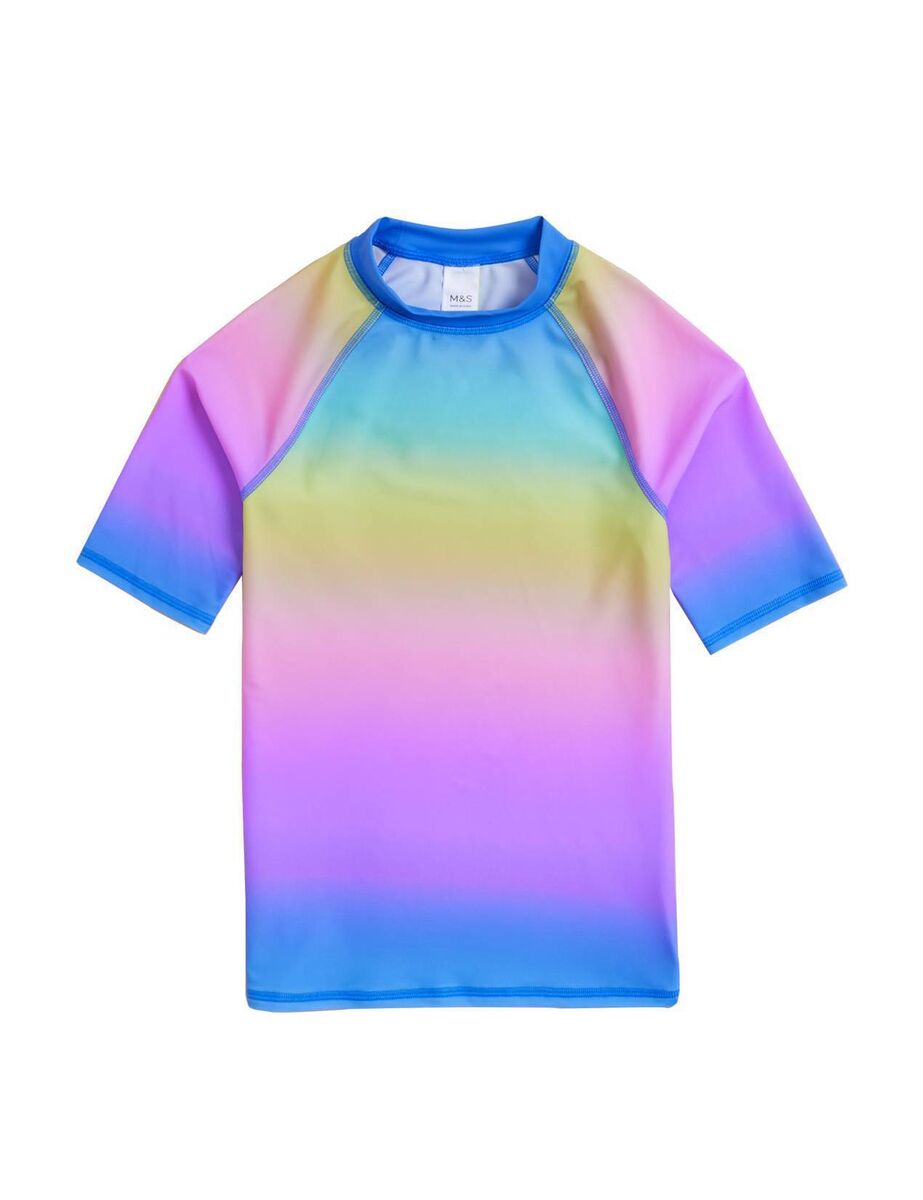
Keep them safe and easy to spot in the pool with this colourful ombré rash vest. Designed in a regular fit with added stretch for comfy wear, the vest includes t-shirt sleeves and a high round neck to provide extra coverage. Importantly, it is also made with UPF 50+ Sun Smart fabric endorsed by the British Skin Foundation, which is long-lasting and chlorine-resistant.
- Ombré rash vest (6-16 years), marksandspencer.com, €17

CONNECT WITH US TODAY



Be the first to know the latest news and updates