Bone can be a boon for some


Half of all men, over the age of 40, experience ‘erectile dysfunction’, at least occasionally. Millions of euro are spent annually on what Hugh Hefner called ‘God’s little helper’; Viagra.
Impotence is not a new problem, however; it arose, and was addressed, countless eons ago.
Bacchus, the Roman god of wine, invented the walking stick to help intoxicated drinkers stay on their feet. ‘Baculum’ is the Latin for ‘stick’; a ‘baguette’ is a long French loaf. A bone found in some male mammals also bears the name; the ‘baculum’, or ‘penis bone’, is located close to the urethra. There’s a female equivalent, known as the ‘baubellum’ or ‘os clitoridis’.
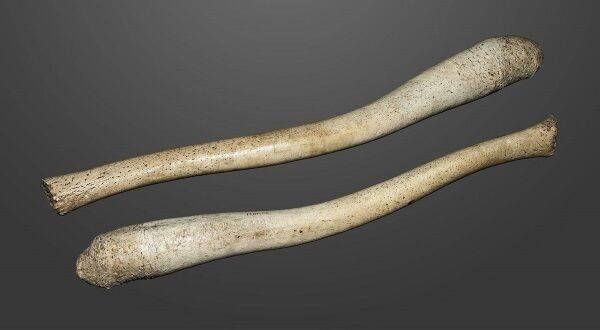
The male bone’s evolution and function had not been well studied until Matilda Brindle and Christopher Opie, of University College London, took up the challenge. Results of their research appear in a December issue of Proceedings of the Royal Society B. Examining the bacula of around 2,000 species, Brindle and Opie compared the bone’s size to testes mass and traced its evolution through the fossil record.
‘The most diverse of all bones’ is found in eight of the 19 orders of mammal. Dogs, cats, weasels, rodents, hedgehogs, seals and bats have it.
Elephants whales dolphins and the hoofed herbivores don’t. It was thought that the lagomorphs, an order including the hares and rabbits, did not have bacula. Then, two years ago, it was shown that one of them, the American pika, has a small one.
The bone varies greatly in size and shape between species. Polar bear penis-bones can be half a metre long and a specimen from an extinct type of walrus clocked in at 1.4m.

‘The ancestral mammal did not have a baculum’, Brindle and Opie claim. The penis-bone evolved, they say, between 145 and 95 million years ago in a common ancestor of the primates and carnivores. But what was the bone’s function and why was it retained in some lineages but not in others?
The baculum was thought to be a ‘marital aid’; it facilitated easier and more prolonged penetration during mating. This function was confirmed by the recent research; ‘baculum shaft width is a significant predictor of the number of offspring sired by male house mice’, the authors note.
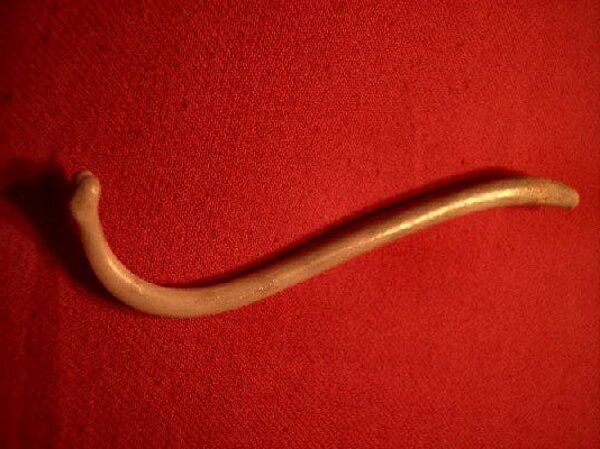
The bone tends to be most prominent in species which have multiple sexual partners or where males must compete for access to promiscuous females. However, Brindle and Opie found no correlation between testes sizes and penis-bone lengths.
It seems odd that hoofed animals such as cattle and deer, with their polygamous mating systems, never evolved bacula. A red deer stag, maintaining a harem during the annual rut, would surely benefit from having a penis-bone.
In species where sperms from rival males compete after being deposited in the female genital tract, the baculum tends to be large. ‘Prolonged intromission’ benefits a male by blocking access to rivals and giving his sperm a head-start in finding and fertilising the eggs. Having a penis-bone helps.
Humans are the only primates without a baculum. Our great-ape ancestors had small penis-bones and their other descendents still have them. About seven million years ago, our evolutionary line split from the one which led to chimpanzees. The pre-humans, presumably, inherited the bone but dispensed with it subsequently. Why?

The researchers think that adopting a monogamous lifestyle led to the change. With the new social order, a female would be constantly in the presence of her mate or his relatives, reducing the risk of cuckolding. There was, consequently, less need for frequent or prolonged mating. Maintaining bone tissue is expensive; it requires scarce resources.
The human baculum was no longer required and under the relentless pressure of natural selection it disappeared.


CONNECT WITH US TODAY



Be the first to know the latest news and updates