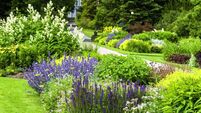
Verbenas are a rich source of nectar for honey bees and butterflies
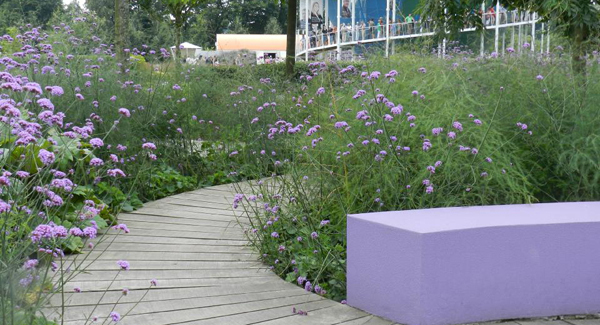
Even with the best laid plans, and for the most diligent of gardeners doing everything correctly — sowing seed indoors during January and February and then pricking out and hardening off; dividing established clumps of herbaceous during the winter months; staking the taller growing perennials to support their sometimes flimsy stems to keep their blooms aloft — even with all these things done correctly it still all comes down to the greatest unquantifiable of all, the weather.
We must be mad, those of us who put so much effort into a pursuit that requires so much in terms of timing, physical effort, design requirements, a certain amount of skill and a rather large amount of time, and after all that, success or failure or certainly a good degree of success, is in the lap of the gods.
I was moved to think of this the other day while admiring a particularly nice display while having a walk with my mother.
She commented on some very bright Verbenas which were certainly doing their thing — providing bright colour to the planting, and said how nice they were looking as it was so nice and sunny. But then as if damning it with faint praise, noted that in wet weather they are less than wonderful.
She’s right of course and it’s no wonder considering that most of the Verbenas or Vervains are native to South America and what we were admiring were half hardy annuals which need as much sun as possible. Indeed, all require sunny positions and well drained soils in which to thrive.
No wonder then, that they will look less than their best in a wet Irish summer. But give them the right conditions and if the summer smiles on them, then what a sensational display they will give.
We then come to the perennial Verbenas of which there are many, spreading and upright in habit. I say perennial here cautiously, as in truth, from my experience, I regard all of them as short-lived perennials.
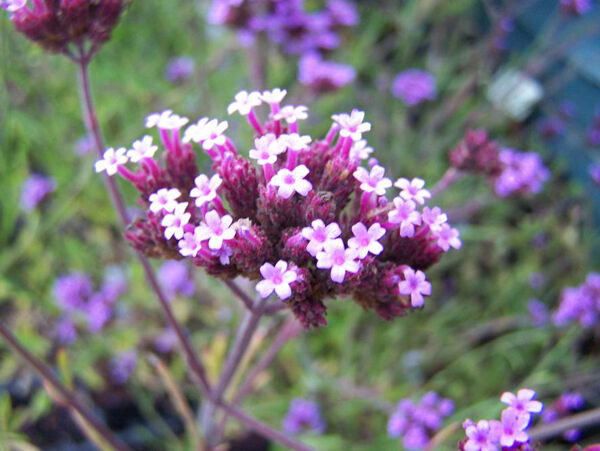
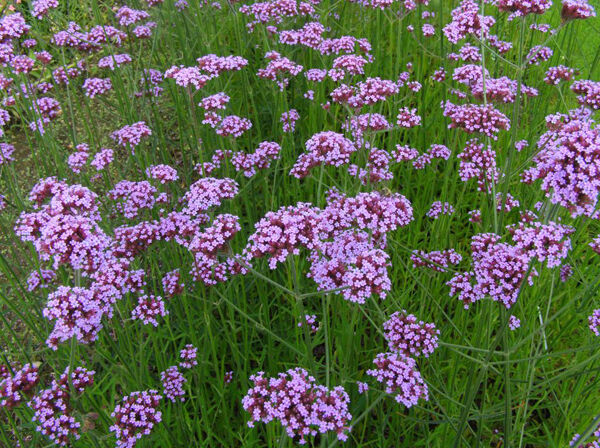
The airy texture and mauve blooms of Verbena bonariensis is a great addition to late summer in Irish gardens and a must for any mixed herbaceous planting or even a wildflower meadow type situation.
Even though it may not last longer than a few years, it does have the welcome habit of spreading its seed quite freely and these seeds will often germinate easily where they land and so you will always have a steady supply of bonariensis in the garden.
It’s not just for aesthetic reasons that it is important to have this plant in the garden, no, it’s important for bees and butterflies too, providing a rich source of nectar for the honey bees.
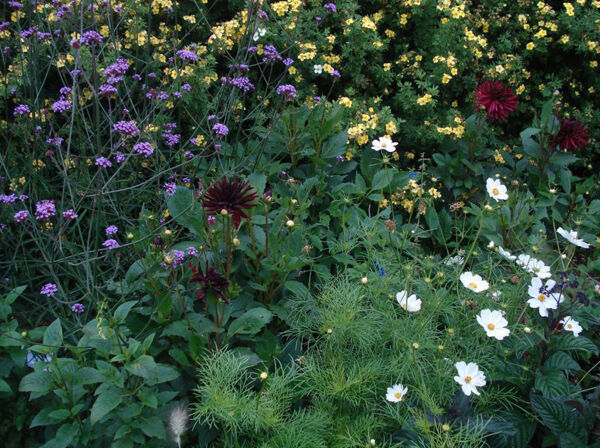
Growing to as high as 180cm (6ft), it will need shelter from strong winds as otherwise it will be blown over, but give it the right position to enjoy the bees and other insects feeding on it during the next few months, and it will allow you to truly enjoy the garden and all that a garden means.
‘Lollipop’ is a variety that offers all the same things as the straight species, bonariensis, but only grows to about 60cm (2ft) in height and is a better plant for the front of a bed or in a windy area.
Another variety that is better in the wind and also a lower grower is Verbena rigida.
The flowers, which can number over 100 from one plant, are a deeper purple and the stems, as the name suggests, are somewhat more rigid and stronger. I have also found it to be a better bet to come on each year.
Verbena is a genus of over 200 species and not all of them are upright and purple in colour. ‘Peaches Cream’ is a beautiful ground covering form.
Semi evergreen and only growing to about 20cm in height it produces masses of pale orange/pink flowers which are again loved by the beneficial insects and will cover and area of about 70cm in width.
Verbena has been used in herbalism for many years and also has a close association with certain religions, including Chritianity as the leaves of Verbena were believed to have been used to heal the wounds of Jesus as he was taken from the cross.
Nowadays, the essential oil has commercial use as a perfume and also in medicine and herbal medicine. The essential oil, however, is not to be confused with that of Lippia citrodora or Verbena.
Not technically a Verbena but a close relation, this sub-shrub may not be the most attractive looking addition to the garden but grow it and introduce yourself to something that smells more lemony than actual lemons.

CONNECT WITH US TODAY



Be the first to know the latest news and updates