Hikes and trails: Sit in Synge's Chair on defiantly traditional and tranquil Inishmaan
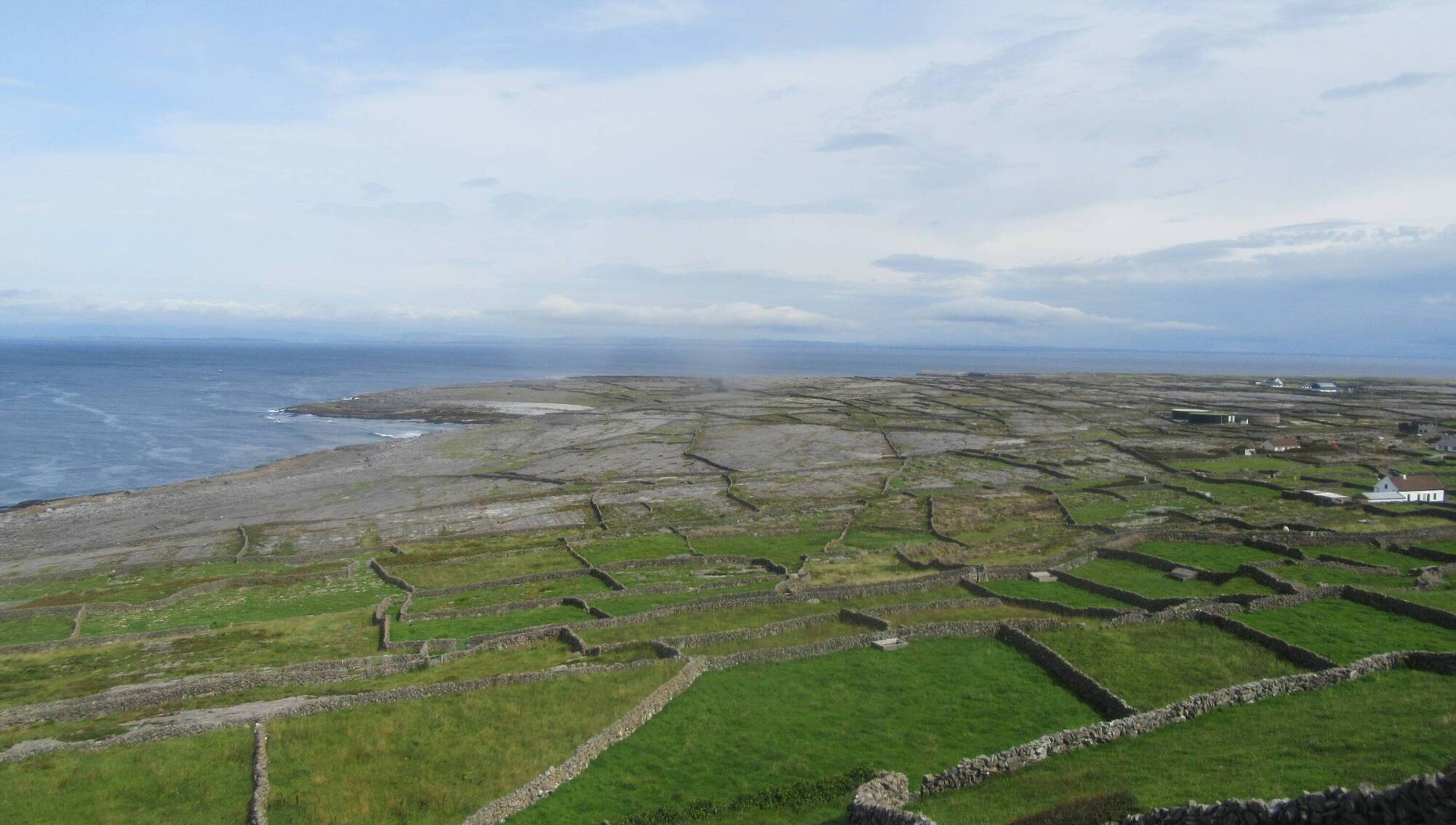
Playwright John Millington Synge was captivated by Inishmaan, an island that remains the most serene of the Aran Islands. Pictures: John G O'Dwyer
Modern audiences celebrate its poetic language, dark humour and mastery over the unique dialect spoken by Irish peasant people. When first performed, however, it was described by Arthur Griffith, founder of Sinn Féin, as "a vile and inhuman story told in the foulest language we have ever listened to from a public platform." The opening night in the Abbey Theatre dissolved into a riot with audiences throwing objects at the stage and calling for the death of the author. Who, then, was the playwright so grievously offending Irish sensibilities with a drama titled that his execution was demanded.
Described by William Butler Yeats as timid and shy, John Millington Synge, who struggled with ill-health throughout his life, was an unlikely disputer of societal norms. In contrast with many of his strongly nationalist critics, Synge had taken the trouble to become an Irish speaker. This allowed him make a deep dive into West of Ireland culture and have a window on the daily language of the people.
When Yeats advised him to visit Inishmaan Island and “express a life that has never found expression”, he changed the playwright’s life. Synge came in 1898 and was so captivated, he returned for five summers and found a wellspring of inspiration for his finest plays, written in unsemtimenatlised English but drawing unmistakably on the vivid idiom of the Gaelic speaking islanders. His plots were derived from stories recounted by the local people: the tale of a man who murdered his father, inspired Synge to pen , while has as its central theme the islanders fatalistic acceptance of ocean fatalities.
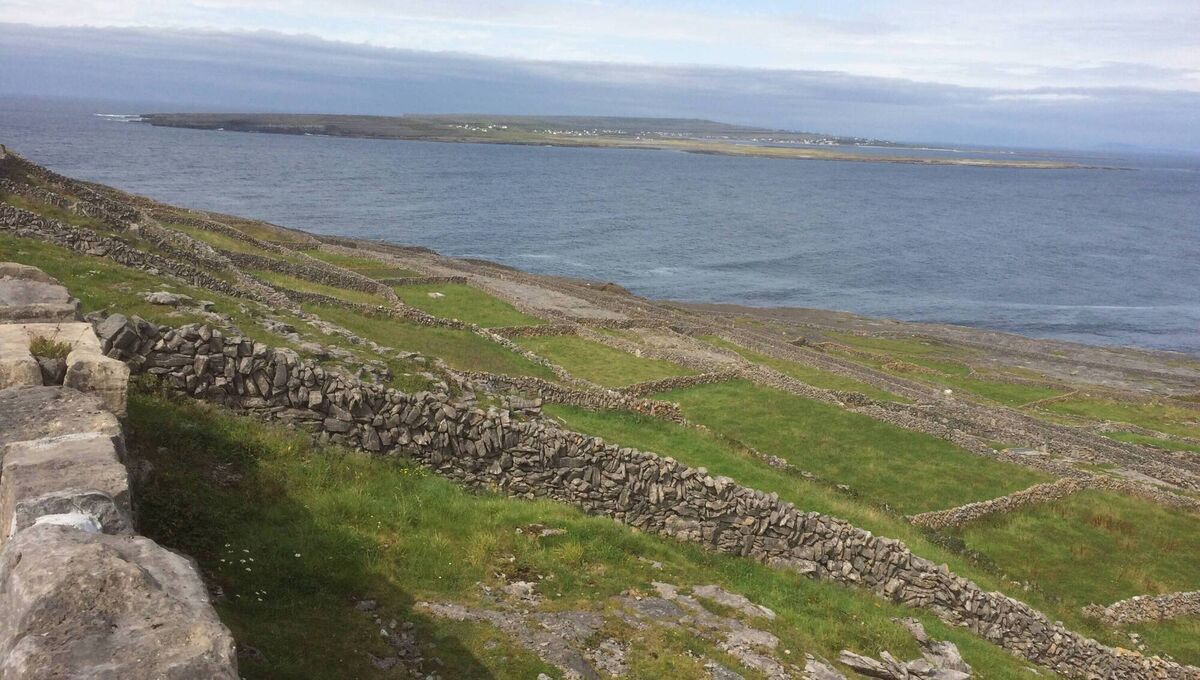
As in Synge’s time, Inishmaan remains the most serene of the Aran Islands. Day-trippers from Connemara rarely pass Inishmore while those from Clare tend to concentrate on Inisheer. Such happenchance has been prescient for the middle island, allowing it to remain defiantly traditional and tranquil.
Irish is the everyday language of the islanders and few concessions are made to mass tourism. In many ways, the attraction of Inishmaan arises from the fact that there is less to do. Simple pleasures take precedence over dedicated attractions, such as enjoying the enchanting ocean views, rambling the traffic-free green lanes and seeking out the abundant heritage sites.
On my most recent visit, I began my exploration from the harbour where the Doolin Ferry decanted me. Following the purple arrows for Lúb Cill Cheannannach, my curiosity was soon captured by a series of botháns: little thatched buildings in a vernacular style that, I was later told, are traditionally used to store animal feed.
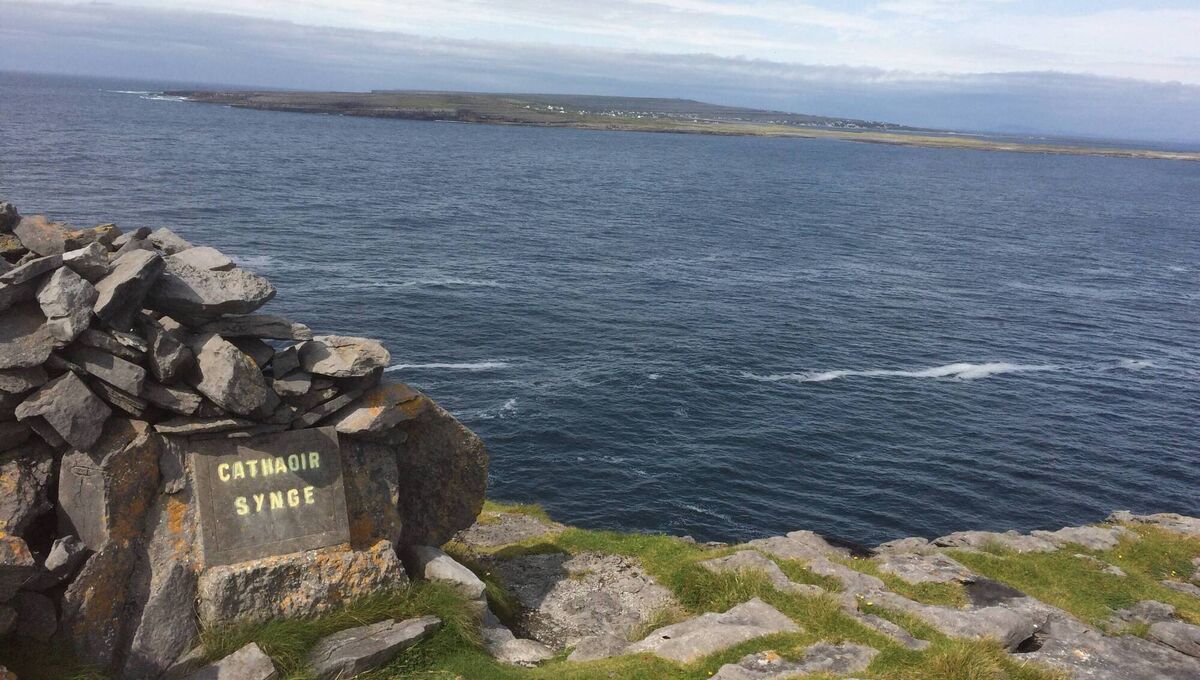
Beyond lay the central ridge of the Island. Here I found it impossible to resist the 500m diversion to visit Cathaoir Synge and was well rewarded. Synge’s Chair, is a rocky eyrie above the western ocean where the playwright enjoyed an inspirational vista over Gregory’s Sound to the austere beauty of Inishmore’s east coast. Returning to the Lúb, my next stop was the improbably huge fort of Dún Chonchúir, offering a 360-degree panorama from atop astounding stone-wall defences that, just then, seemed implausibly lavish considering the frugal nature of the island economy.
Teach Synge, the house where Synge lived when visiting the island, has recently been restored as a small museum. It was closed when I arrived, so I ambled east along the island’s high road, where houses huddle for shelter beneath the central ridge. Immediately it was clear that Irish remains the number one language; locals and visitors alike greeted me with a cheery “dia dhuit”.
Beyond, Inishmaan’s solitary pub proved too strong a temptation, so I headed inside for a coffee. Afterwards, I swung right at a sign marked Dún Fearbhaí to explore the island’s second largest stone fort before returning to the route. Gaining the east coast rewarded me with exquisite views to Connemara, the Burren and the Cliffs of Moher. This was my signal to swing left along a green lane to reach the ruins of an early Christian oratory at Cill Cheannannach.
Regaining the tarmac, I passed by what was once the sole landing place for a Island that lacked natural harbours. Continuing between the little beach at Tra Leitreach and a cemetery, I turned inland to parallel the airstrip before diving left along a green lane and later a public road to finish my outing at the new harbour, having enjoyed a 9km walk. Here, I reflected happily that Inishmaan remains much as I had remembered it. Untroubled by the daily pressures of tidal tourism, it continues as an authentic outpost of Gaelic culture where Irish defiantly persists as an everyday language.
- There are daily sea crossings to Inishmaan from Rossaveal in Connemara, which is an hour’s drive from Galway city. (aranislandferries.com). Ferry connections to Inishmaan also operate from Doolin, Co Clare (doolinferry.com).


CONNECT WITH US TODAY



Be the first to know the latest news and updates