Hikes and trails: Enjoy an easy ramble back through the centuries at Portumna Forest
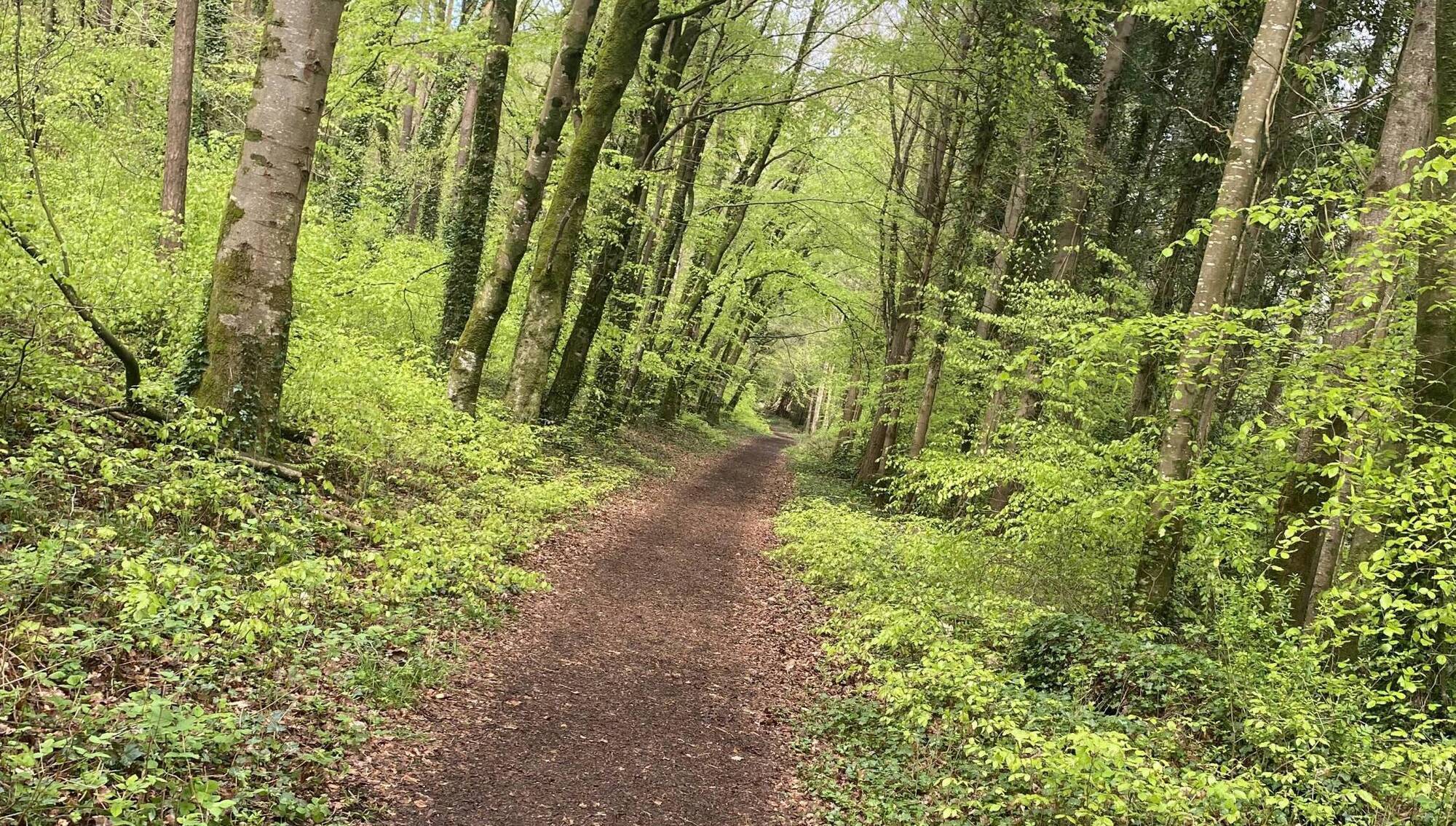
Much of the forest has been restored to oak, ash and hazel woodland as part of an admirable native-trees regeneration scheme.
It is sometimes said that the 12th-century Norman invaders to Ireland eventually became more Irish than the Irish themselves. For the de Burgh family, this was certainly true. Arriving from East Anglia in the late 12th century, they established their base west of the River Shannon. Granted extensive estates by England’s King John, William de Burgh, the family patriarch in Ireland, soon became Governor of Limerick. In the 13th century, they expanded their control over Connacht and founded Galway City as a major trading port.
Later, the de Burghs became highly Gaelicized. Adopting Irish dress customs and laws under the name de Búrca, Burke or Bourke, they became deeply Irish and began marrying with Gaelic families. An internal rift in the 14th century split the family into two clans: MacWilliam Iochtar (Mayo) and MacWilliam Uachtar (Clanricarde). The descendants of Richard Óg Burke of Clanricarde then established themselves as independent lords in south and east Galway.
Centred on Portumna, they controlled the strategic crossing point before the River Shannon widens as it enters Lough Derg. In the 16th century, the 1st Earl of Clanricarde accepted King Henry VIII's policy of "surrender and regrant", which aimed to bring the Irish chiefs and lords under the direct control of the Crown. Swearing an oath of loyalty, he recognised the King of England as his feudal lord. In return, Henry regranted the traditional land of the Burkes to the Earl, but under an English tenure.
Later, Richard Burke, the 4th Earl, built Portumna Castle, which was, in its time, without equal in Ireland. The structure represented a transition from a medieval tower house, which was easier to defend but notoriously dark and uncomfortable, to a manor house that blended comfortable living with some defensive features, just in case.
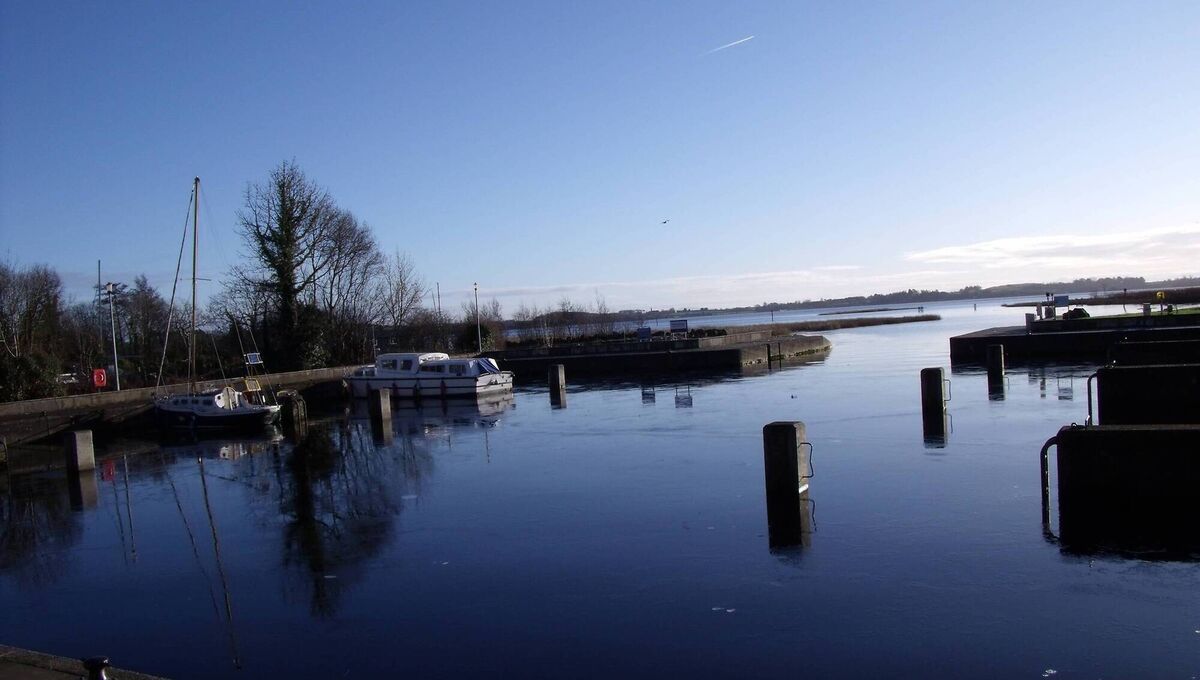
The huge castle and estate soon attracted workers and businesses, with the Burkes laying out the planned town of Portumna to accommodate them. The opening of the Grand Canal in 1804 then transformed the East Galway town into a bustling river port handling goods and passenger traffic between Dublin and Limerick. Later, when canals were superseded by railways, the Shannon became a mecca for river cruising, with Portumna an important stopover for leisure cruisers.
Following a devastating fire in 1826, the castle degenerated into a roofless ruin and was abandoned by the Burkes. In recent years, the Office of Public Works re-roofed the building and restored the ground floor and gardens, which are now open to visitors.
To explore Portumna, start from the castle gates and follow the exterior walls of the estate to a 13th-century Cistercian Abbey built by monks from Dunbrody, Co. Wexford. It became a Dominican friary in 1426 and continued until it was dissolved during the Reformation, with its lands granted to Ulick Burke, 3rd Earl of Clanricarde.
Revived during the Catholic resurgence of the 1640s, it hosted the 1689 marriage of Irish Jacobite leader Patrick Sarsfield and 15-year-old Honora de Burgo, daughter of the 7th Earl, before being permanently dissolved at the end of the Jacobite Wars. Today, it features the well-preserved ruins of a large church and cloister and an unusual inverted head on the sacristy door. This is believed to represent St. Peter, who was crucified in an upside-down position.
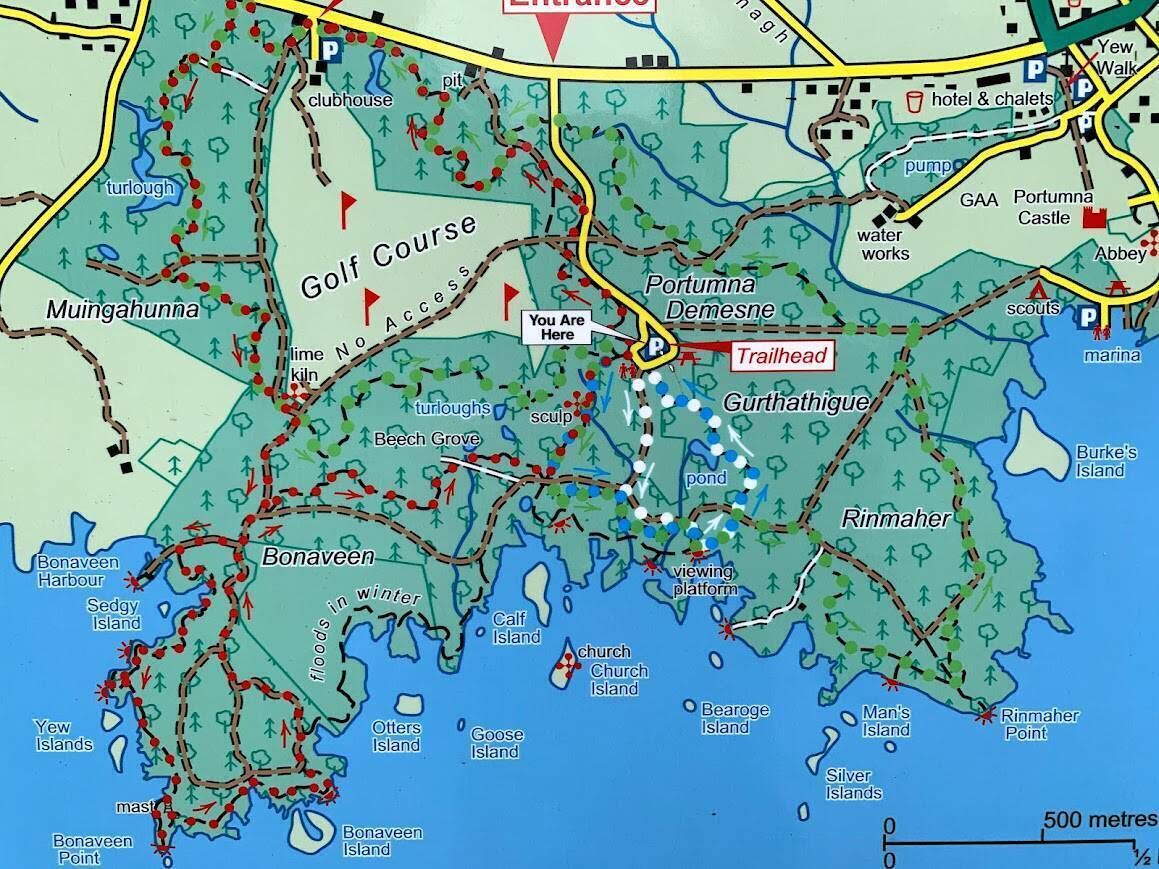
Beyond a picturesque marina on the River Shannon, you will encounter an area of forest, which has been restored to oak, ash and hazel woodland as part of an admirable native-trees regeneration scheme. A right fork in the path leads to the main trailhead for Portumna Forest Park, offering map boards, toilets, car parking and picnic tables. Here begins the Bonaveen Trail, the longest and most picturesque hike in the Park. It is denoted with red arrows and kicks off with a sylvan path through native woodlands.
The trail conveys you past Portumna Golf Club and continues along tree-lined pathways before encountering a forest-enclosed turlough. Turloughs are lakes that disappear when the water table falls in summer, only to reappear in autumn, with this particular one providing a winter sanctuary for migratory waterfowl. Almost unique to Ireland, turloughs are a feature typical of low-lying limestone areas, with most found west of the River Shannon.
Eventually, you will return briefly to a forestry road before heading off again on a series of narrow trails leading to Bonaveen Point. This is undoubtedly the high point of the walk, with the quicksilver waters of the Shannon sparkling vividly through the trees, creating a memorable panorama. In this area, you are likely to encounter deer grazing nonchalantly in the forest clearings, while the tree-lined canopy above the path is sometimes colonised by a noisy gaggle of squirrels. Complete the day by following the arrows back to the trailhead in the forest park and then retracing your steps to Portumna, having enjoyed an easy ramble of about 3 hours.

CONNECT WITH US TODAY



Be the first to know the latest news and updates