Michelle McKeown: An island in the Pacific built from ancient waste
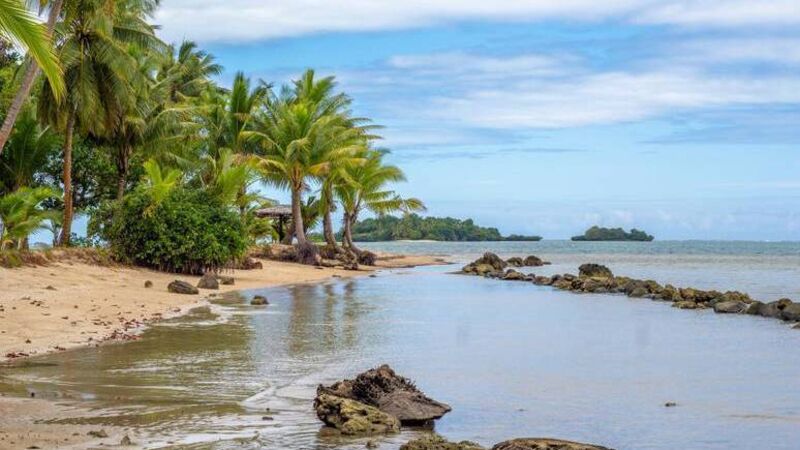
A tropical beaches on the island of Vanua Levu island in Fiji in the South Pacific Ocean. Picture: iStock
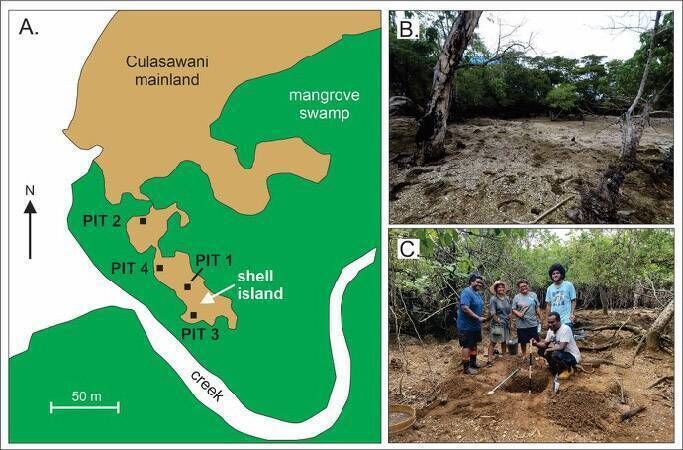
Just off the coast of northern Vanua Levu in Fiji lies a small, unassuming island surrounded by mangroves. At first glance, it looks like many others in the Pacific. But beneath the surface, it tells a very different story. This island is not formed from sand or rock. It is built largely from discarded shells. The remains of countless meals consumed over a thousand years ago. Our recent study led by Professor Patrick Nunn (University of the Sunshine Coast, Australia) and published in the journal Geoarchaeology, investigated this unusual feature and asks a deceptively simple question, is this island natural, or was it created by people?
A midden is essentially an ancient waste deposit that is often made up of food remains such as shells, bones, and other debris left behind by human activity. While the word may suggest something unremarkable, middens are among the most valuable archives available to archaeologists. They provide detailed insights into past diets, environments, and daily life.
In coastal regions, particularly across the Pacific, shell middens are especially common. For thousands of years, shellfish have been a reliable and accessible food source. Their remains accumulate over time, sometimes forming substantial deposits that can persist for centuries or even millennia. Typically, these deposits remain part of the landscape as layers within the soil, quietly recording human activity. What makes the Culasawani site interesting is that the midden does not simply sit on the land. It appears to be the land.
The island we studied covers approximately 3000 square metres and rises up to around 60 cm above the surrounding mangrove environment. What makes it striking is its composition: between 70% and 90% of the sediment consists of shell material, forming a deposit roughly 20–40 cm thick. Excavations revealed that these shells are not randomly distributed. They are overwhelmingly from edible species. Shellfish that would have been deliberately collected and consumed. Fragments of pottery were also found throughout the deposit, reinforcing the interpretation that human activity played a central role in its formation.
Radiocarbon dating gave us a clearer sense of timing. When we dated shells from across the site, most pointed to around 1,200 years ago, with dates stretching from about 400 to 1,000 AD. In simple terms, this wasn’t a one-off event, nor was it something that built up endlessly over time. It reflects generations of people returning to the same place, again and again, leaving behind the remains of their meals.
The most compelling explanation is that this is a midden island. A landform created through the long-term accumulation of discarded shellfish remains. Around a thousand years ago, people living in this region likely relied heavily on nearby coastal resources. The site’s location, which is close to shallow marine environments and a river mouth, would have provided easy access to abundant shellfish. Over time, repeated collection, processing, and disposal of shells led to the gradual build-up of material.
There are a few possible scenarios for how this happened. People may have lived directly on or above the site, perhaps on stilted structures over shallow water, discarding shells below them. Alternatively, the site may have been used primarily as a processing area, where shellfish were prepared before being transported elsewhere for consumption. Both interpretations are consistent with the evidence, including the dominance of edible species and the presence of pottery. In either case, the outcome is the same. Here everyday activities, repeated over generations, resulted in the creation of a new physical feature in the landscape.
As with any scientific interpretation, we have to consider alternative explanations. One possibility is that the island was formed by a high-energy event, such as a storm surge or tsunami, which transported and deposited shell material in a single episode. However, several lines of evidence make this unlikely. The shell layer is relatively uniform in thickness and confined to the boundaries of the island, rather than thinning outwards as would be expected from a wave deposit. In addition, the shells are exclusively from edible species, rather than representing the broader range typically found in natural marine sediments. While a natural origin cannot be entirely ruled out, the evidence strongly supports the interpretation of the site as a human-made midden island.
At one level, this is a story about food and waste. But at a deeper level, it highlights the long-term relationship between people and their environments. The Culasawani island demonstrates that human activity can shape landscapes in subtle but lasting ways. Over time, the accumulation of everyday waste (something often overlooked) can fundamentally alter the physical environment. In this case, it may have contributed to the emergence of land in a coastal setting influenced by changing sea levels.
The discovery is also significant in a regional context. If confirmed, this would be the first documented midden island in the tropical Pacific east of Papua New Guinea. That opens up new possibilities for understanding settlement patterns, resource use, and environmental change in the region.
What we see today as a small island in Fiji may, in fact, be the material legacy of centuries of daily life. It is a quiet but powerful reminder that even the most routine human activities can leave lasting marks on the world.
CONNECT WITH US TODAY



Be the first to know the latest news and updates