Take a stroll to discover the religious history intertwined with Ardmore trail
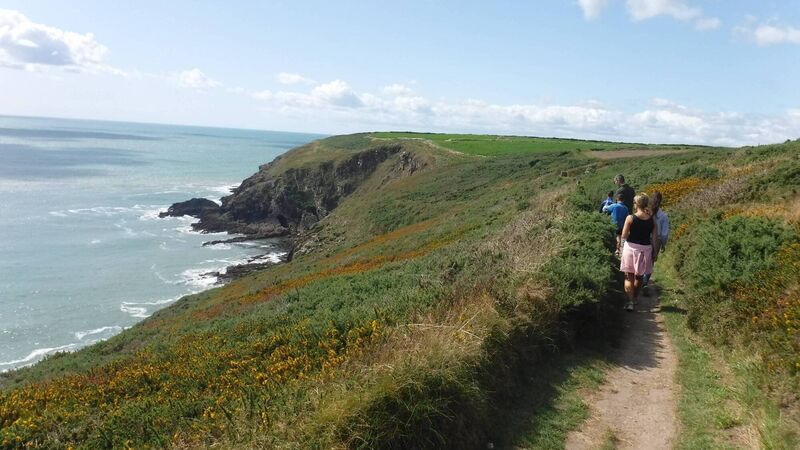
Pass the Cliff House Hotel before embarking on a scenic path that meanders around a peninsula, with slopes dropping seaward.
If history consists of stories that later generations recount about the past, Ardmore is indeed a storyful place. Locally regarded as Ireland's earliest Christian site, it provided the seed corn for the mythologies that bonded Deise inhabitants in an area that many regard as the birthplace of Irish Christianity.
Begin your outing from the trailhead located on the waterside opposite the Catholic Church. Head southeast to the shoreline that bookends the strand, where a rock on the beach is reputed to have floated ashore. Legend has it that a golden bell from heaven appeared while Waterford-born St Declan was celebrating mass abroad. On his return journey, Declan, absentmindedly, left it behind when sailing from Wales and was distraught by the loss. He prayed, and a large floating stone carrying his bell appeared in the ocean alongside and began guiding his boat. Declan promised to build a monastery wherever the bell came ashore. The rock fetched up on Ardmore Beach, and true to his word, Waterford’s patron saint founded Ireland’s first monastery on the high ground above.
Later, he was disconcerted to hear accounts of a newly arrived, British-born evangelist in Ireland. Would the new arrival in some way disrupt Declan’s ministry? To sort this out, legend has it that the southern saint creating St Declan’s Way when he travelled to Cashel, the seat of the Munster Kings, and met St Patrick.
Here, the holy men agreed that Declan would have unchallenged authority over the Deise, with Patrick now declaring “Degláin, Pádraig na Deise” (Declan is the Patrick of the Deise). Meanwhile, Patrick would become Primate of all Ireland – so face was saved all round. Wisely, the man who would become Ireland’s national apostle, refrained from crossing the mountain passes to the Deise on his missionary journey. Declan remained supreme in his Munster heartland, where he continues to this day as the much-adored saint of Co Waterford.
HISTORY HUB
If you are interested in this article then no doubt you will enjoy exploring the various history collections and content in our history hub. Check it out HERE and happy reading
Ardmore has since been a place of veneration and healing. History records thousands of pilgrims coming since at least the 17th century, particularly during the pattern festivities marking St Declan’s Feast Day, on July 24.
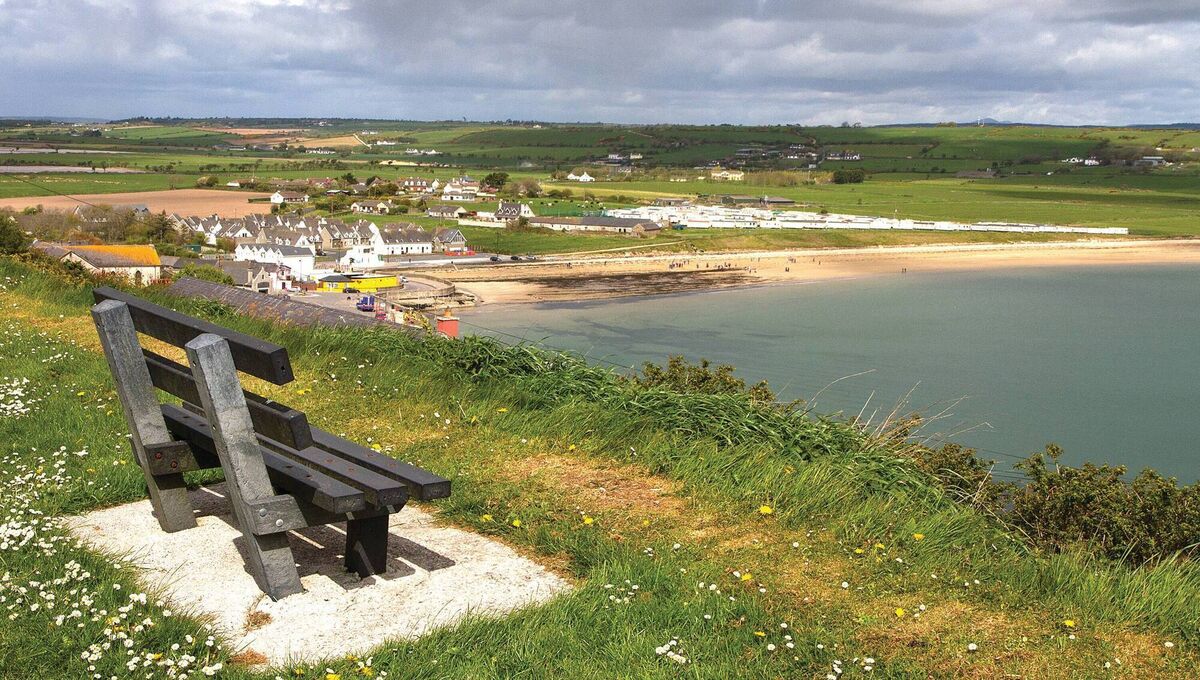
Next, it is upwards past the spectacularly located Cliff House Hotel, which overlooks Ardmore Bay. Beyond, you cross a stile leading to Declan's Hermitage and a 5th-century holy well. Here, the Saint performed many baptisms and to this day, it remains a place of pilgrimage.
The path now meanders around a peninsula, with mighty declivities dropping seaward. Soon, the rusting remains of the Samson become visible at the base of the sheer cliffs. This ship came unhitched while under tow and fetched up below Ardmore Head becoming, like the Plassey shipwreck on Inisheer Island, an unlikely, but popular tourist attraction.
Rounding Ram Head, rewards you with a photogenic vista over Youghal Bay to the East Cork coastline. Onwards now to explore a couple of lookout stations: the tallest served as a watchtower in Napoleonic times, when it was feared a small man with a big hat was about to overrun Europe, while the other dates from World War II. Beyond a curious structure built over a spring is referred to as Fr O’Donnell’s Well. Surprisingly modern, it was built in 1928 by one JP O’Rahilly, who believed in the curative power of the waters issuing here.
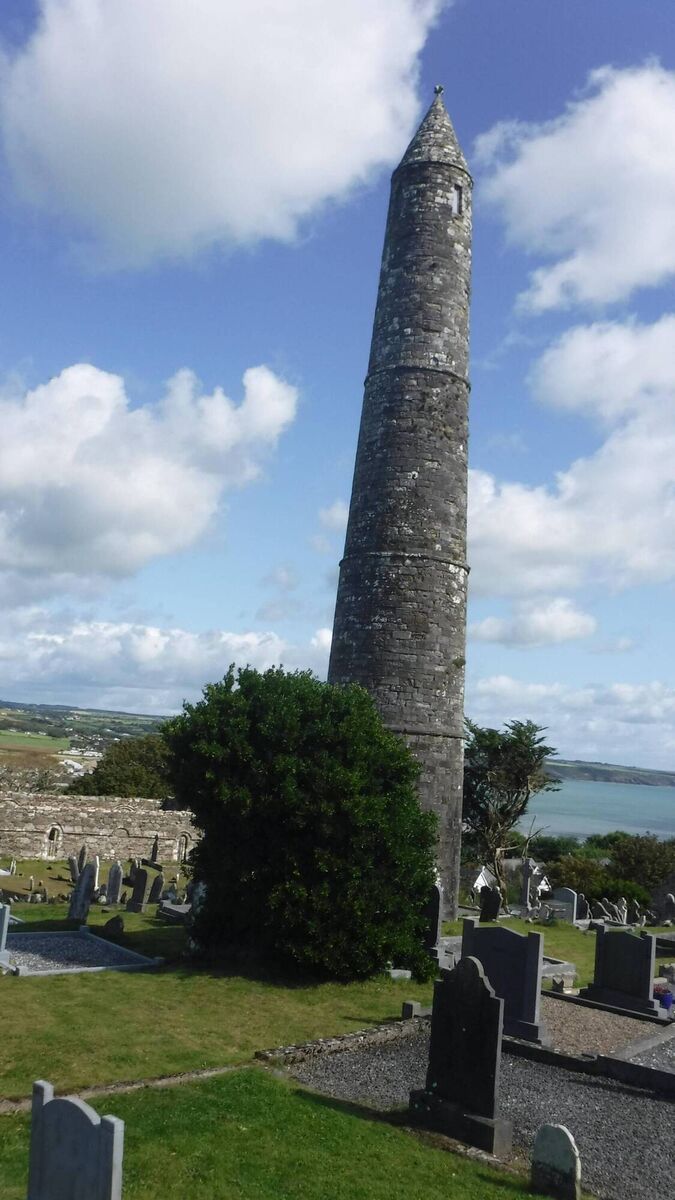
Swinging inland, you pass by a soccer pitch and soon after Ardmore Round Tower comes into view. One of the last completed in Ireland, it captures the eye as it rises gun-barrel straight to a majestic 29m. Agreement has not been reached on the purpose of these edifices, but in school, most Irish students were assured they were refuges during Viking attacks. This may now seem unlikely. The ease with which defenders could be burned out appears undeniable. Certainly, were bloodthirsty Vikings to appear over the horizon, the instinct of most people would not be to rush into the tower’s claustrophobic confines, but to leg it speedily in the opposite direction.
Whatever their purpose, we should be grateful to the tower builders. Minimalist creations of the greatest beauty, their true wonder is that, for over 1,000 years, they have articulately spoken to succeeding generations about the extravagant flourishing in early Christian Ireland of culture, learning, architecture and art.
On reaching the monastic enclosure, you will discover that the oldest building is Declan’s Oratory, within which lie the Saint’s remains. The now roofless Romanesque cathedral has an ornate gable depicting biblical scenes, and two ogham stones inside that are inscribed with Celtic Era script. The graveyard surrounding the monastic site contains many memorials to those who perished in shipwrecks along the Waterford Coastline.
Finish by heading downhill to Ardmore after a circuit of about 90 minutes. Here, you might reflect that monastic life as practiced here, with its emphasis on simplicity, mindfulness and humility, still has lessons to offer in the third decade of the twenty-first century.
- John G O'Dwyer's latest book, titled is out next May from publishers, Currach Books.


CONNECT WITH US TODAY



Be the first to know the latest news and updates