Being cruel to be kind: Rathlin Island finally a ferret-free zone
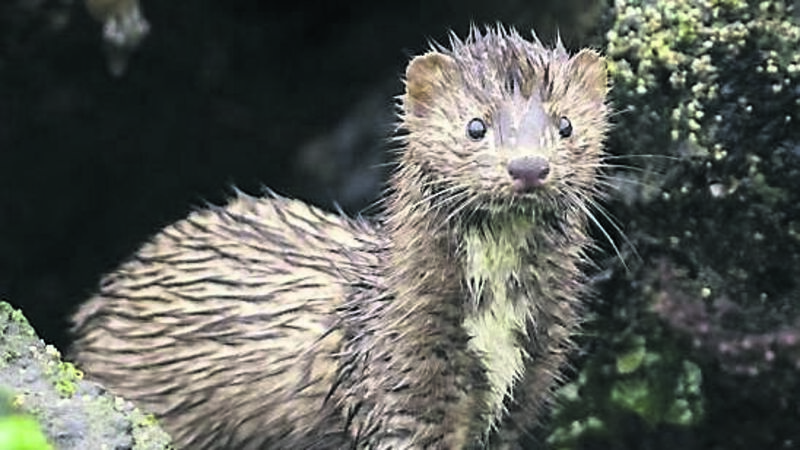
Like their wild ancestors, ferrets are slim serpentine creatures almost half a metre long with black brown, or multi- coloured, coats.
—
The rogue ferrets of Rathlin Island have finally met their Waterloo. It’s sad that they had to be killed but, sometimes, ‘we must be cruel to be kind’.
The ferret, almost a distinct species, was bred artificially from domesticated polecats long ago. Polecats are found in Wales and the English midlands, but not in Ireland. Notoriously smelly, these members of the weasel family used be known as ‘foul-marts’, their distant relative, the pine marten, being ‘sweet-marts’.
Like their wild ancestors, ferrets are slim serpentine creatures almost half a metre long with black brown, or multi- coloured, coats. Males, known as ‘hobs’, are larger than ‘jills’, the females. Youngsters are ‘kits’.
Prior to the myxomatosis onslaught of the 1950s, ferrets were widely used to hunt rabbits in Ireland. The exits of a warren would be blocked, apart from one which had a net placed across it. A ferret, released into the warren, would then chase the rabbits into the net.
In 1949, Prince Michael of Saltee wanted to rid his island of troublesome bunnies. Taking a leaf from the rabbit-hunter’s book, he released ferrets there, but they died during the winter.
Undeterred, the Prince airlifted 37 cats to the island. The press got wind of the story and a public outcry ensued. Concerns about cruelty to the cats led to questions in the Dáil. A veterinary surgeon and a civil servant were duly despatched to Saltee on a fact-finding mission. A garda who, presumably, was to take distressed cats into custody, also went along. The delegation, however, failed to find any cats.
But both the cats and rabbits survived. Their kittens, however, were not strong enough to catch rabbits during the winter. They starved to death. Some attached themselves to picnic parties and found new homes on the mainland. Others lived on Saltee for up to eight years, which is about the life expectancy of a feral cat in the wild.
History has repeated itself on Rathlin but, this time, the rewilding project succeeded. Like Saltee, Rathlin has an internationally important seabird breeding colony. The Royal Society for the Protection of Birds (the ‘RSPB)’, has provided an excellent viewing area there, from which puffins guillemots and razorbills can be observed.
About 150 people live on Rathlin so, inevitably, there are rats there. So, during the 1980’s, ferrets were released in an attempt to control them. All of the introduced ones were deemed to be males, so the ferrets, it was expected, would die out on the island once their work eliminating rats was done. However, a rogue female managed to go along for the ride. Soon, ferrets were breeding on Rathlin and would be there permanently if nothing was done.
The Normans, famously, ‘became more Irish than the Irish themselves’. Likewise, the alien Rathlin ferrets became more rat-like than the rats themselves; they took to killing seabirds.
An RSPB team, supported by Woody a trained ‘conservation dog,’ spent years hunting down the ferrets. Over 400 traps were set on the island in a project costing £4.5 million. No Rathlin ferret has been sighted since October 2023, and the island has just been declared a ferret-free zone.


CONNECT WITH US TODAY



Be the first to know the latest news and updates