Written on the walls: what lichens tell us about our environment
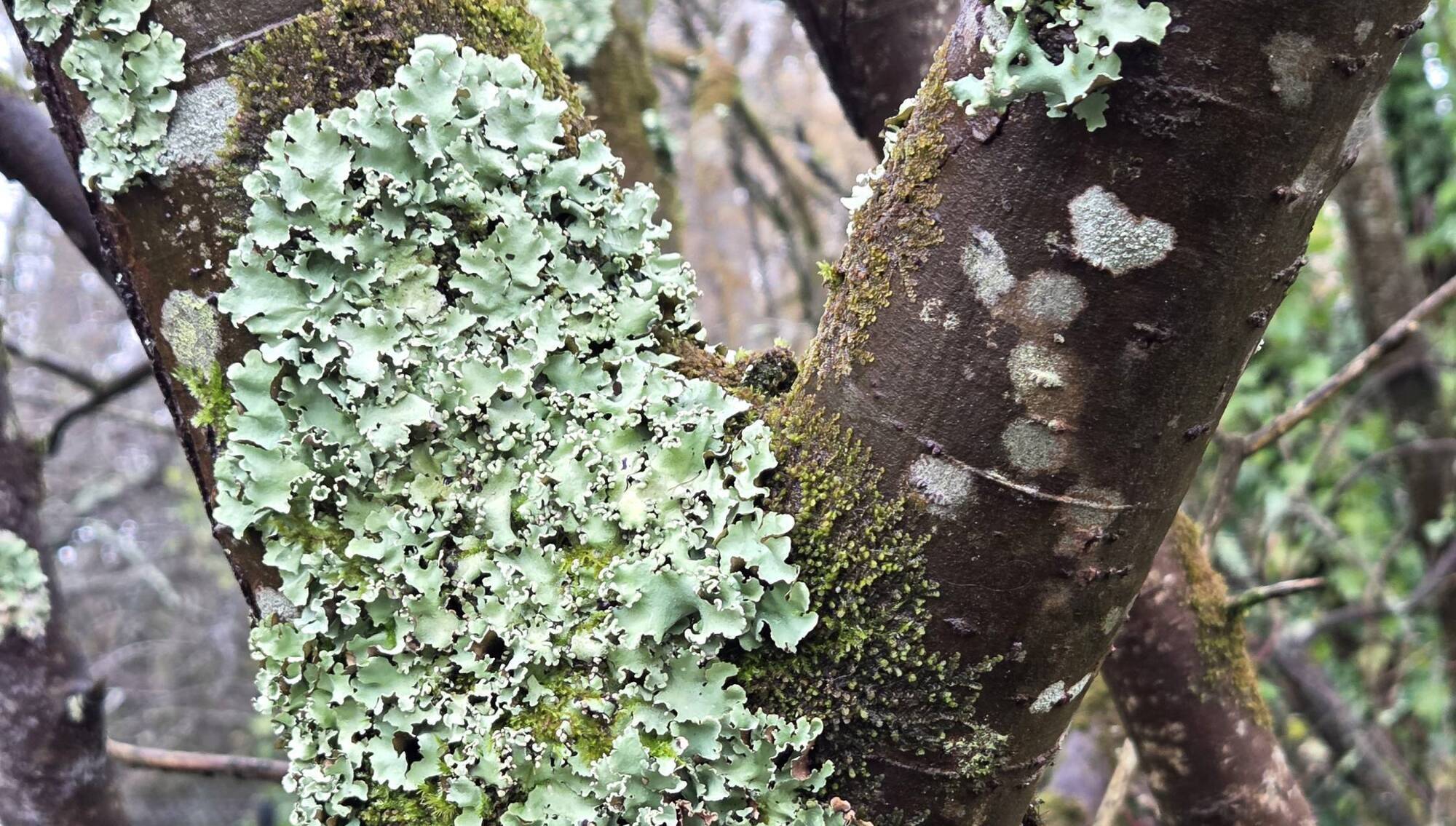
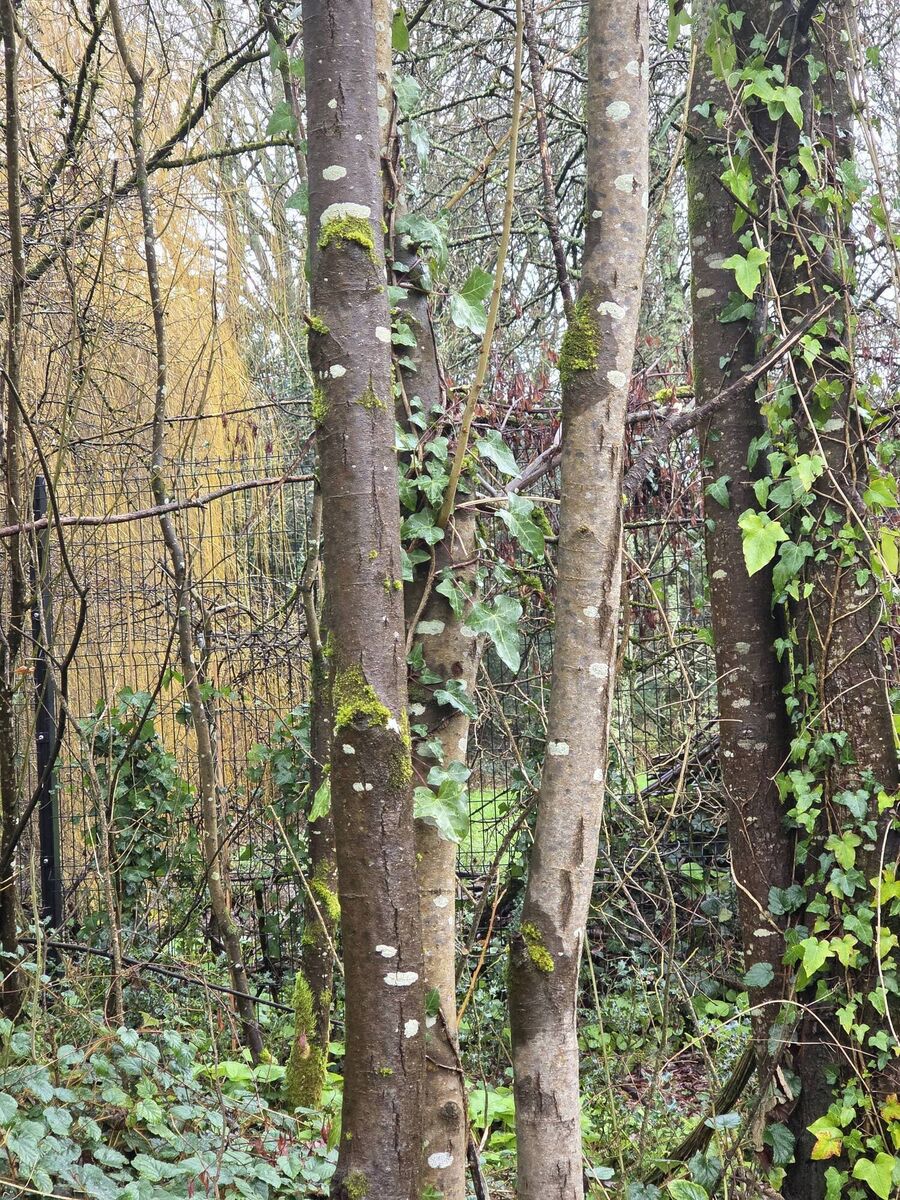
Lichens are not parasites, and they are not a single organism. A lichen is best understood as a composite life form: a fungus living in intimate association with a photosynthetic partner, usually a green alga or a cyanobacterium. Lichen growing on the bark of trees in Marina Park, Cork. Picture: Caroline Delaney
They cling to stone walls, creep across tree bark, and wash rooftops in greys, greens and soft golds. Most of us pass them every day without a second glance, mistaking them for stains, weathering or signs of age. Yet these quiet markings are alive, and they belong to some of the most remarkable organisms on Earth.
Lichens grow where few others can survive. They endure intense cold, prolonged drought and relentless exposure to wind and rain. Some can lose almost all their water, shut down completely, and revive hours (or even weeks) later when rain returns.
Others grow so slowly that a single millimetre can take a year to form. In the wild, some lichen colonies are estimated to be thousands of years old, making them among the oldest living things on the planet.
They are also (depending on how you define 'they') not exactly a single organism at all.
Lichens are not parasites, and they are not a single organism. A lichen is best understood as a composite life form: a fungus living in intimate association with a photosynthetic partner, usually a green alga or a cyanobacterium. The fungus builds the structure and controls moisture, while the photosynthetic partner produces food from sunlight. Together they form the thallus, which is the body visible on bark, stone, roof tiles and the occasional neglected garden ornament.
Because lichens obtain nothing from the surface they grow on, they do not damage trees or stonework. They use bark simply as a place to live, not as a source of nutrients. In ecological terms, they are epiphytes rather than parasites.
For generations, this tidy two-part symbiosis dominated biology textbooks. But modern science has revealed a far messier and far more interesting reality. Many lichens host additional fungi, yeasts and bacteria that influence growth, nutrient cycling, and stress tolerance. What looks like a single organism is now understood as a tiny ecosystem. A tightly woven community of life occupying just a few square centimetres.
“Lichens of Britain & Ireland” by Rebecca Yahr and Frances Stoakley is finally available for purchase. This has been a much needed ID guide for beginners to intermediates and the publication is finally here!! https://t.co/umCOTPDAix #bloomsbury #lichens pic.twitter.com/LR7T1KW7qP
— The British Lichen Society (@BLSlichens) December 22, 2025
Researchers are still unravelling who does what within this miniature world. What is clear is that lichens represent one of evolution’s great success stories, refined over more than 400 million years.
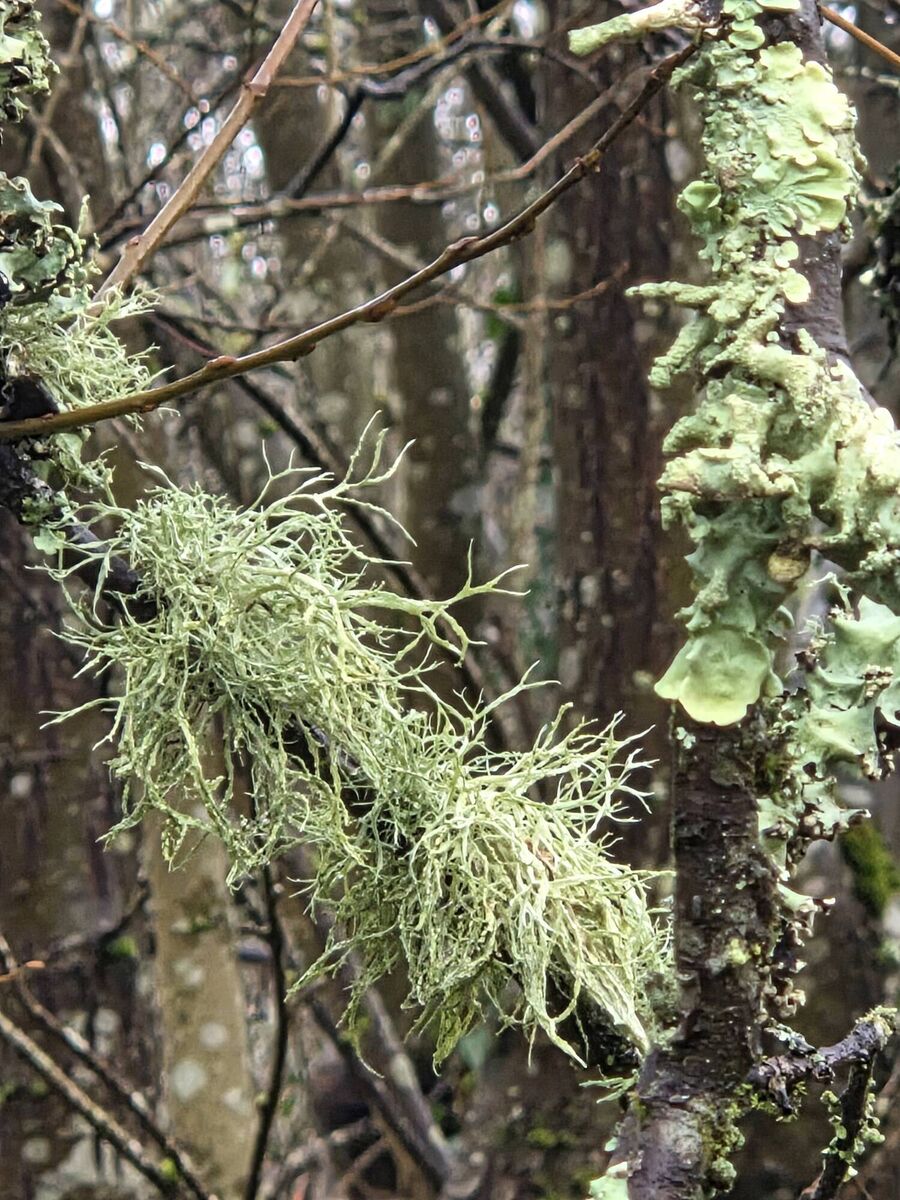
Once you start noticing lichens, they become impossible to ignore. Some spread as thin crusts that appear painted directly onto stone, clinging so tightly they cannot be removed without taking the rock with them. Others grow as leafy rosettes that lift gently from bark. Then there are the shrubby and hair-like lichens dangling from branches and giving forests a windswept, ancient feel.
These shapes are not aesthetic choices. They determine how much sunlight a lichen receives, how quickly it dries out, and how effectively it captures moisture from fog and rain.
In environments where water can disappear within minutes, these differences mean survival or death. In newly exposed landscapes, such as post-glacial terrain, lichens are often among the very first organisms to arrive. By slowly breaking down bare rock and trapping dust, they help create the earliest soils, paving the way for mosses, plants and eventually forests.
Lichens are also food. Insects, mites, snails and other invertebrates graze on them. Even when they appear passive, lichens sit quietly within food webs, supporting life at multiple levels.
Lichens have no roots, no waxy leaves and no way to filter what they absorb. Everything they take in comes directly from the atmosphere. This makes them extraordinarily sensitive to air quality. For more than a century, scientists have used lichens to track pollution.
During the industrial era, their disappearance from cities provided one of the clearest biological warnings of sulphur dioxide contamination. As emissions declined, lichens returned. So, lichens have been quietly mapping cleaner air long before monitoring stations.
Because lichens grow slowly and accumulate substances over time, they act like natural data loggers. Heavy metals, nitrogen pollution and airborne particles become locked into their tissues, allowing researchers to reconstruct past environmental conditions years after the pollution itself has dispersed.
- some survive temperatures well below freezing
- others tolerate intense ultraviolet radiation
- in laboratory experiments, several species have even survived exposure to the vacuum of space, reviving after rehydration as if nothing had happened
Part of this resilience comes from their ability to suspend life when conditions turn hostile. Metabolism slows to near zero, restarting only when moisture returns. It is survival through patience rather than speed.
Some lichens also contain cyanobacteria capable of fixing nitrogen from the atmosphere, enriching nutrient-poor environments and supporting surrounding ecosystems. In places where soil is scarce and fertility is low; lichens quietly subsidise life.
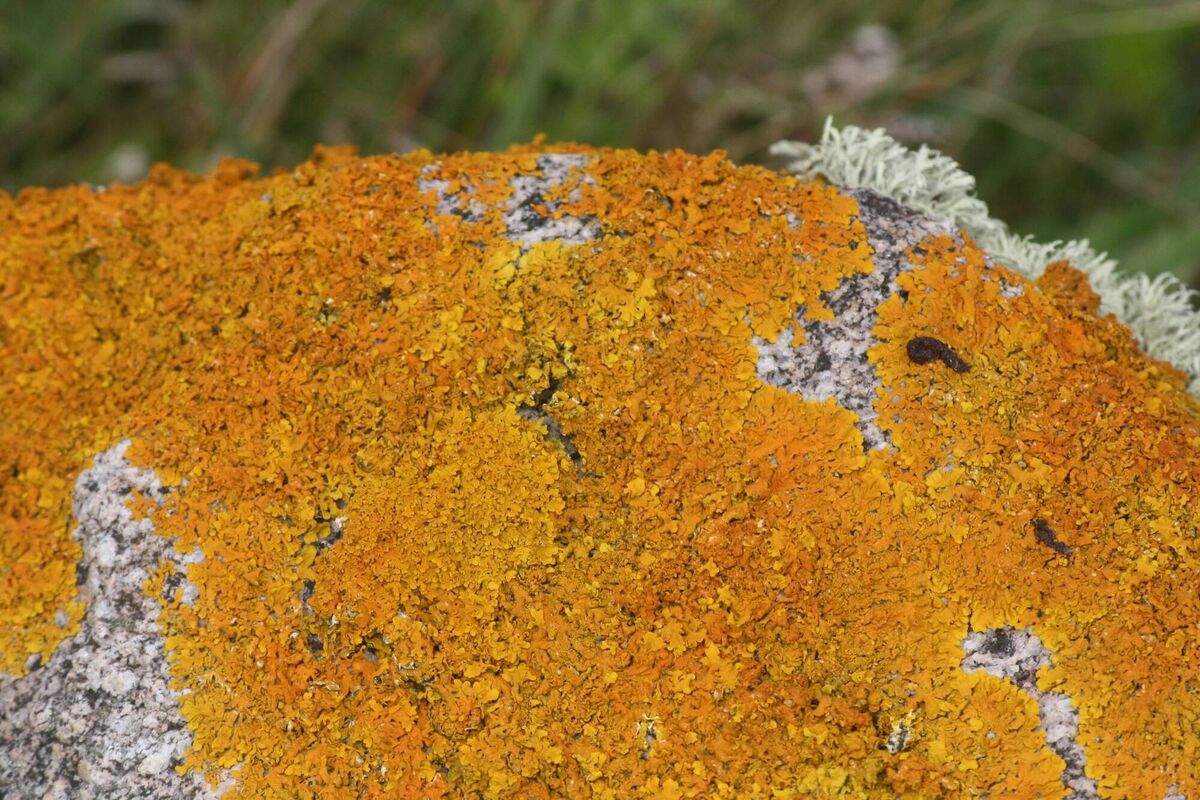
You do not need specialist equipment to find lichens — only time and attention. Old stone walls, roadside trees, coastal rocks and garden fences are often rich with species. Differences in colour, texture and abundance can reveal subtle changes in exposure, pollution and moisture.
Lichens do not respond to yesterday’s weather or last week’s emissions. They reflect long-term conditions, integrating months and years of atmospheric history into slow growth. In an age of instant data and rapid change, they offer something increasingly rare, which is ecological memory.
The next time you notice pale crusts spreading across a wall or delicate patterns clinging to a tree trunk, pause for a moment. You are not looking at neglect or decay, but at one of Earth’s oldest survival strategies, quietly recording the state of the world, one millimetre at a time.

CONNECT WITH US TODAY



Be the first to know the latest news and updates