Birds of Ireland: Hen harrier
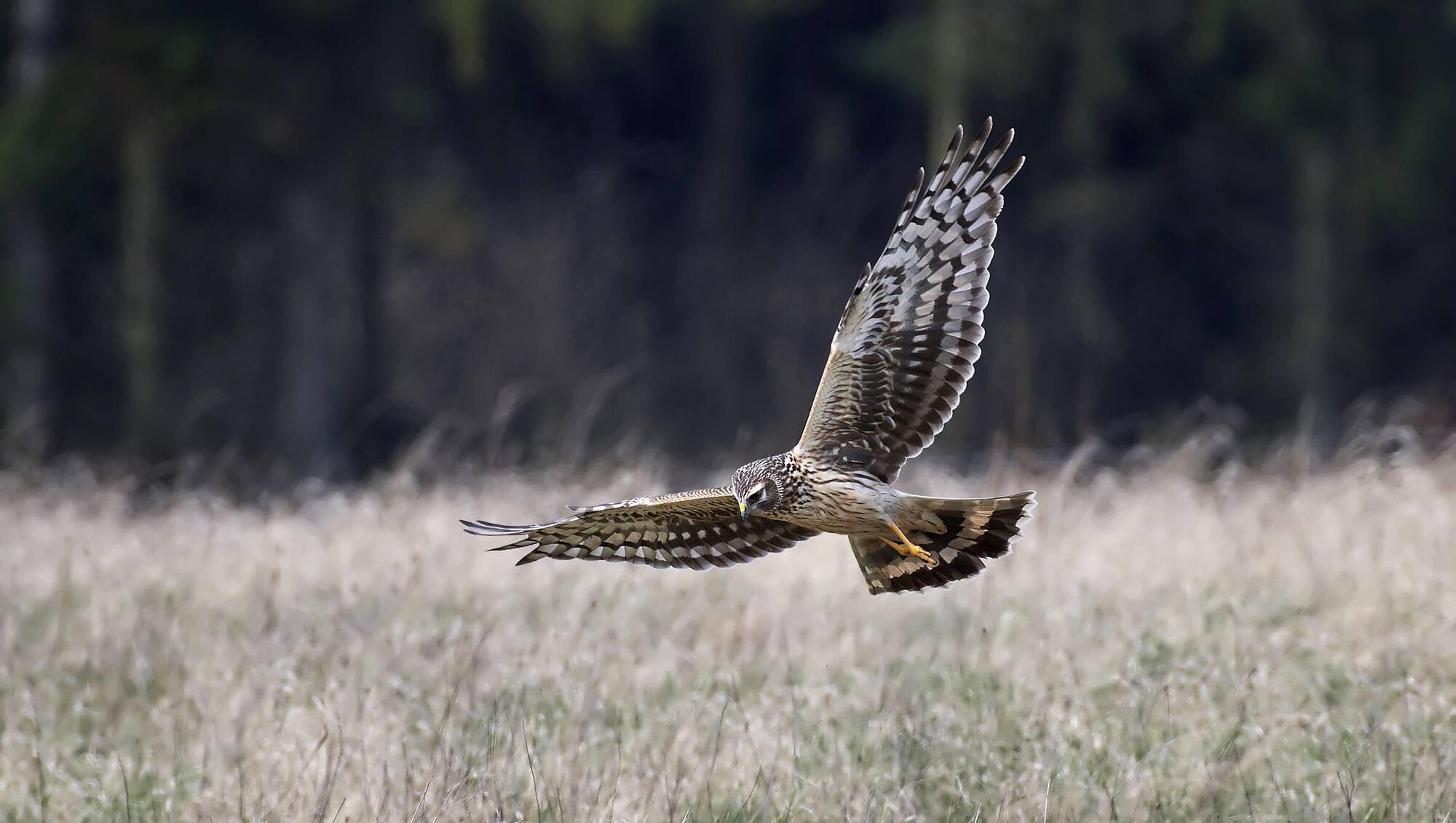
Hen harrier looking for food in its natural habitat
A hen harrier is about 46-50 centimetres long with a wing span of 108-112 centimetres.
They are a scare breeding species — but are becoming a rare breeding species. The ones that are found here are found all year round on uplands, woodlands, and wetland.
A hen harrier is a bit bigger than a rook and they have long, yellow legs, and a stubby hook-tipped beak.
Male hen harriers have a uniform grey body and wings with black outer primaries; they have a white rump patch and a long, grey tail.
Female hen harriers are brown, streaked below and they have a white rump patch and long, barred tail.
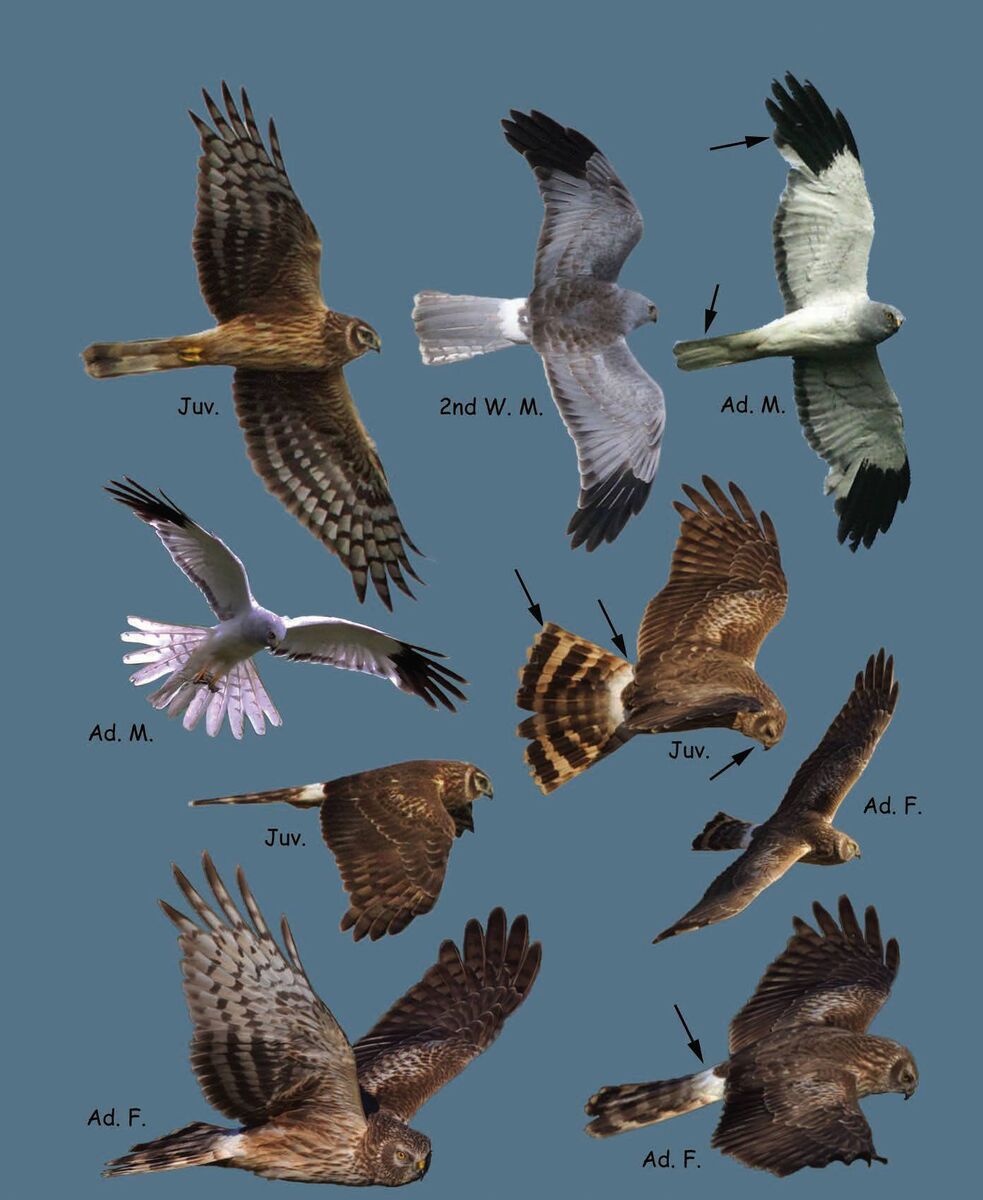
Juvenile and immature hen harriers appear similar to adult females; their irises usually dark; andin flight their dark inner secondaries are visible from below.
A young male in his second year resembles and adult but has brown feathers on the wings.
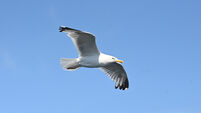
In flight a hen harrier's long, narrow wings and tail, and square white rump patch are visible. They glide a lot with their wings held in a shallow ‘V’.
: birds that are a widespread breeding species in suitable habitat, such as robin, rook, guillemot (at seabird colonies), etc.
: birds that are a breeding species in relatively small numbers in suitable habitat. For example, chough, red grouse, whinchat, lapwing, cuckoo, little egret.
: birds that breed in very small numbers, as few as two or three pairs on the whole island, in suitable habitat. Examples are red-throated diver, corncrake, hen harrier, redstart, wood warbler.
: birds that are not known to breed here, are seasonal and usually come to Ireland outside the breeding season, such as the Brent goose, which arrives here in the autumn after breeding and departs in spring. This category also includes non-breeding birds, such as the whimbrel, which pass through in good numbers on spring or autumn migration. It also includes scarce or rare visitors which do not breed here (as far as we know) such as the Bonaparte’s gull from North America, and cattle egret.
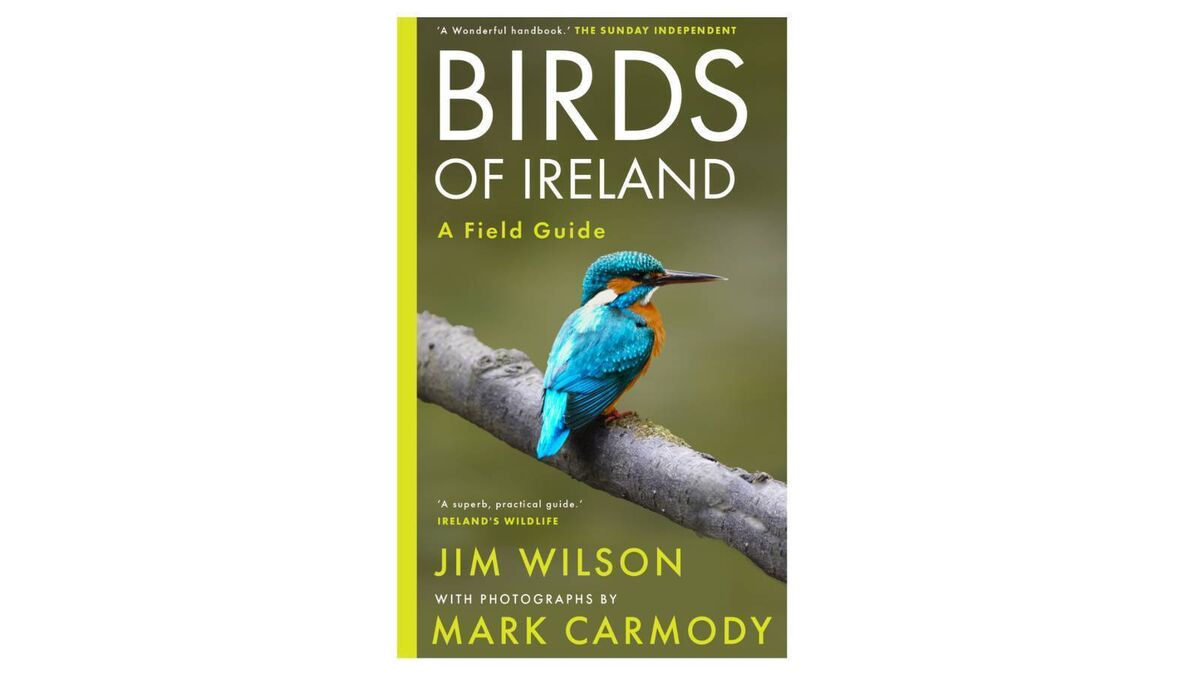
Featured in Birds of Ireland: A Field Guide, (Gill Books) by Jim Wilson, with photographs by Mark Carmody.
- Jim Wilson is a wildlife writer, broadcaster, tour leader, and former chairman of BirdWatch Ireland. He has been involved in the study and conservation of birds in Ireland for more than 45 years, contributing to several major surveys and international projects.
- Mark Carmody is an award-winning wildlife photographer, has a PhD in biochemistry and works as a European patent attorney.
CONNECT WITH US TODAY



Be the first to know the latest news and updates