White storks breeding in Britain but no plans to try introduce them here
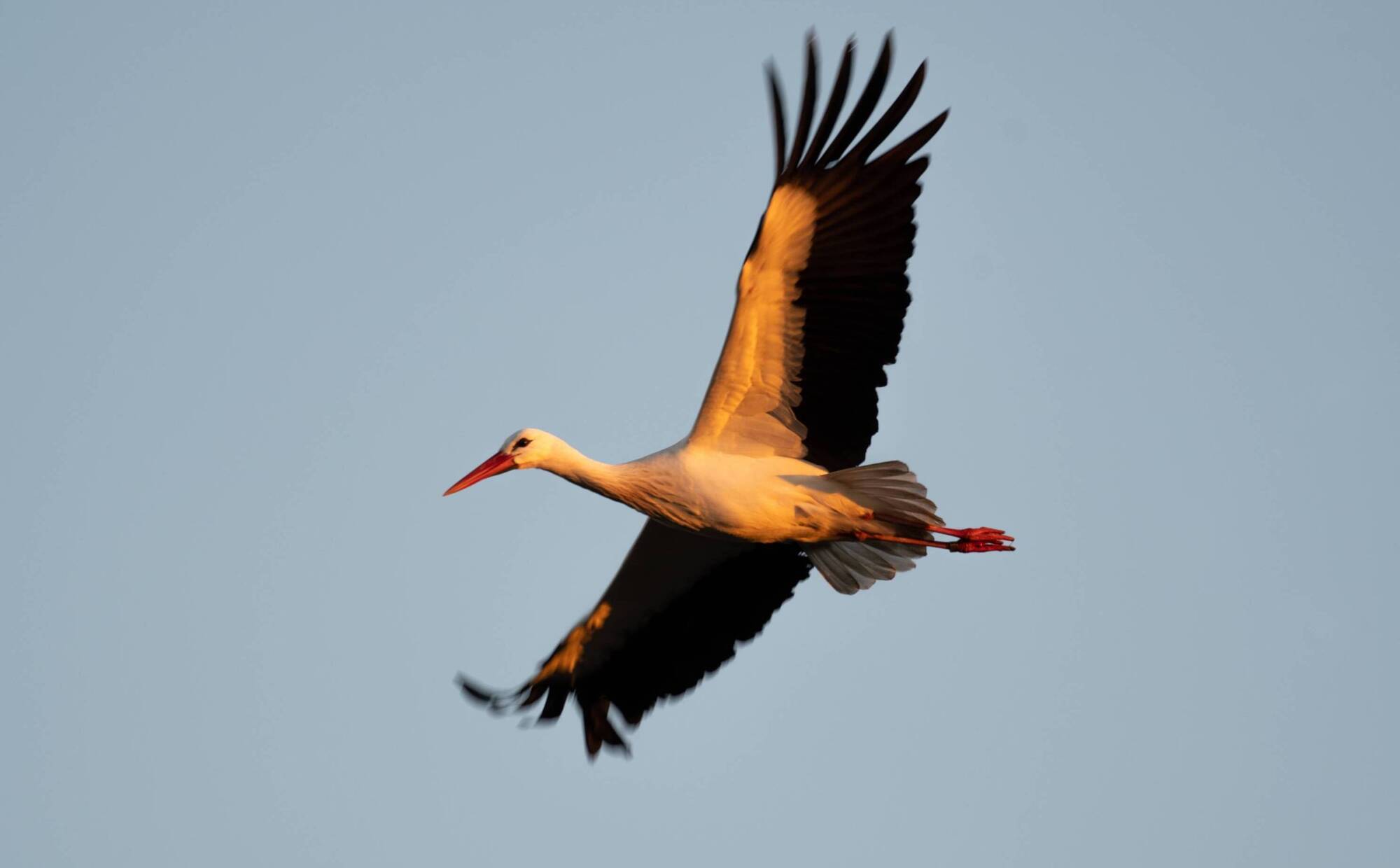
A white stork flying above Knepp estate in West Sussex. A project to reintroduce the birds as a breeding species to England has created wild colonies producing dozens of chicks each year. Picture: Charlie Burrell/Knepp/PA Wire
‘We have watched the storks and the swallows; the summer birds have come and are gone again’ – Giraldus Cambrensis,
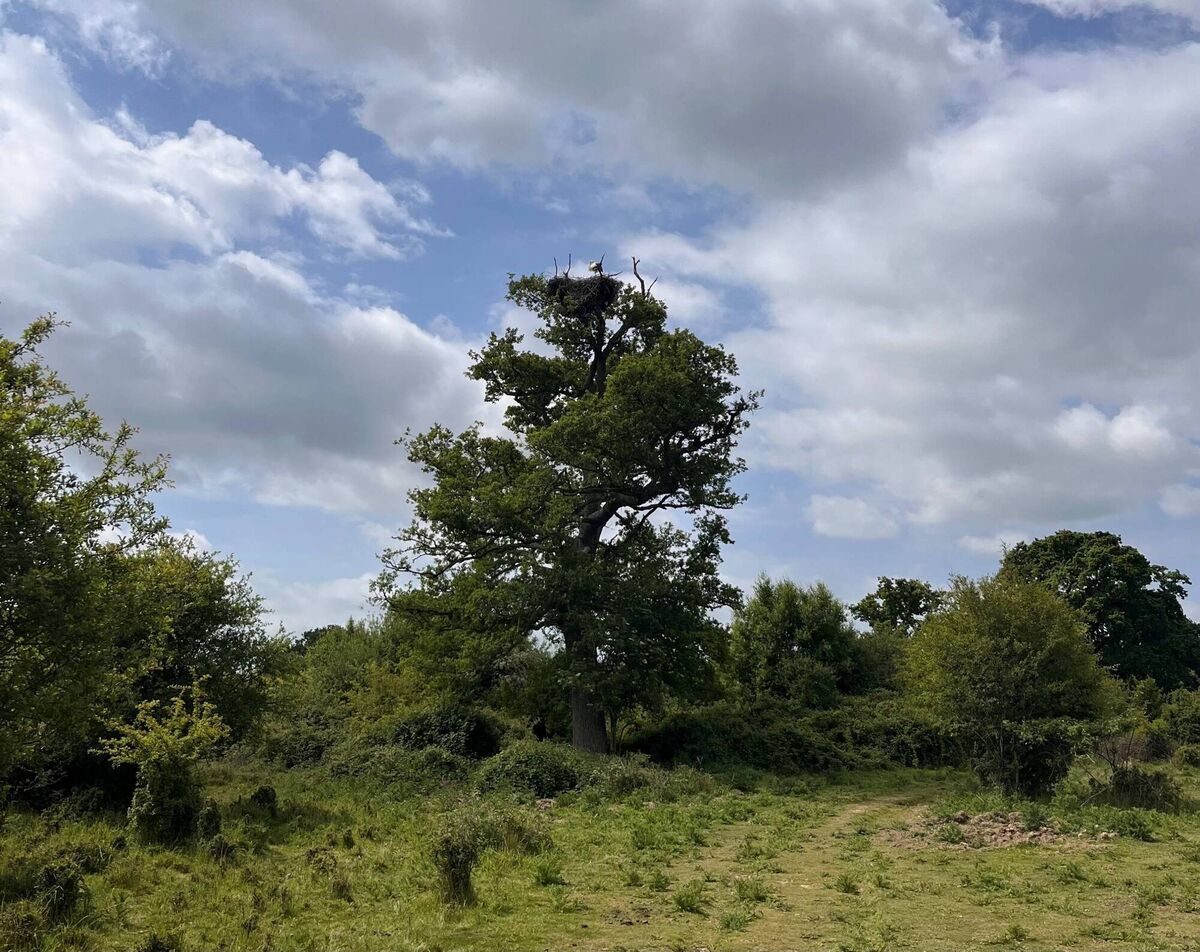
White storks are breeding again in Britain. They had not done so since 1416 when a pair nested in Edinburgh. As part of a ‘rewilding’ project at the 1,400 hectare Knepp Castle Estate in Sussex, rehabilitated storks were imported from Warsaw Zoo. Three pairs nested in 2020 and more than 50 chicks fledged this year.
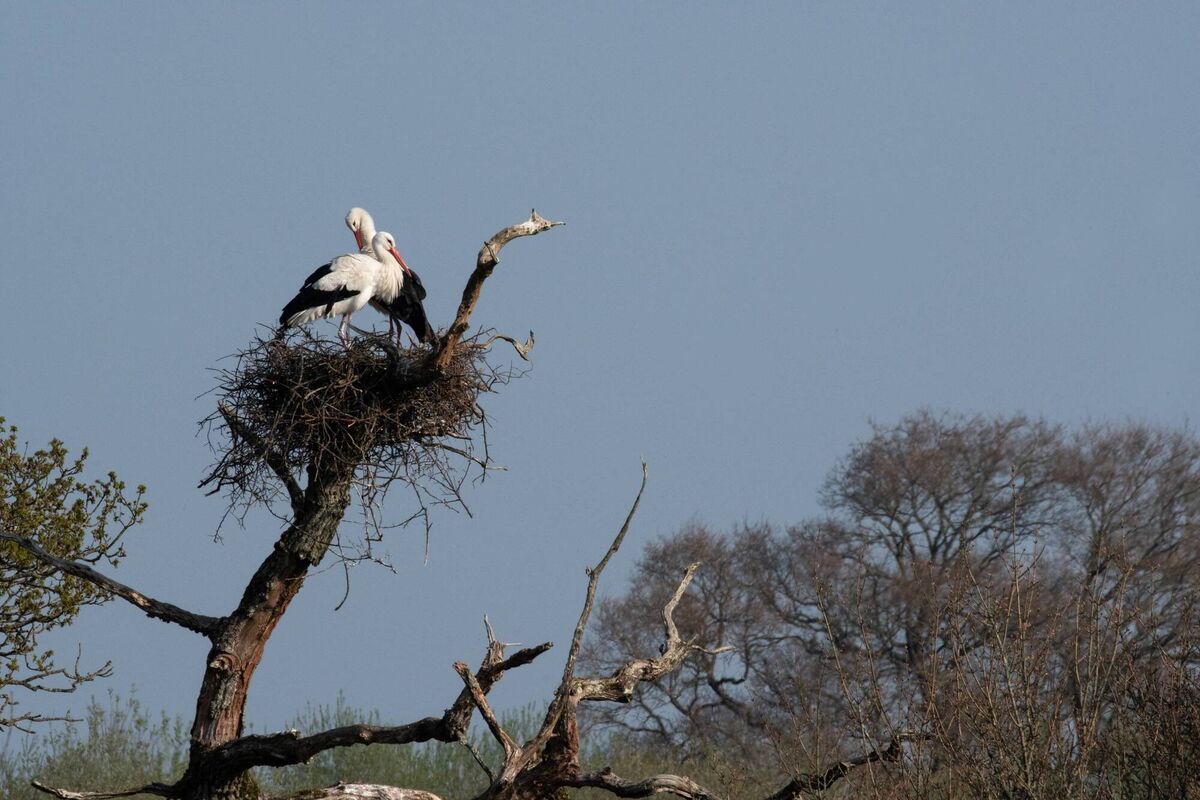
Storks are long-distance migrants, so there were fears that youngsters would get lost when travelling. But this doesn’t seem to be a problem; six juveniles returned to Knepp after visiting Europe. Thanks to funding by the lord mayor, breeding colonies may be established at two London locations in 2026.
Noisy bill-clattering is the stork’s birdsong.
‘Stork’ comes from old German, meaning ‘stick’. Like many large marsh birds, storks will stand on one leg, which then vaguely resembles a stick. Doing do reduces heat loss from the exposed flesh. But ‘stick’ is also slang for ‘penis’ — hence the bird’s role as a midwife.
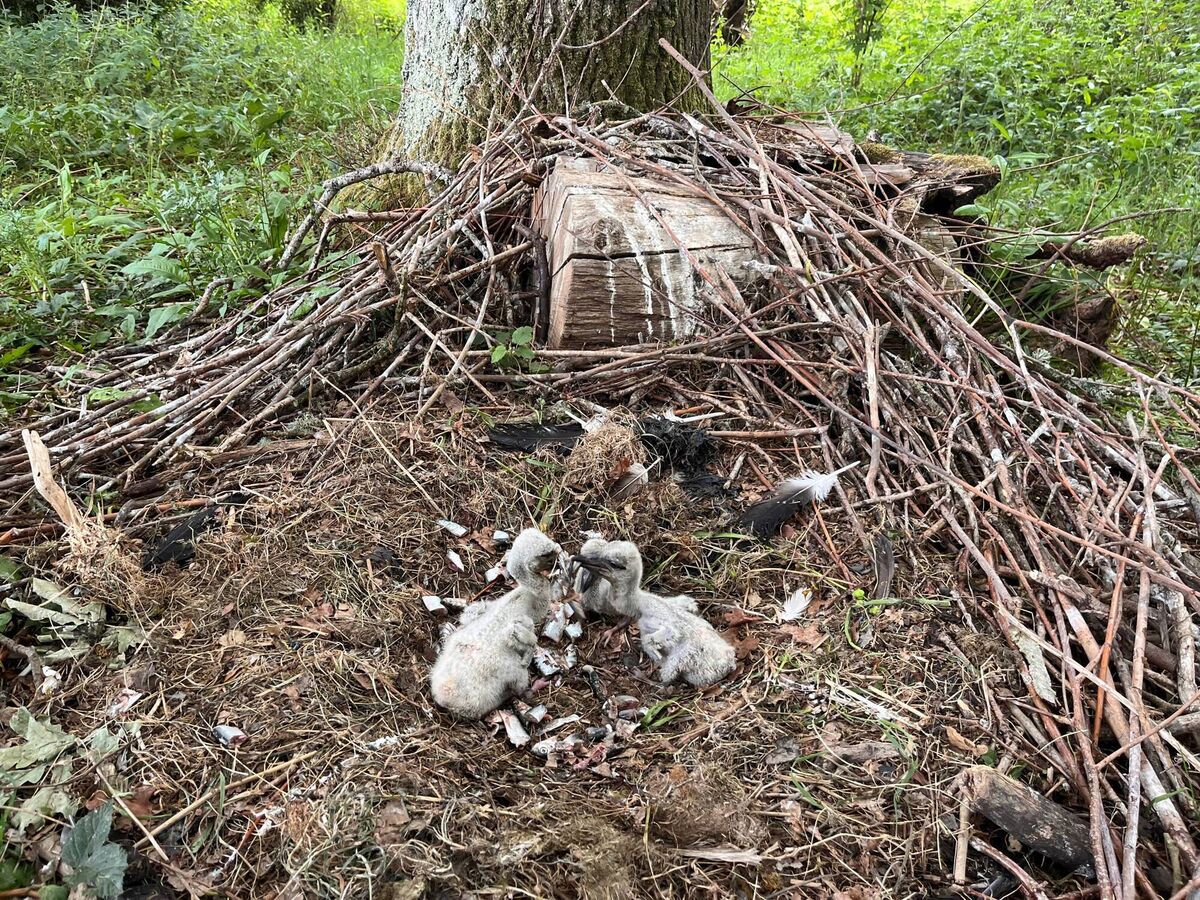
Symbols of birth and renewal, the stork ticks boxes both natural and cultural.
If only we had an excuse to bring some to Ireland! The Knepp project shows what could be done. But there’s a problem; we have are no reliable record of their breeding here. Introducing an alien species, however attractive, would be an ecological cardinal sin.
Storks have nested as far north as Finland where the climate is more severe than Ireland’s. Our damp wet climate and marshy habitats must surely have suited them long ago. Nesting by such noisy creatures seems unlikely to have gone unnoticed, but absence of evidence isn’t evidence of absence.
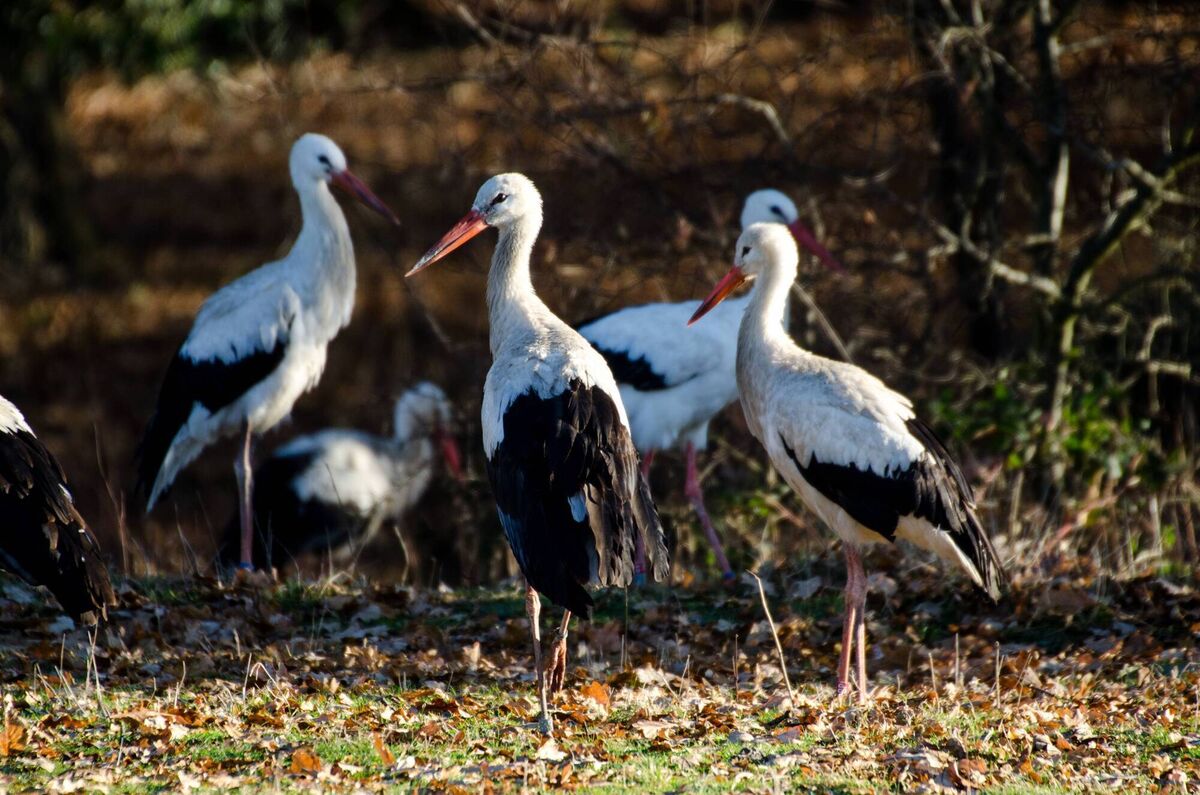
The Norman cleric Gerald of Wales visited Ireland in 1183 and returned with Henry II two years later. In his , he claimed that ‘storks are very rare throughout the island’. But he added that ‘their colour is black’, which seems to rule the species out. The white stork’s black primary feathers might give the bird a black-on-white appearance when resting... or had he mistaken juvenile cormorants for storks?
Giraldus was not strong on zoology. Indeed he deserved a Nobel Prize for gullibility:
— He claimed that cranes keep guard at night standing on one leg with a stone held in the other. Should the bird nod off, the stone would fall on its toe and waken the sleeper.
— A priest, walking in a Kilkenny forest, met a talking wolf to whose dying wife he gave the last rites.
— A Wicklow man’s mother was a cow.
His claim that storks were ‘rare throughout the island’ wouldn’t have impressed the Irish Rare Birds Committee.
But white storks visit Ireland occasionally. The vagabonds tend to be waifs and strays which have lost their way while migrating.
However, one remained on at Ballykelly, County Derry, from May to December 1974. We discovered recently that wild cats were in Ireland. Our mild marshy island would seem to have been a paradise for storks long ago.


CONNECT WITH US TODAY



Be the first to know the latest news and updates