Helping wild Atlantic salmon overcome man-made obstacles
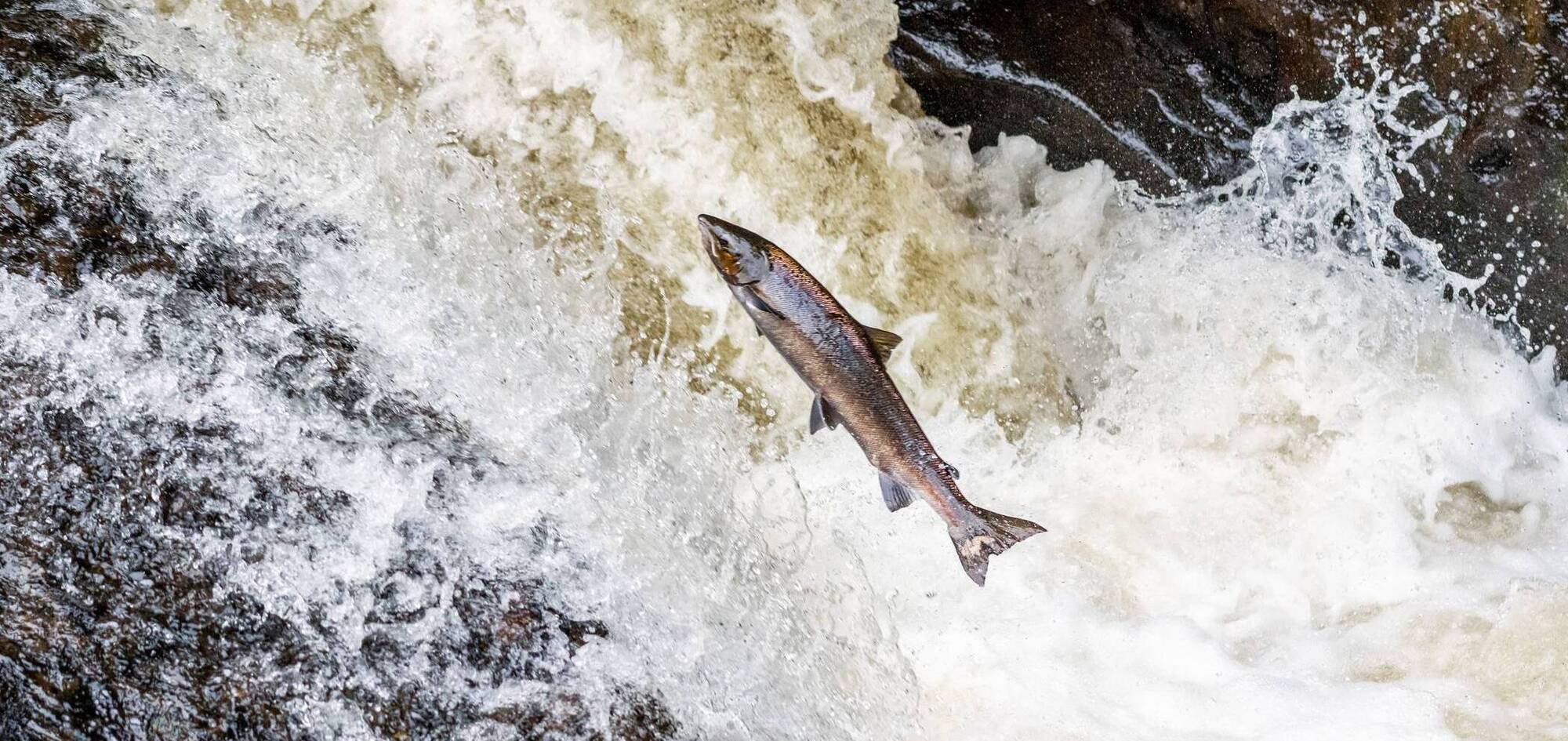
In the days before electricity, barriers of all sizes were important for using a river’s energy to turn mill wheels and power all sorts of machinery. Many of these barriers are still present but most now serve no purpose, other than preventing salmon from making their journeys between the sea and freshwater
Helping wild Atlantic salmon overcome man-made obstacles

Wild Atlantic salmon can travel thousands of kilometres and encounter many hazards along the way before returning to its birth river in Ireland to spawn. Our rivers are heavily fragmented by weirs, dams, sluices, culverts, bridges and other artificial barriers

As if fish hadn’t enough to do to cope with polluted water in rivers, they also have lots of other man-made obstacles to deal with.

Think of the wild Atlantic salmon which can travel thousands of kilometres and encounter many hazards along the way before returning to its birth river in Ireland to spawn.

Our rivers are heavily fragmented by weirs, dams, sluices, culverts, bridges and other artificial barriers. All of which can obstruct fish migration and damage habitat.

Easky Lough Weir, County Sligo — an obstacle to fish passage

There are tens of thousands of such barriers. Most recent statistics from Inland Fisheries Ireland (IFI) show more than 39,000, mainly culverts, but total ‘potential’ barriers could exceed 73,000.

IFI is providing €13.6 million for 103 fish barrier mitigation projects to improve water flow and thereby ease fish passage. The money will help State bodies and local authorities remove these obstacles, or lessen their effects.

Considering the scale of the problem, the programme seems infinitesimal, but it’s a start.

Barry Fox, IFI deputy chief executive, said they were committed to restoring natural connectivity in our rivers. “This is critically important for species such as wild Atlantic salmon, European eel and lamprey,’’ he stated.

“Reopening these natural pathways strengthens ecosystem resilience, boosts native fish populations, and supports the long-term sustainability and productivity of our rivers."

Waterville, County Kerry — platform near bridge posing barrier to fish migration

In the days before electricity, barriers of all sizes were important for using a river’s energy to turn mill wheels and power all sorts of machinery, such as millstones for grinding wheat to make flour, or saws to cut large trees into planks for construction purposes.

Many of these barriers are still present. Most now serve no purpose, other than preventing some of the afore-mentioned fish species from making their journeys between the sea and freshwater.

Building large dams and reservoirs has benefited humans by providing electricity and drinking water supplies. Reclaiming land in estuaries and building large ports allow ships to transport goods all around the globe.

Extensive drainage projects in rivers have helped to improve farmland and increase yields. Drainage, however, has changed the shape of rivers and the amount of water they can carry.

National Barrier Mitigation Programme Dashboard

Furthermore, hydro-electric dams have significantly impacted natural river flow, which affects native fish, while the creation of reservoirs has submerged natural habitats.

While some dams, like those on the Lee, in County Cork, are now operated to mitigate flooding, their construction, in the 1950s, had severe consequences — flooding of land, and the large-scale destruction of ancient oak forest in the Gearagh flood plain, outside Macroom.

Also, fish stocks on the Shannon have been reduced because of barriers to migration and reduced water flow in bypassed sections of the river.

More in this section

Revoiced

Newsletter

Sign up to the best reads of the week from irishexaminer.com selected just for you.

Cookie Policy Privacy Policy Brand Safety FAQ Help Contact Us Terms and Conditions

© Examiner Echo Group Limited