Mine-clearing record for hardworking Ronin the rat
Mine-clearing record for hardworking Ronin the rat

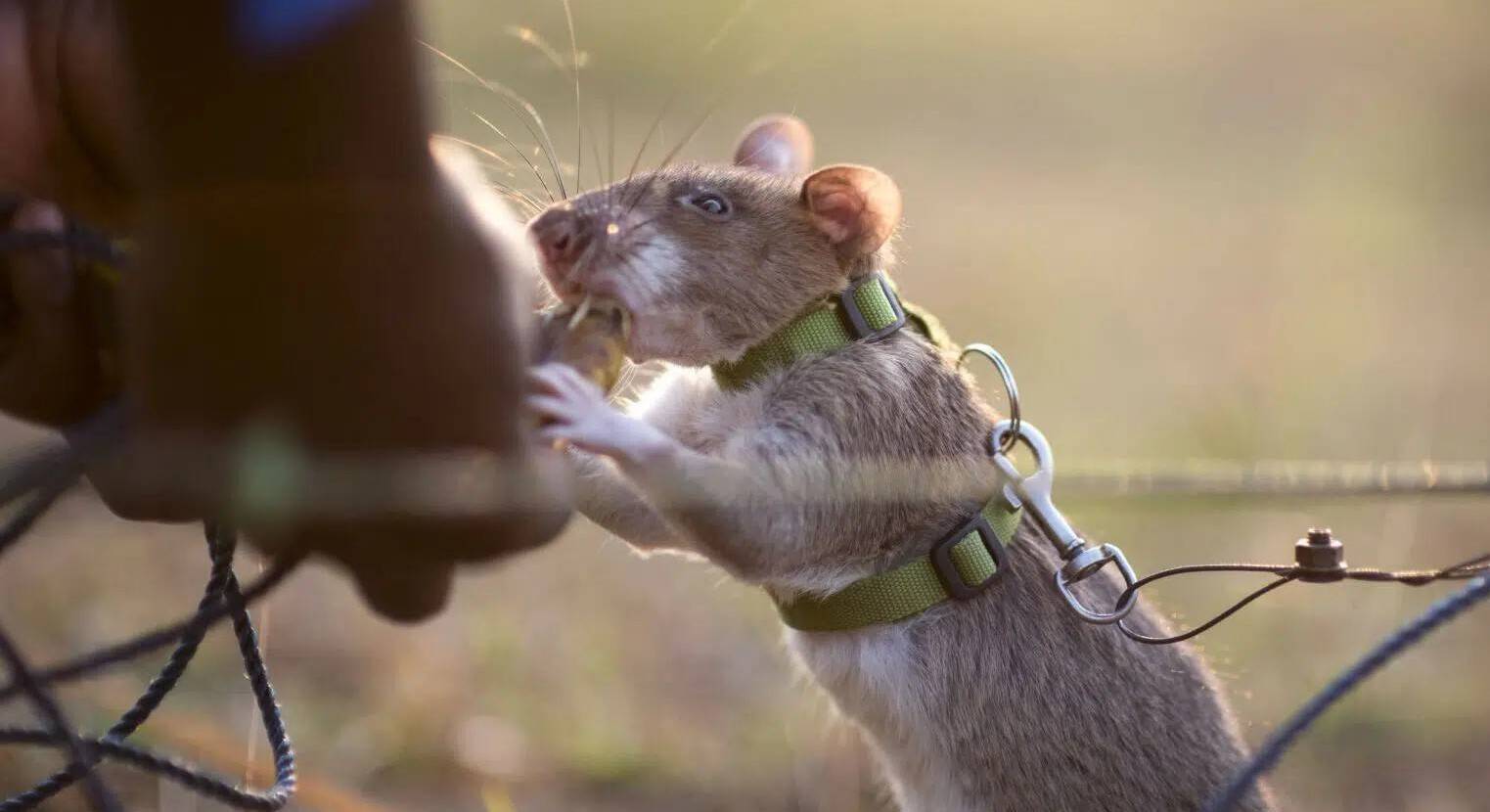
Mine detection rat, Ronin — his favourite food is avocado and he has been described by handlers as 'hardworking, but friendly and relaxed'. Picture: apopo.org

Fate is not an eagle, it creeps like a rat — Elizabeth Bowen

Visiting Cambodia some years ago, I came upon a band of musicians busking at the side of the road. The dozen or so men and women played sad wistful music on a various instruments, both western and local. But this was no ordinary band. All of its members were victims of landmines planted during the two decades-long civil wars of the Pol Pot era. Each musician had lost a limb or had been blinded.

More than 40,000 Cambodians, almost half of them children, had become victims of mines. Naturally inquisitive, youngsters stray off paths and pick up strange objects. Mines are still a threat. According to the Cambodian Mine Action Authority, there were four deaths, 18 injuries, and 10 amputations in 2023.

Landmine clearance is on-going. Britain's Princess Diana, dressed from head to toe in protective clothing, brought the dangers involved in it to world attention. Dogs can be trained to sniff out mines but, being heavy, they risk detonating them; a mine-locating dog is unlikely to die of old age.

Rats have the smelling ability of dogs. They are intelligent and can be trained.

Most importantly, they are light enough not to set off the mines they detect. A rat can scan an area the size of a tennis court in half an hour. It would take a human de-miner, using a conventional metal detector, up to four days to do so. Rats respond to the smell of TNT and are not distracted by harmless metal items in the ground.

APOPO, Anti-personnel Landmines Removal Project, is a charity founded by two Belgians 25 years ago. Dedicated to land-mine clearance, it trains rats to sniff out mines, while working on long leads held by controllers.

A rat named Ronin has just set a new mine-clearing record. Born in Tanzania, he is a graduate of the APOPO training course. Described as "hardworking friendly and relaxed", he has been deployed in Cambodia’s Preah Vihear province since 2021. To date, he has sniffed out more than 100 mines and other hidden explosives, preventing death and horrible injuries to people.

Ronin may look like one of our own brown rats albeit suffering from extreme obesity... but he’s not a close relative. He’s a ‘Gambian pouched rat’, native to sub-Saharan Africa. Among the world’s largest ‘muroid’ rodents, individual pouched rats can weigh up to 1.5kg, three times that of their brown distant cousins.

Mine detection rat, Ronin, born, on August 13, 2019.  In Preah Vihear, Cambodia. Picture: apopo.org

Large cheek pouches give the species its name; these biological 'Dunnes Stores shopping bags' enable nuts to be gathered, transported, and cached. An acute sense of smell compensates for poor eyesight.

Prolific breeders, from the age of six months a female can produce four litters of up to six kittens a year. Although males are territorial, pouched rats live in colonies. Being sociable, they make good pets and can be trained easily.

Pouched rats, introduced to the US as ‘companion animals’, have escaped to the wild. The species is deemed to be ‘invasive’ in Florida and its importation is banned.

‘Smelling a rat’, ‘ratting’ on someone, the ‘rat race’, ‘fleeing the sinking ship’, the Plague, the Pied Piper of Hamelin etc — it’s good to have something positive to say about rats for a change.

x

More in this section

Revoiced

Newsletter

Had a busy week? Sign up for some of the best reads from the week gone by. Selected just for you.

Cookie Policy Privacy Policy Brand Safety FAQ Help Contact Us Terms and Conditions

© Examiner Echo Group Limited