Have you seen a stoat? Help researchers fill gaps in the Irish stoat story

Irish stoat. Picture: Dermot Breen / Vincent Wildlife Trust
Launched in February 2023, the Irish Stoat Citizen Science Survey is a two-year project that aims to uncover insights into its current distribution and establish baseline data to guide future research. With the help of citizen scientists, researchers can better understand and protect this charismatic species.
The project is led by Vincent Wildlife Trust (VWT) in collaboration with the National Biodiversity Data Centre, the University of Galway, and the Centre for Environmental Data and Recording. VWT is a wildlife charity focused on conserving British and Irish mammals, with its work in Ireland supported by funding from the Irish Environmental Network, National Parks and Wildlife Service and the Heritage Council.
The Irish stoat, a legally protected animal, remains one of Ireland’s lesser-known species. Its small size, speed, and elusive behaviour make it notoriously difficult to monitor. Unlike its relatives, which include otters and pine martens, stoats leave few obvious field signs such as footprints, fur or scats (carnivore droppings), which makes it harder to study.
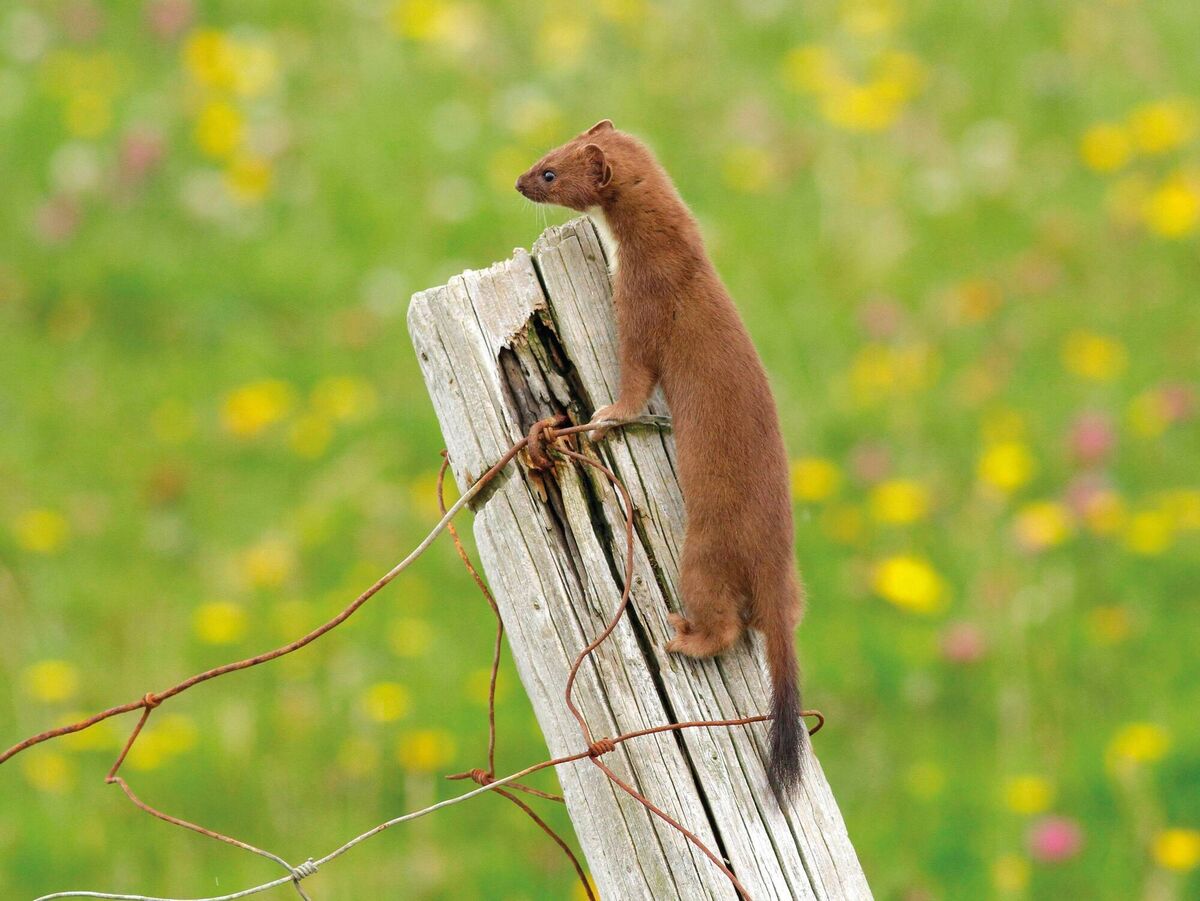
Keen to know more about these lively little mammals? Here are answers to some of the most frequently asked questions Vincent Wildlife Trust receives about stoats...
Stoats are often confused with other small carnivores in Ireland, including ferrets, American mink and the pine marten. Although similar in some ways, you could say ‘stoats are ‘stoatally’ different! All four species share the same long, thin body shape and short legs, but stoats differ in their much smaller size (far smaller than a cat), chestnut brown coat with creamy white underside, and the very distinctive black tip to their tail.
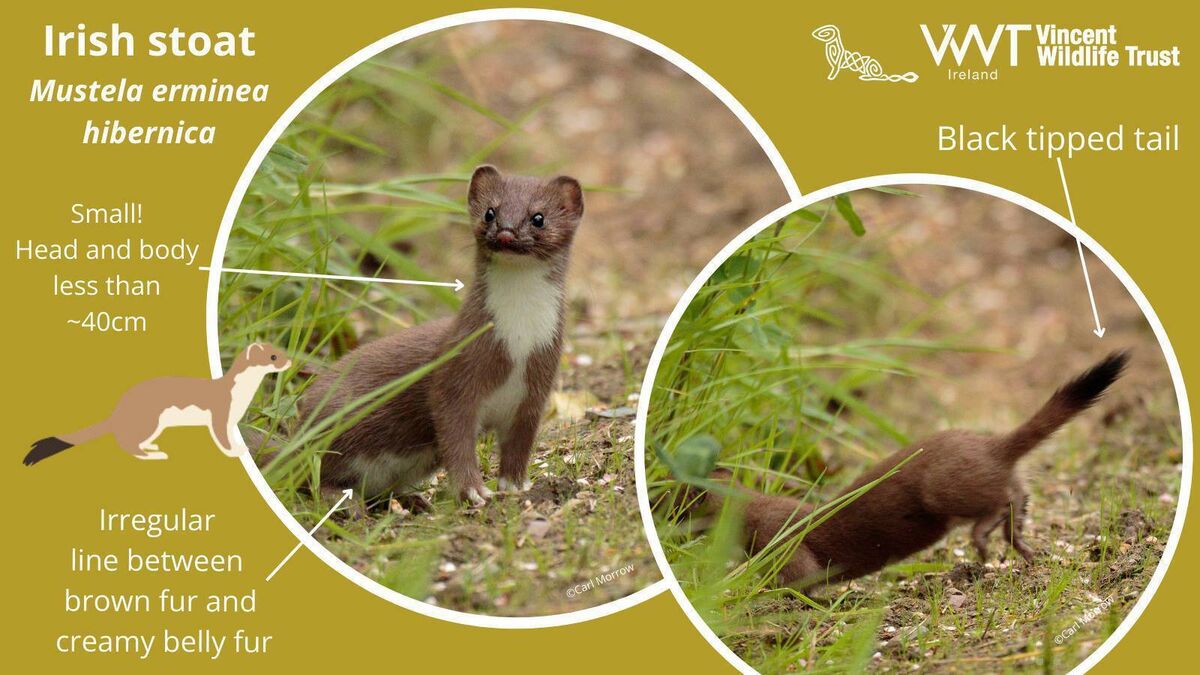
The black-tipped tail is the stoat's most distinctive feature, but it's not there just to look good. In an experiment conducted by Roger Powell using captive hawks and model stoats, it was observed that the models with black-tipped tails were less likely to be successfully targeted by the hawks compared to those with black spots in other areas or no black markings. This suggests that the black tip on the tail may draw away a predator’s attention from more vulnerable areas like the head and neck.
The Irish stoat, Mustela erminea hibernica, is a unique subspecies only found on the islands of Ireland and the Isle of Man. It differs physically and genetically from stoats found in Britain and Europe — the Irish stoat tends to be smaller, it doesn’t turn white in the winter, and the line dividing the chestnut-coloured upper fur and the creamy-coloured fur on its belly is usually irregular.
Fossil bones of the animal have been found in two caves in County Cork, with one set dating back between 27,000 and 35,000 years and a second set around 10,680 years ago. There is compelling evidence that the species survived the last Ice Age under the snow, making it one of our oldest mammal inhabitants, along with the Irish hare.
Stoats thrive in many habitats but are often seen darting across roads to dive into stone walls or hedgerows, which offer protection from predators. They’re active all year round, day and night, though colder days may keep them underground.
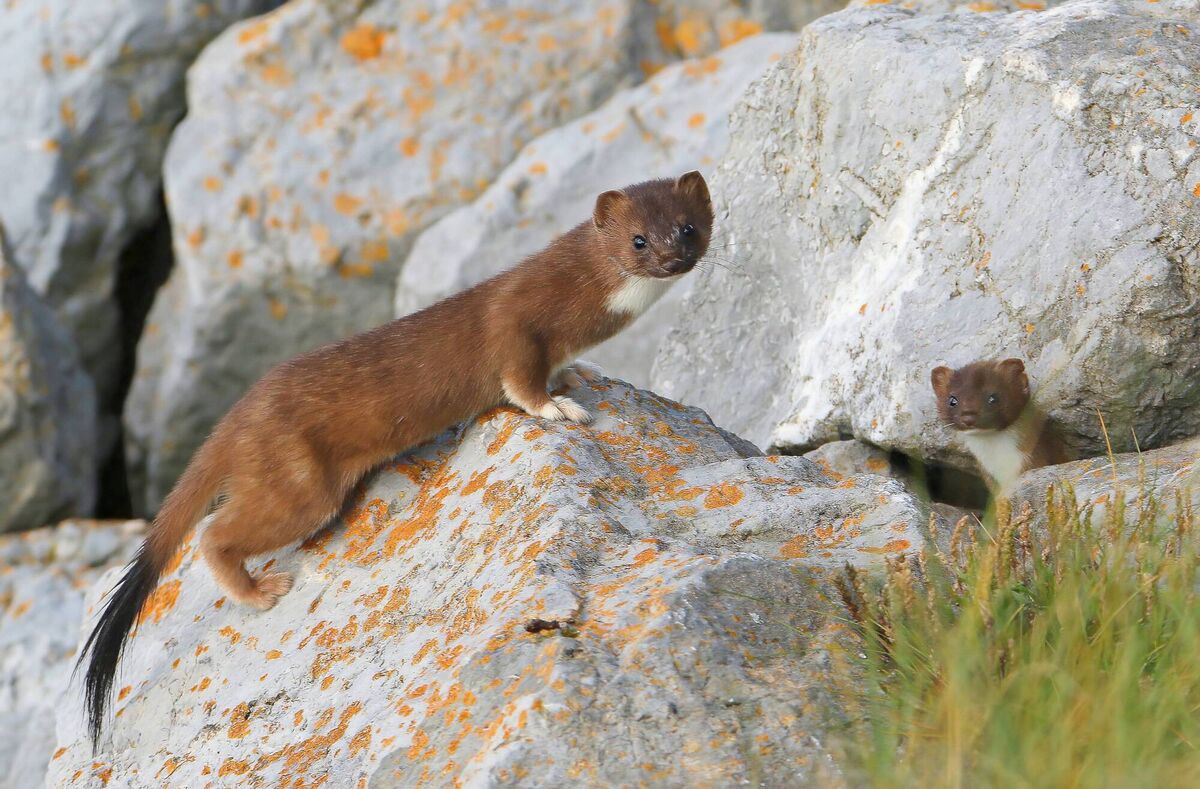
Stoats are carnivorous and opportunistic hunters. They feed primarily on small mammals such as rabbits, rats, mice, voles and shrews. They also eat fish, birds, eggs and occasionally insects. Despite their small size, stoats are fearless predators and can take down prey much larger than themselves, such as rabbits, by targeting the neck with one lethal bite.
From chasing down prey to playing house guest, check out these fab videos sent into the Irish Stoat Survey!
— IrishStoatSurvey (@IrishStoatSurv) December 13, 2024
Do you have a stoat video to share? We’d love to see more.
Seen an Irish stoat? Submit your sighting below.
RoI: https://t.co/rFlJgVtaXl
NI: https://t.co/DrCyUUsPro pic.twitter.com/RDYV8ODsY2
Stoats pose no significant danger to humans and pets like cats and dogs. Their natural behaviour is to avoid contact with people and much larger animals such as cats and dogs. However, stoats can prey on birds such as chickens and take their eggs if given the opportunity. Making sure chicken enclosures are well maintained and free of gaps will prevent stoats from getting in.
Stoats are frequent victims of road traffic collisions, and their numbers may also be affected by habitat loss and changes in land use.
Irish stoats are often called weasels. However, weasels are not present in Ireland. If you visit Britain or mainland Europe, where both species are present, the main differences are size (stoats are larger) and weasels don’t have a black tip to the tail. But, confusingly, stoats, pine martens, mink, otters and badgers all belong to the Family Mustelidae, which is also known as the weasel family!
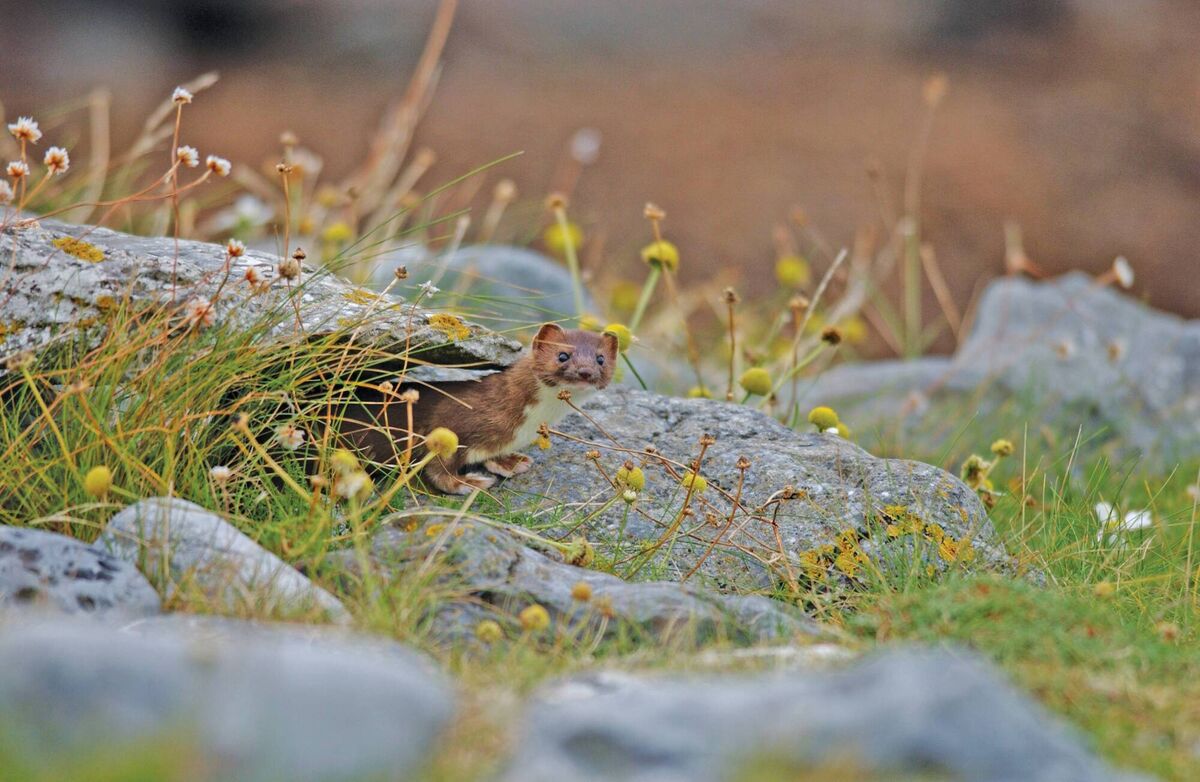
A common question is why mink, another small mustelid, can be trapped and killed, while stoats are protected. American mink were introduced to Ireland for fur farming but escaped into the wild, where they now cause significant harm to bird populations and other small animals. Stoats, by contrast, are native to Ireland and so have an important role to play in regulating other wildlife and helping to maintain a balanced ecosystem.
Your sightings are invaluable — and by participating in the Irish Stoat Citizen Science Survey, you’ll help fill critical knowledge gaps.
To stay updated on the survey, visit vincentwildlife.ie or follow our social media:
- Facebook: Irish Stoat Survey
- X: @IrishStoatSurv
- Want to dive deeper? Check out this new publication from The New Naturalist Library — by Jenny MacPherson, Vincent Wildlife Trust’s principal scientist.

CONNECT WITH US TODAY



Be the first to know the latest news and updates