Richard Collins: Hand-reared songbirds learn the songs they need to survive
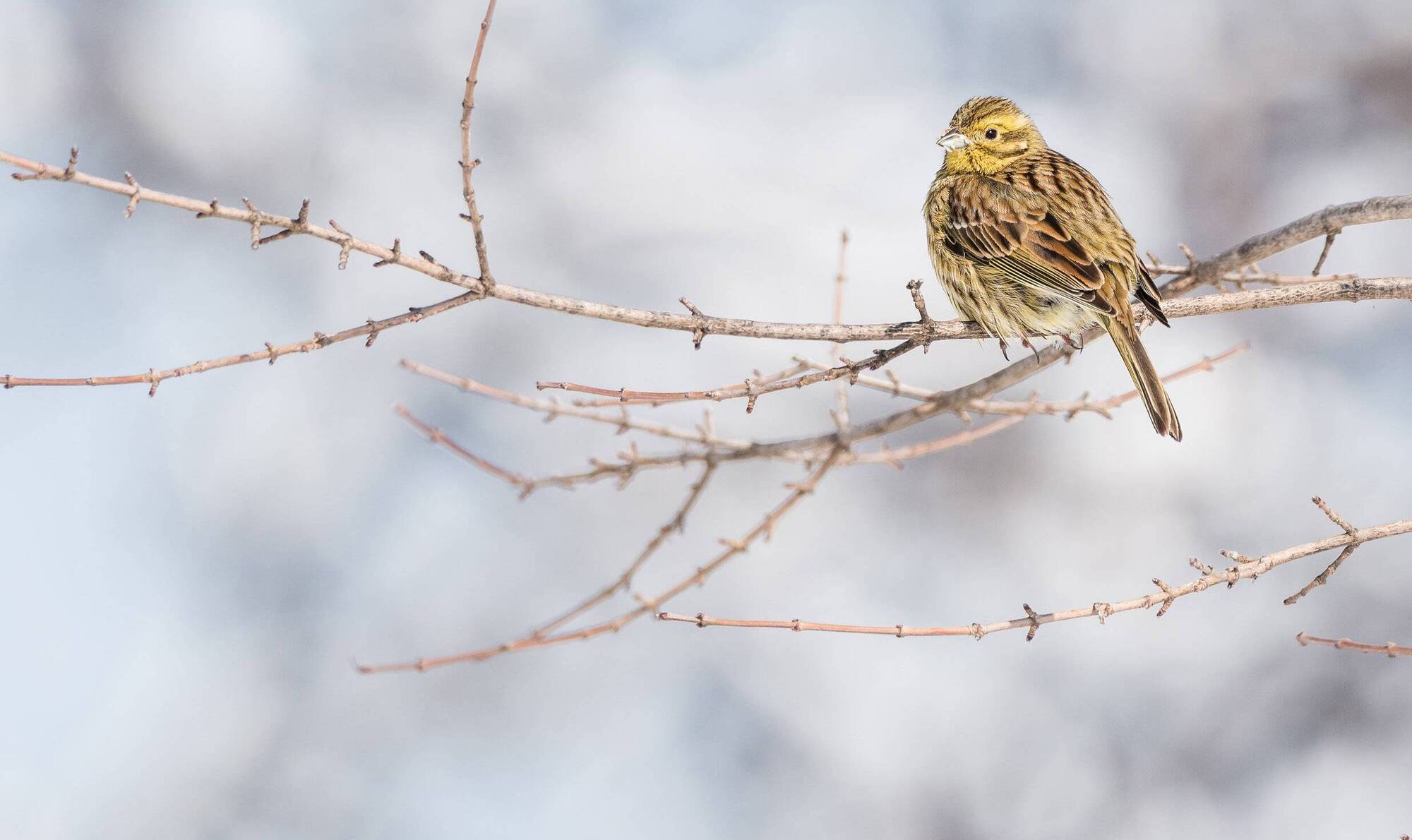
Cirl bunting (Emberiza cirlus) Conservation status:Red. Picture: RSPB
Wrong-way Corrigan, an American pilot of Irish descent, was refused permission to fly solo from the US to Ireland. But he did so anyway, claiming that, due to an instrument malfunction, he had taken a wrong turn. Douglas Corrigan landed at Baldonnel on July 28, 1938 after a 28-hour flight.
On May 8, 2006, an avian kindred spirit turned up at Mizen Head. Slightly smaller than a yellowhammer and not as colourful, the visitor was identified as a cirl bunting — a species never recorded previously in Ireland. The bird’s arrival here might seem unremarkable but this species hardly ever migrates, although flocks of buntings roam the countryside visiting local stubble fields, and a ringed one flew from Belgium to the south of France.
Male Cirl Bunting very vocal this morning. Spring is coming. @WarrenBirding @DevonWildlife @SEDwildlife @DevonBirds @WildlifeMag @WillifeMag @WarrenBirding #cirlbuntung #devon #BirdTwitter #BirdsSeenIn2024 #dawlish pic.twitter.com/rwi9SibskW
— Tim Ridgeway (@TimTim292) February 18, 2024
The cirl bunting is less glamorous than its cousin the yellowhammer. Shy and retiring, its plumage is a discrete mixture of brown, black, and yellow. These little seed-eaters breed in southern Europe Morocco and Algeria. Up to the 1930s, they were relatively common in England and Wales. Then a decline set in. Nowadays, only about a thousand pairs of these ‘French yellowhammers’ nest in Britain, all in the Jurassic Coast region of the West Country. It’s the most northerly population of the species.
In an effort to halt the relentless decline, the Royal Society for the Protection of Birds began a ‘translocation’ project in 2006. Buntings do not do well in captivity so, each year up to 2011, six-day-old chicks were removed from nests in Devon. The youngsters were hand-reared until about 28 days of age, then released on the Roseland Peninsula, south of Truro, in Cornwall.
The project led to an interesting finding, details of which have just been published.
No foreigner, it’s sometimes said, can fully master German. Human immigrants invariably retain traces of their original accents. Songbirds generally learn their songs and calls from adults as nestlings and fledglings. The translocated birds had heard only the bunting recordings of a single CD played to them. Lacking normal education, would they be able to communicate well enough to mate and defend territories?
The organisers need not have worried; the translocated population grew from nine pairs in 2007 to 52 in 2015.

Researchers recorded bunting songs of both the host population in Devon and the translocated one in 2011 and 2019. Males begin singing, as normal, from song posts at around 8am. Each vocalist was recorded at least twice to determine the extent of his repertoire. Spectrograph analysis enabled the ranges and numbers of different song types in the source and introduced populations to be compared.
Fewer song types were recorded at Roseland in 2011 and there were abnormal ones. By 2019, however, the song types had become typical and corresponded to those of the original population. According to lead author Sarah Collins "this is ultimately a positive conservation story". But she warned that the results "cannot be guaranteed to occur in all song-learning birds" and that "the song development of a species needs to be considered in translocation projects and that could include playing typical songs to young chicks before they are released in the wild".