Islands of Ireland: Semi-ruined Carrigafoyle Castle surveys Carrig Island and beyond
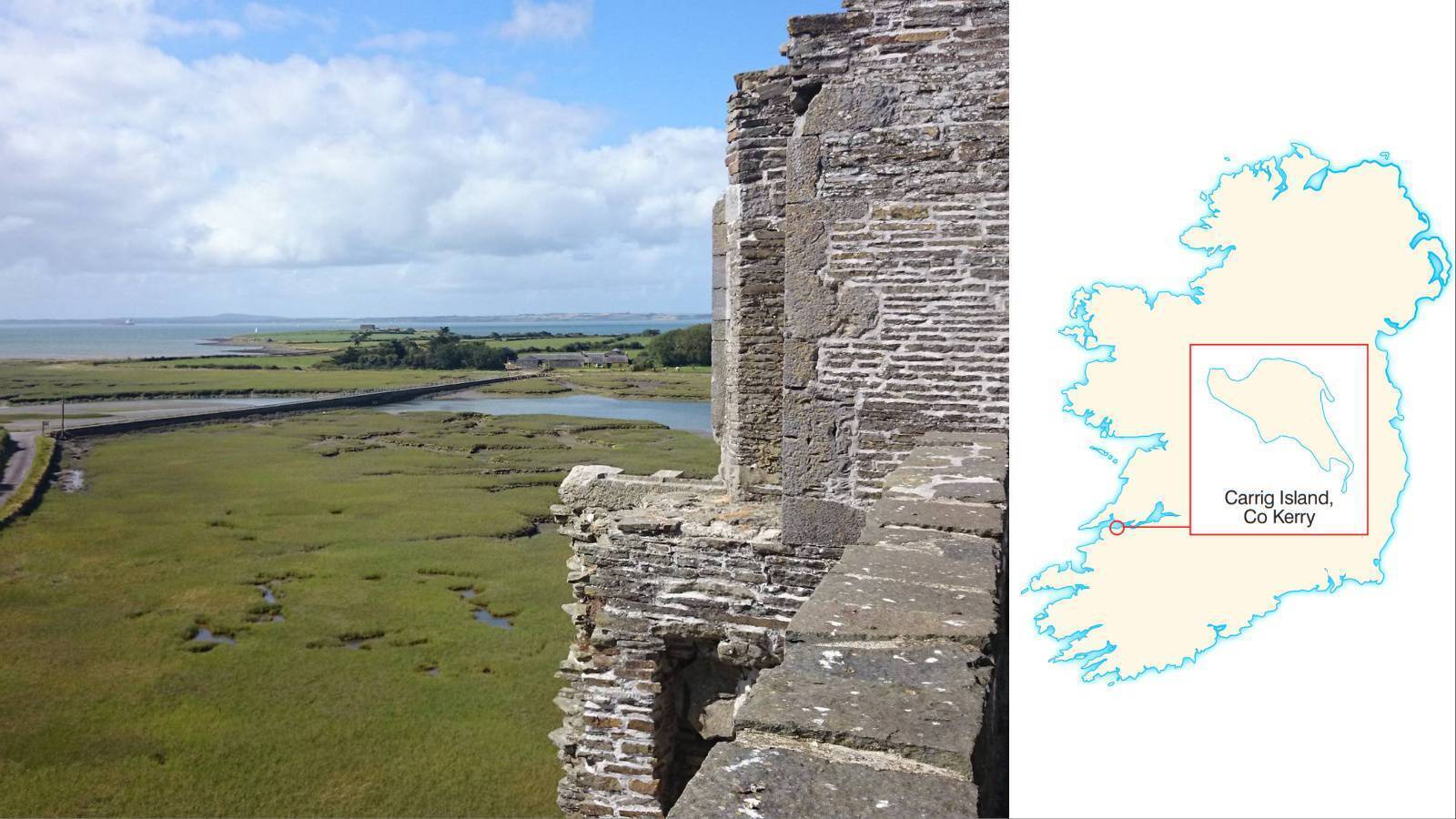
Islands of Ireland: Carrig Island with Carrigafoyle Castle, County Kerry. Picture: Dan MacCarthy
The north Kerry coastline from Kerry Head heading east to the Shannon Estuary is bereft of islands save for the sizeable Carrig Island. However, some may dispute it is an island at all as it is joined to the mainland by a causeway. Of course, prior to the construction of that link it was clearly an island and had several human settlements which inform its character today. Only the purists would argue that Carrig’s county neighbour, Valentia Island, is not an island.
A little further east, is the town of Tarbert from where ferries come and go across the Shannon to Killimer in County Clare. Across the estuary from Carrig Island are the County Clare duo of Scattery and Hog.
Today, the 245-acre island is dominated by farmland. Pre-Famine, the island supported more than 100 people — now though it is just a handful.
It has one magnificent associated standout feature: Carrigafoyle Castle stands in semi-ruins at the causeway. The formidable tower house was built around 1490 by Cornelius O’Connor Kerry. Its position at the start of the estuary was no coincidence as it allowed the clan to control all maritime trade up to Limerick, in the same way as the O’Driscoll clan ruled the seas of Roaringwater Bay in West Cork in the 16th century.
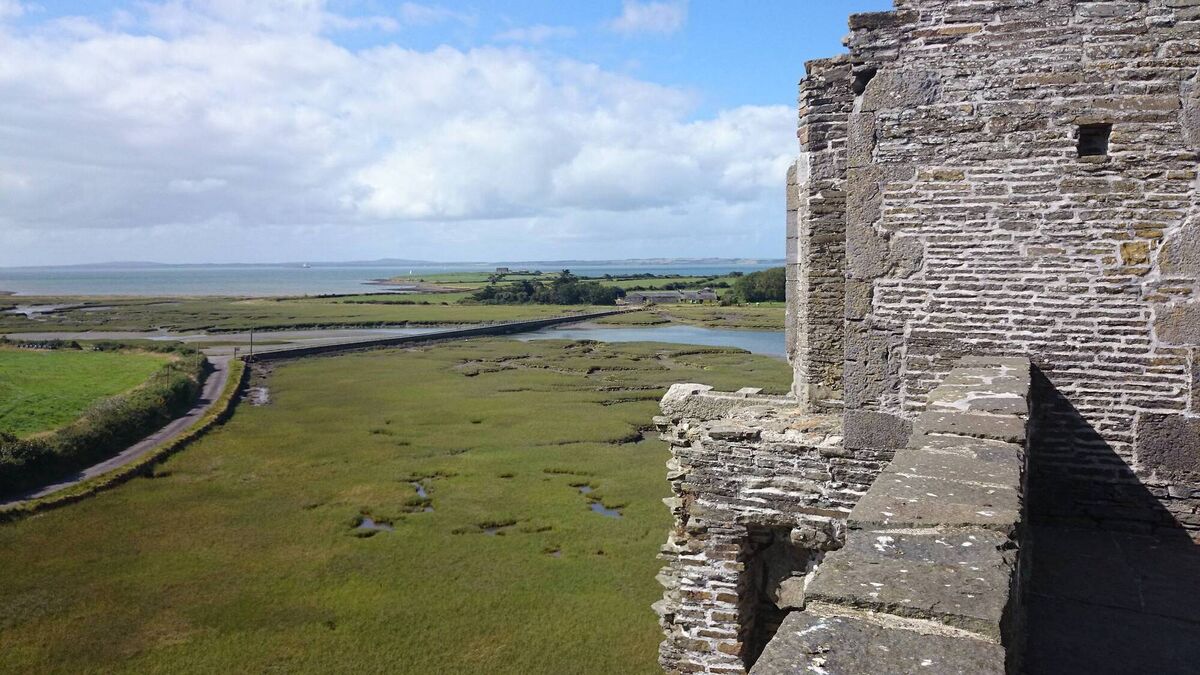
The castle was the site of an infamous siege in the second Desmond Rebellion in 1580 when the garrison of Gerald Fitzgerald, along with a group of Spanish soldiers deployed to Ireland as part of the papal force the year before, was besieged by the English army under William Pelham. A bombardment over two days killed almost all the occupants with just a few escaping.
The hinterland of Carrig Island includes the village of Ballylongford whose famous son, the poet Brendan Kennelly, wrote several poems about the island, or inferring it. A verse of his is even represented on a wrought-iron gate there. In his 1977 poem, ‘Islandman’, he evokes the lives of the castle’s occupants:
“When I stand in the ruined castle I hear again the banquet clatter Laughter of women and men Dying out over the Shannon That covers the mud Grey veil over the face of a disappointed god.”
Carrigafoyle Castle, Ballyford, County Kerry (Ireland) reconstruction. Site reminds me of Archibald 'The Grim's' Keep of Threave Castle in Scotland. #CarrigafoyleCastle #IrishCastles #HistoryRebuilt pic.twitter.com/IXNLVBwIPe
— Andrew Spratt (@andrewsp2009) November 25, 2023
There are also the remains of a monastic settlement which should come as no surprise considering the prevalence of such sites up and down the west coast. Just 3km to the north, Scattery had connections to Carrig Island when St Senan had established his sixth-century monastery. This was built in the centre of the once-wooded island and was well hidden from prying eyes.
On the east of the island is St Senan’s Way which according to folklore had it: “In the time that St Seanan lived in Scattery Island, he ordered that a road should be made all the way from where he was which was Scattery Island to Carrig Island. The road was started in Carrig Island but it is not known whether it was then when the saint ordered it or later on it was started. The road goes out about one mile and a half and can be seen to the present day.”
On the west of the island is Corran Point Battery which was a coastguard station from 1837. The battery dates from the Napoleonic era when in addition to around 50 Martello watchtowers built around the coast (Dalkey Island and Shenick Island, County Dublin; Garinish and Bere Island, County Cork) to watch for a French invasion force, 10 quadrangular towers were built.
“Six of these quadrangular towers were constructed along the shores of the Shannon Estuary below Limerick: Tarbert and Carrig Island on the south shore and Kilcredaun, Doonaha, Scattery Island and Kilkerrin on the north shore,” according to the Kilkee Heritage Group.
The formidable structure was never utilised for the purpose, of course. There is a very pleasant walk from the causeway to the battery. There, you can hear the echo of Kennelly’s lines, themselves an echo: “Listen, the island is not dead/ Although debris drifts in/ Like bits of lost mythologies.”
: 2km north of Ballylongford, County Kerry.
: Brendan Kennelly, Selected Poems, Kerrymount;


CONNECT WITH US TODAY



Be the first to know the latest news and updates