Anja Murray: Grasshoppers and crickets add to the sounds of summer — here's what their noises mean
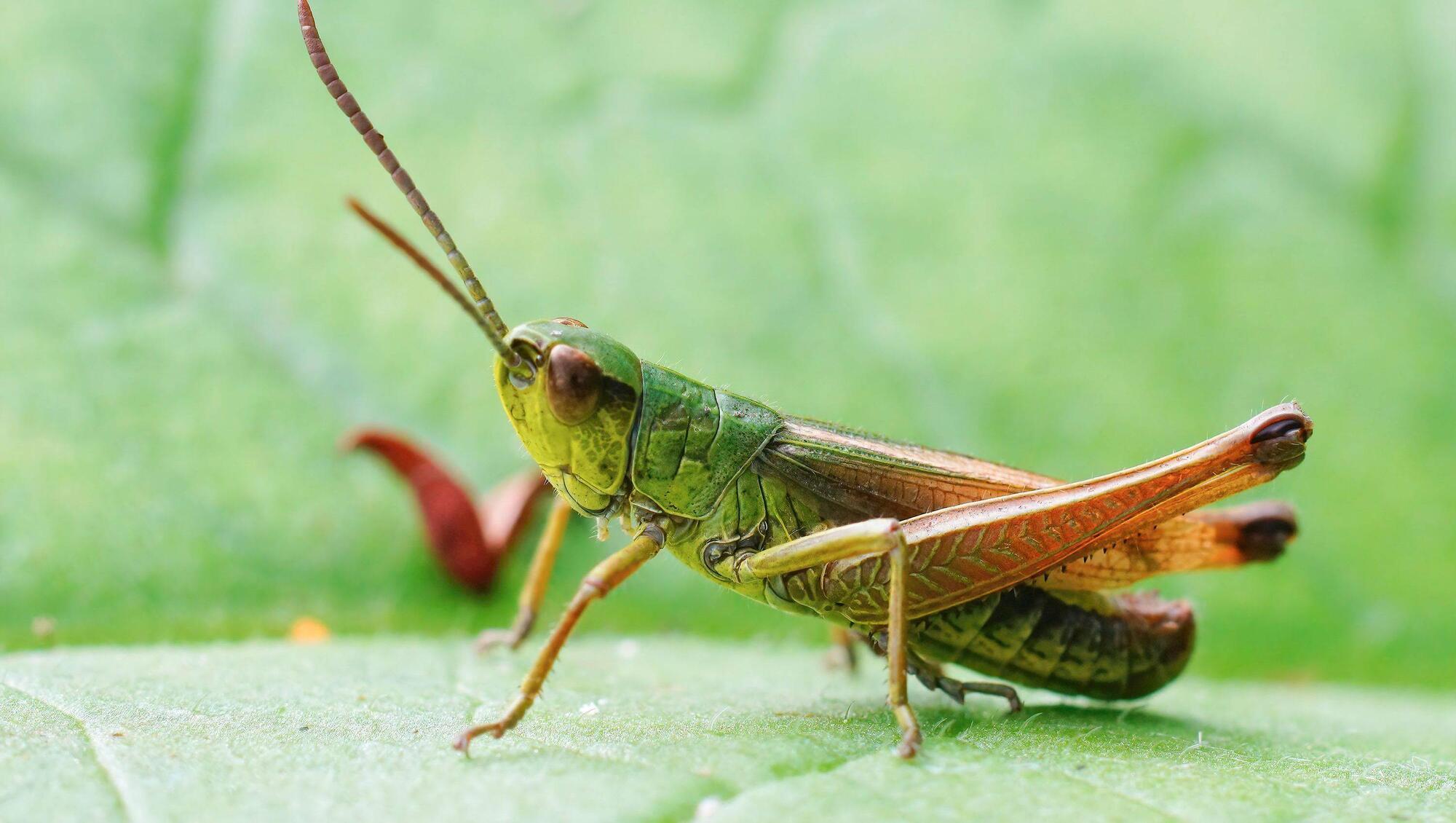
Field grasshoppers are a species that prefer dry sunny places such as sand dunes and dry heath. Picture: iStock
Distinctive soundtracks of summer are playing out across the country, each field, farm, lake and bog alive with its own unique array of creatures and their calls.
Swifts and swallows are still making plenty of noise as they whizz through the skies, while small songbirds chirp from thickets of hawthorn, hazel and willow throughout the day. Young long-eared owls can be heard calling out from the upper branches of tall trees each evening, pleading with their parents to bring them food. Their distinctive call sounds like a squeaky gate creaking and carries well across rough pasture and patchy woodland.
Birds are not the only ones who set the soundtrack of summer. Insects are a noisy lot too. The vast majority of all the different species of animals on the planet are insects, each group with their own distinct ways of creating sound.
Up in the canopy layers of oak, ash, birch, and sycamore live throngs of hoverflies, bumblebees and flying beetles, filling the air with the fizzling buzz of their tiny wings. Out over wet pools of a peat bog and patches of open water, the helicopter hum of dragonfly wings sound out, hovering for the chance of a mate.
Other sounds that we are barely aware of are those made by the billions of minuscule lifeforms that live in the soil. Scientists eavesdropping on soil using sound sensors are able to listen in on to tiny invertebrates chirping, rustling, thrumming, and humming as they go about their lives.
One of the most distinctive, and readily audible sounds of summer is the gentle repetitive pulsing of grasshoppers and crickets. These are noisiest of all insects and we don’t need any specialist equipment to tune in to them.
One of the ways that grasshoppers produce sound is by rubbing their hind legs against their wings. Each of their long legs is lined with a row of protruding pegs, which they move up and down against the stiff ribbed veins of their wings, like rubbing a fingernail against the teeth of a comb.
The songs produced vary in the strength of sound, the rhythm of the pulse and the frequency of repetition. The sounds that this produces can be heard 15 metres away, an impressive achievement for creatures that are only a few centimetres in length.
The main reason that grasshoppers and crickets produce their distinctive songs, correctly known as stridulations, is to attract a mate. Just like birds, male grasshoppers have specific songs to attract a mate, and rival males often call out in a ‘rival’s duet’. Females can respond with a different stridulation.
Once a pair couples up, they sing together with another different song, an often elaborate courtship duet. In case the idea of prospecting for a mate by rubbing one's wings against long bumpy legs isn’t odd enough, grasshoppers and crickets also have ears on the underside of their abdomen with which to listen out for each other’s calls.
Grasshoppers can also get the attention of potential mates by “popping” their wings – stiffening the membranes between the veins in each wing, the vibration producing loud snapping or cracking sounds as they fly.
While all this might sound somewhat exotic, Ireland is full of grasshoppers and bush crickets. We share this island with 12 species of orthoptera: five grasshoppers, five bush crickets and two species of groundhopper.
They occur in every county of Ireland, common among the tall grasses of summer meadows; in rough pastures where grazing animals haven’t shorn the sward too low; and in gardens where the destructive blades of lawnmowers are locked away till the summer's end.
Some species are quite particular in their habitat needs and preferences, restricted to the green shelter of woodland edges or the wet mossy warmth of bogs.
The largest species here is called the large marsh grasshopper, at home among sphagnum mosses and sedges that grow in west of Ireland bogs. They are active only from July to September.
The lesser marsh grasshopper is common in both dry and damp grassland, including salt marsh and coastal habitats. Field grasshoppers are a species that prefer dry sunny places such as sand dunes and dry heath.
Common green grasshoppers like long lush grassy meadows and gardens where the grass is let grow long. One additional species, the mole cricket, is thought to have gone extinct here, as there is only one known record dating back to 1920.
Grasshoppers and crickets are small and are experts at camouflage, hence we rarely see them. It is through the sounds they make that we know they are present. In the same way that bird enthusiasts know a blackbird from a wren based on their call alone, expert entomologists are able to identify different species of grasshopper and bush cricket just by listening to their song.
A recent emerging field of biology is soundscape ecology, the study of the acoustic relationships between living organisms and their environment. Some pioneering scientists are using sound as a way to record biodiversity exploring the soundscapes for bio-acoustic signals that can reveal so much about a habitat. Some of these studies have revealed stark declines in an array of cryptic species.
Soundscapes are also a major, though much-overlooked, aspect of our environment, generating so much of what we perceive as distinctive to each place. We notice, without paying attention, the diminishing diversity of birdsong, the near absence of moths on the windscreen, and the gaps in the soundscape of summer left by the absence of grasshoppers and crickets who are in decline.
Habitat loss has been severe in recent decades and many insect species are unable to survive in the industrially managed fields of 2023. Scientific studies have shown that almost one-third of insect species have declined to the point they’re now under threat of extinction.
This is but one of a thousand reasons why nature restoration is more urgent than ever before.

CONNECT WITH US TODAY



Be the first to know the latest news and updates