Donal Hickey: Warmest water around Ireland is at Cork and Kerry coasts
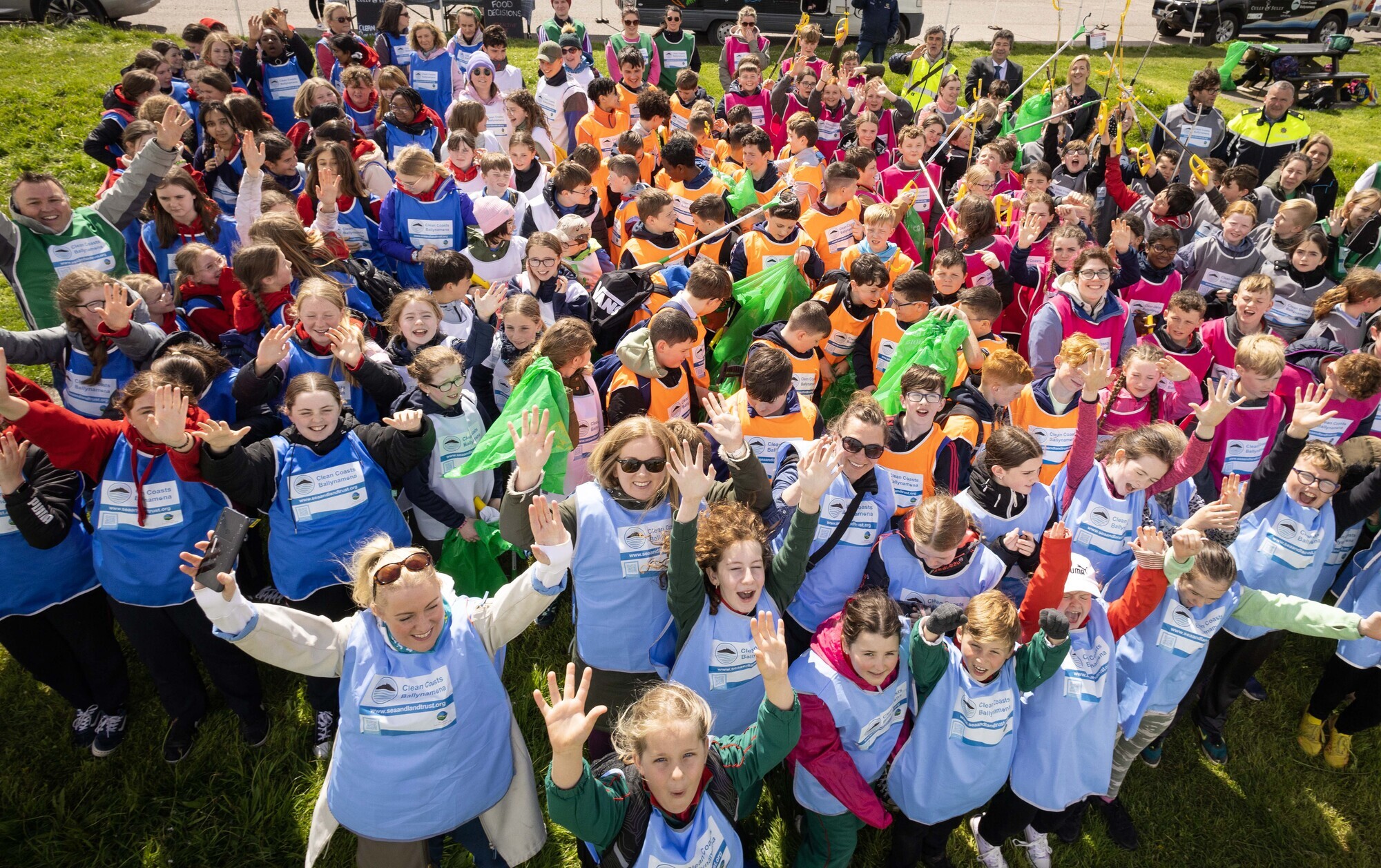
Pupils from St Colman's Community School, Midleton, Shanagarry National School, Scoil Réalt na Mara, Ballycotton, Scoil Íosagáin Farranree, Cork City, Castlemartyr National School, Scoil Bhríde Midleton, and Kyle National School, Youghal at Garryvoe beach as part of a Blue Flag Education supported by Cork County Council, in association with Clean Coasts Ballynamona.
Many people taking their first 'dip' of the year in the ocean may not notice, but changes are happening in the seas around us.
Despite the sunny, warm spell, some swimmers report a chill in the water and the water safety advice is to stay within your depth as a warm body can experience cold water shock. For all that, a new report from the Marine Institute (MI) says there’s been a 0.5°C rise in sea surface temperatures on our colder north coast during the past 10 years.
Lots of people have taken up sea swimming, some year-round, especially since the 2020 covid lockdowns.
And the good news is that the warmest sea temperatures have yet to come. Sea water is coldest in March, averaging 10°C degrees, but it’s 13.6°C degrees in June, 15.8°C degrees in July and there’s a high of 16.5°C degrees in August, according to the SeaTemperatu.re website.
The late, esteemed meteorologist, Brendan McWilliams, who wrote for several years about such matters in The Irish Times, explained that the sea reacts slowly to the changing temperatures.
Land in the northern hemisphere generally has its highest temperature in late July and the coldest in the closing days of January. The ocean, however, reaches its extreme temperatures about a month later in each case.
Happily for swimmers from Barleycove to Ballinskelligs, and numerous other beaches in the south-west, McWilliams noted that the warmest water around Ireland is off the coasts of Cork and Kerry. The coldest is off the Antrim coast.
Date for the Diary - Tuesday, 13th June.
— Marine Institute (@MarineInst) June 9, 2023
The sense of urgency to improve Ocean health is reflected in the UN Decade of Ocean Science for Sustainable Development and the EU Mission: Restore our Ocean and Waters, and tackling the loss of oxygen in the Ocean is critical to… https://t.co/XtPax6P9n3
The above-mentioned MI ocean climate report also notes evidence of damaging substances from land-based activities entering our seas, which result in more tell-tale, algal blooms.
For far too long, waterways generally in Ireland have been treated as sewers. According to the EPA, just 51% of sewage here is treated to EU standards, whereas the European average is 90%.
Work to stop raw sewage getting into seas and rivers from 32 towns and villages has started, or is due to commence next year, the EPA also says.

Scientific evidence in the MI report will inform action plans to deal with the effects of climate change on the ocean.
This research shows the impact of climate change is already evident in Irish marine waters, with noticeable patterns of harmful algal blooms. "The ocean off the south-west coast will likely become warmer and less salty by the year 2035," says MI chief executive, Paul Connolly.
Separately, World Ocean Day, on June 8, was marked by beach clean-ups here. Last year, volunteers took part in 230 such events run by the Clean Coasts organisation, removing a staggering 63 tonnes of litter.

CONNECT WITH US TODAY



Be the first to know the latest news and updates