Donal Hickey: Cigarette butts and single-use vapes could ruin our beaches
Vapes are made of materials such as plastic, rubber and metal that don’t break down naturally, and 1.3 million single-use vapes are thrown away every week
Donal Hickey: Cigarette butts and single-use vapes could ruin our beaches

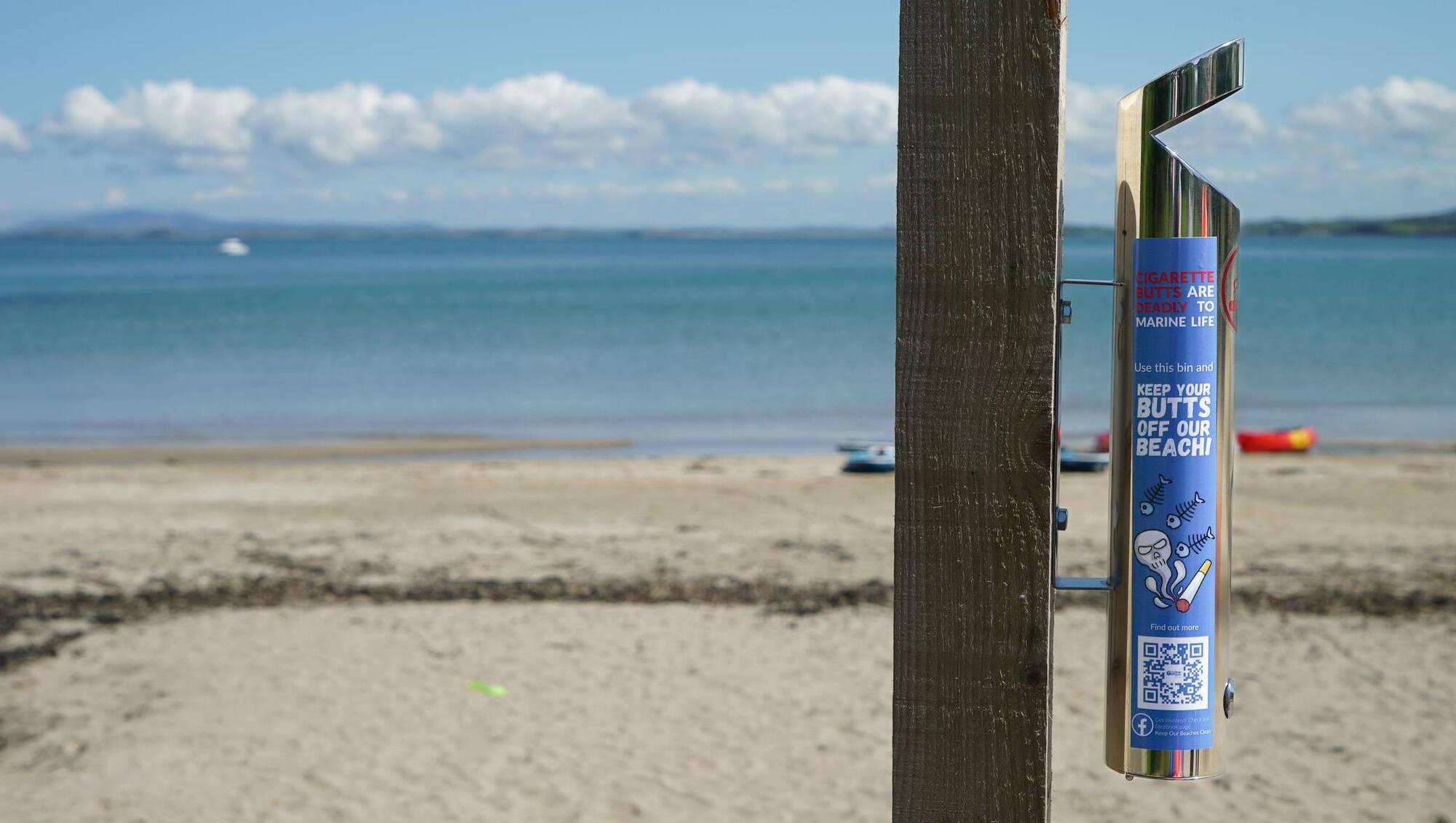
Clean Coasts and volunteers from Keep Our Beaches Clean installed informational stickers on cigarette bins on Old Head Beach to ask visitors to dispose of their cigarette butts properly. Courtesy of CleanCoasts

Most people I know who once smoked have given up the habit. The recent census found that smokers now form just 13% of the population, compared to around 40% in the 1970s.

Yet, cigarette butts account for almost 50% of all discarded waste in this country, on land and ocean.

There’s another surprising fact, which you may not have noticed if you were among the many thousands of people who visited the seashore during the recent warm, dry spell.

Obvious litter on our beaches might include plastic bottles, parts of fishing nets, and wrapping. But, something much smaller makes up the greater part of waste on the golden sands — cigarette butts, according to the Clean Coasts organisation.

Clean Coasts is asking people to dispose of their smoking-related litter correctly to protect our environment and marine life. In the picture: Clean Coasts Officer Olivia Jones and Keep Our Beaches Clean volunteer Mairead Staunton. Courtesy of CleanCoasts  

For several years, butts have been the top litter item found during the Big Beach Clean, which last September amounted to 63 tonnes of waste collected by volunteers around the coast.

Nearly seven tonnes were removed from Cork coastal locations alone, such as Cobh, Bere Island, Inchydoney, Garryvoe, and Garrettstown.

With the bathing season now underway, Clean Coasts is asking people to dispose of their smoking-related litter correctly to protect our environment and marine life.

While the risks tobacco poses to human health are well known, there’s an urgency about highlighting the harmful effects tobacco has on the environment, poisoning water through chemicals, toxic wastes, micro-plastics, and e-cigarette waste.

To mark the launch of the Clean Coasts anti- smoking litter campaign, volunteers from Keep Our Beaches Clean and Western Care association undertook a beach clean at Old Head Beach, Co. Mayo, before installing informational stickers on cigarette bins. Courtesy of CleanCoasts  

Cigarette butts and filters are often assumed to be biodegradable, but one butt might take more than a decade to decompose. Cigarette filters are made of a plastic called cellulose acetate, which can remain in the environment for very long periods in the form of microplastics.

When consumed, the hazardous chemicals in microplastics can eventually kill marine life, including birds, fish, mammals, plants and reptiles In addition to cigarette butts, volunteers doing clean-ups have noticed that amounts of incorrectly disposed of vapes are also increasing. Vapes are made of materials such as plastic, rubber, and metal that don’t break down naturally. Hundreds of thousands of single-use vapes, which can be recycled, are thrown away every week.

Clean Coast groups in Louisburgh, County Mayo, and Bettystown, County Meath, have purchased butt disposal bins in an effort to combat littering.

The problem is global, as Ocean Conservancy, which has sponsored a beach clean-up every year since the 1980s, has discovered. For 32 consecutive years, cigarette butts have been the single most collected item on the world’s beaches, with more than 50 million picked up over that time.

That amounts to about a third of all collected items, more than plastic wrappers, containers, bottle caps, eating utensils, and bottles combined, says Ocean Conservancy.

x

More in this section

Revoiced

Newsletter

Sign up to the best reads of the week from irishexaminer.com selected just for you.

Cookie Policy Privacy Policy Brand Safety FAQ Help Contact Us Terms and Conditions

© Examiner Echo Group Limited