Richard Collins: The hoopoe even made it to Ireland - but not into this famous painting
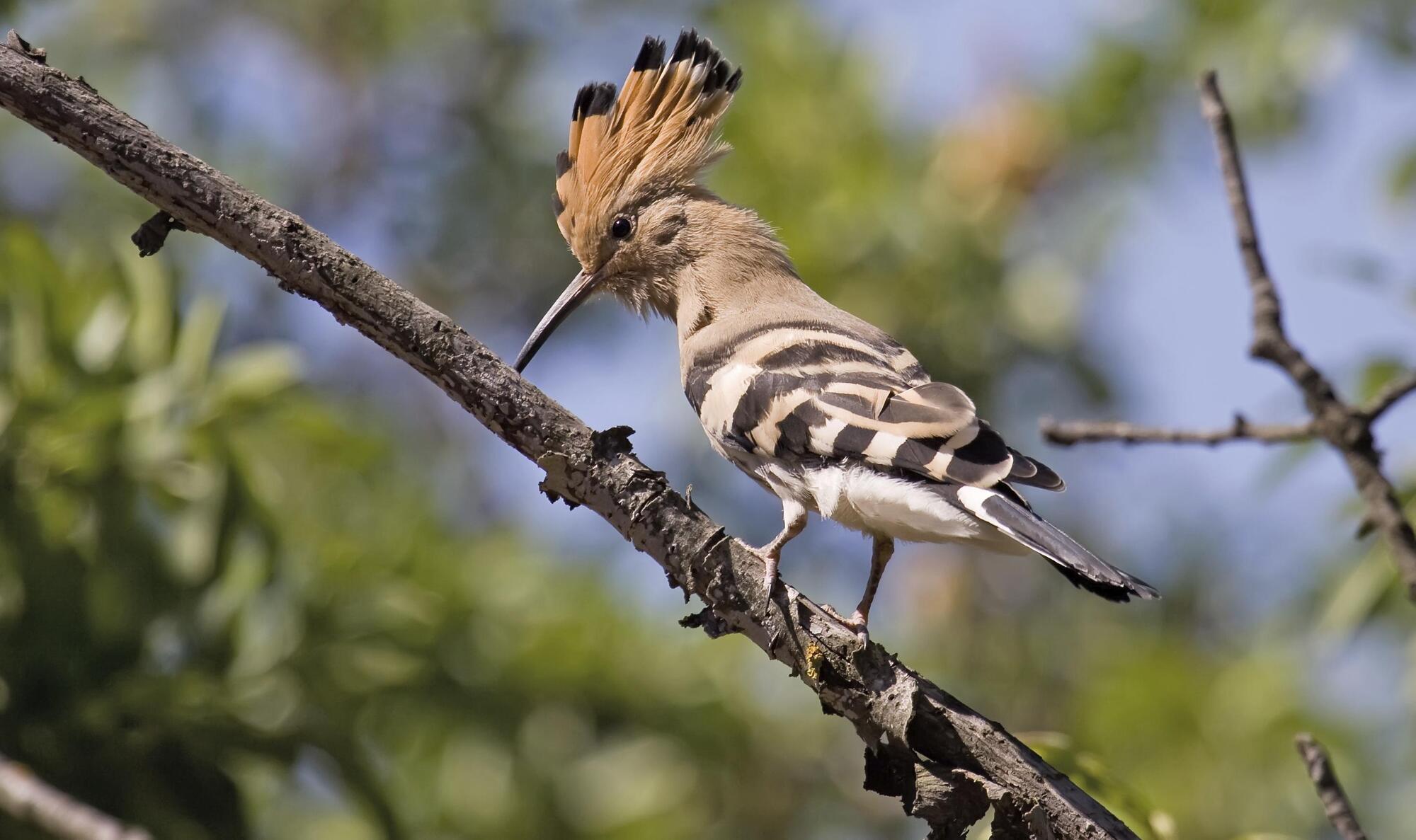
This bird’s flamboyant crest made it a solar symbol to the ancient Egyptians and Minoans. Its image adorned their temples and monuments
Richard Collins: The hoopoe even made it to Ireland - but not into this famous painting

A Eurasian Hoopoe (Upupa epops) pecking at a branch

According to the Qur’an, a hoopoe arrived with a message for Solomon. ‘I have come from Sheba with important news’, the bird declared,’ I found the queen and her people prostrating to the sun instead of God, and Satan has made their deeds pleasing to them’. In ’give up your auld sins’ mode, Solomon sent the hoopoe back to the queen, with a letter begging her to mend her idolatrous ways.

The Bible account does not mention the hoopoe. It says that the Queen of Sheba ‘came to Jerusalem with a very great train, with camels that bare spices and very much gold’. Her arrival at Solomon’s court is depicted in Lavinia Fontana’s magnificent painting, which is the centre-piece of an exhibition of her work at The National Gallery.


Although Albrecht Dürer had done so a century earlier, it was not considered entirely respectable to depict wildlife for its own sake in Fontana’s day. But wild creatures managed to creep unofficially into religious and mythological subjects. The goldfinch, with its blood-red face and gold wing-flashes symbolises Christ in one of Raphael’s famous Madonnas. A lion limped into St Jerome’s monastery. The monks fled but Jerome welcomed the animal as a guest and treated its sore paw. The grateful beast remained on as a devoted follower of the saint, giving artists, including Fontana, a watertight excuse to depict it.

Dr Aoife Brady, Curator, National Gallery of Ireland in front of ‘Consecration to the Virgin’, 1599 at the launch of the landmark exhibition celebrating works of the first professional woman artist, Lavinia Fontana, in The National Gallery of Ireland. Picture: Naoise Culhane

Fontana seems to have been fond of animals, especially dogs. They feature in many of the paintings on display in the Dublin exhibition; dogs symbolise love and steadfast devotion in Renaissance art. Her erotically-charged portrait of a sensual Minerva has an owl, the symbol of wisdom, in the foreground, informing the viewer that it’s the Goddess of Wisdom, not a soft-porn model, who is being depicted.

Visit of Queen of Sheba to King Solomon. Picture: Lavinia Fontana at the National Gallery of Ireland

But did the talented Lavinia miss a trick when she painted Solomon and Sheba?

Her great painting does not include that key player of the Qur’an narrative, the hoopoe. This cream-coloured blackbird-sized bird, with its Indian-chief-style erective head-dress and long narrow bill, challenges the kingfisher’s claim to be Europe’s most glamorous bird. The fluttery flight, on rounded zebra-striped wings, resembles that of a large moth. Any artist would surely give his or her eye-teeth for an excuse to include such an exotic creature in a major painting?

The bird’s flamboyant crest made it a solar symbol to the ancient Egyptians and Minoans. Its image adorned their temples and monuments. Depicting sentient creatures is forbidden in Islam, however, lest it encourage idolatry. Nor has the hoopoe’s habit of probing dung for creepy-crawlies endeared it to the Arab world; the bird is deemed to be ‘unclean’.

However historian Timothy Schum, writing in the Journal of Islamic Studies, says that it played a prominent cultural role "most notably via its inclusion in the Qur’anic narrative surrounding the prophet Solomon".

The hoopoe, native to Southern Europe, is no stranger to Ireland. A few ‘vagrants’, lost on migration, turn up here each spring. In 1934, a pair stayed on near Cappoquin, but no nest was found. A juvenile was reported shot that autumn but the carcass wasn’t shown to anyone competent to identify it.

* Lavinia Fortuna, Trailblazer, Rulebreaker . The National Gallery of Ireland (until August 27, 2023)

x

More in this section

Revoiced

Newsletter

Sign up to the best reads of the week from irishexaminer.com selected just for you.

Cookie Policy Privacy Policy Brand Safety FAQ Help Contact Us Terms and Conditions

© Examiner Echo Group Limited