Hooded crows: The Einstein of birds is often fooled by reflections
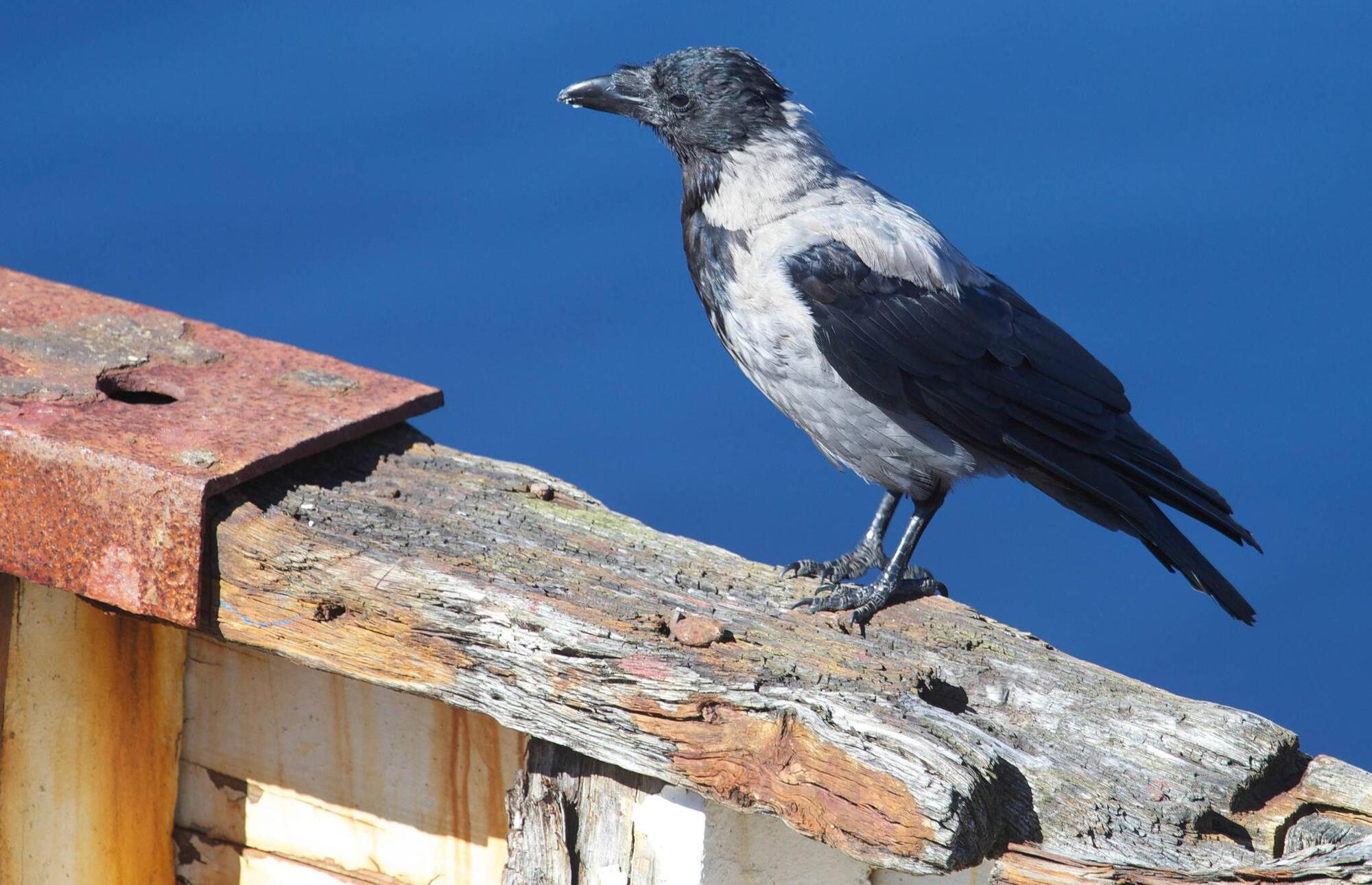
A hooded crow has brains, strong claws, and a razor-sharp beak — but it has a bit of an image problem
Hooded crows: The Einstein of birds is often fooled by reflections

A hooded crow can be equally at home on the coast, in the mountains, or in city centres

A hooded crow is knocking on a bedroom window in the early morning, interrupting the owner’s beauty-sleep. It’s a frequent complaint at this time of year when birds are establishing breeding territories. The image in a window pane is ‘a red rag to a bull’. The bird ‘thinks’ that a challenger is invading its patch.

Robins, thrushes, and starlings are the usual offenders. A wagtail, flying past a car, may catch a fleeting image of itself in a wing mirror and return repeatedly to check it out. This avian helicopter’s long tail gives it the aerobatic skills to do so.

A crow can make quite a din thumping its powerful bill on the glass. Frustrated that the intruder doesn’t retreat, the bird may strip wood or paint from the window frame. This letting-off-steam ‘displacement behaviour’ dissipates surplus energy generated for ‘flight or fight’.

In the Limerick of my youth, ‘ hoodies’ were called ‘scald’ crows — the naked nestlings of songbirds being ‘scaldies’. The crow’s grey torso, like that of a scaldy, gives the impression this it lacks the full complement of feathers. The 'carrion’ crows of England are entirely black, but they are so closely related to hoodies that the two ‘corvids’ were only confirmed as separate species in 2002.

The curved grappling-hook carried on ancient Roman warships was known as a ‘corvus’. The crow’s Swiss-army-knife bill curves slightly downwards, giving rise to the name ‘corvid’. The bird’s skill in prising opening molluscs is the origin of 'crowbar'.

It is surprising that this Einstein of the birds, with its ‘Jack of all trades’ abilities, is fooled by mere reflections in windows. Equally at home on the coast, the mountains, or in city centres, hoodies can make a living just about anywhere. Imitating gulls, they break the hard protective shells of mussels by dropping them onto rocks. The largest available molluscs are selected and released at the minimum height required, there being no need to waste energy flying higher. Patience is a crow virtue: a shell will be dropped repeatedly until it breaks. Limpets, locked onto rocky surfaces, are very difficult to dislodge, but a crow does so with a blow of the bill. Fish can be seized in the claws from the water, osprey-style. Crows may even wade in to catch frogs.

But the bird isn’t strong on public relations. The editors of the authoritative Birds of the Western Palearctic don’t make value judgements but they couldn’t resist commenting that the crow ‘lacks any grace or attractive feature’.

The hoodie, a Satanic avian rat, haunted battlefields and execution sites to scavenge on the dead. Sheep-farmers say that, when attacking a lamb, crows disable it first by taking out the eyes. A brooding presence, the hoodie will monitor the comings and goings of nesting songbirds, choosing the optimum moment to take their eggs and young.

I have ringed grey crows. They remain docile and motionless in the hand, as you record their measurements. Then, suddenly, they lash out, the cat-of-nine-tail claw leaving three bloody stripes across the back of the hand. Magpie bites draw a little blood, but the grey crow’s bill sinks to the bone.

The hoodie really is ‘red in tooth and claw’.

More in this section

Revoiced

Newsletter

Sign up to the best reads of the week from irishexaminer.com selected just for you.

Cookie Policy Privacy Policy Brand Safety FAQ Help Contact Us Terms and Conditions

© Examiner Echo Group Limited