Richard Collins: Are loners better innovators?
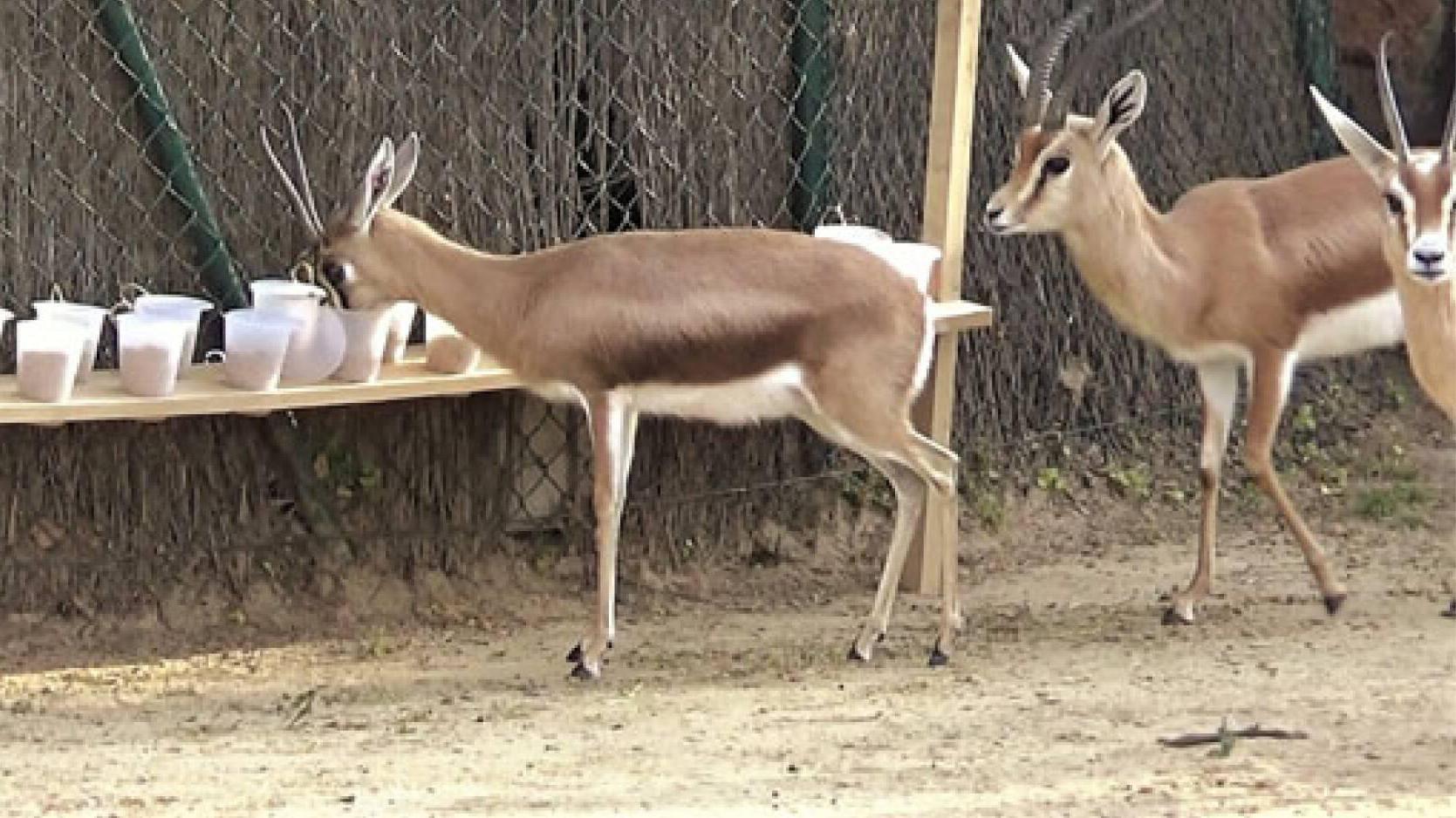
Researchers tested animals' readiness to approach something new: a dorcas gazelle retrieving food after removing the cover from a cup
— Gandhi
Nietzsche thought that only ‘supermen’ — very talented individuals— mattered. The rest of the common herd, he declared, had ‘the green-meadow gregariousness of bovine mediocrity’.
But did he choose the wrong metaphor?
Cattle aren’t losers. Apart from humans, cows are the world’s most successful large animals; there are more than 1.5 billion of them worldwide — one for every five people. That is no mean feat, especially for creatures whose forebear, the auroch, was rendered extinct in 1627.
"Farm animals feel pleasure and sadness, they are far more intelligent than we ever imagined" according to Jane Goodall. Cattle, in Nietsche-speak, are 'superbeasts’.
Mary Temple Grandin earned the trust of farm animals by entering into their world. An advocate of the humane treatment of livestock, and the author of more than 60 papers, her work revolutionised animal-husbandry. Research on cognition, however, has focused mainly on primates, dogs, and parrots. Scientists have given the mental powers of hoofed animals far less attention, as the authors of a research paper, just published, acknowledge.
Alvaro Caicoya, and colleagues at the University of Barcelona, investigated how ungulates address novel problems and respond to unfamiliar situations. They selected 110 captive animals of 13 species, including goats, giraffes, camels, llamas, wild horses, sheep, and deer. The extent of each individual animal’s integration into its social group and its tendency to avoid new situations, were assessed, as these traits might influence performance during tests.
Each animal was presented with a transparent and opaque cup, containing its favourite food. But, to gain the reward, the cover of the cup had to be removed, using the lips the nose, or both.
‘Neophobia’ — fear of the new — affects some animals more than others. Readiness to approach a strange-looking food-cup varied widely during the experiment. All of the camels examined the cups, whereas only a third of the sheep did so. However, the researchers noted, being timid or cautious did not necessarily indicate an inability to solve problems.
Exciting news! Our latest article has just been published in Proceedings of the Royal Society B, "Innovation across 13 ungulate species: problem solvers are less integrated in the social group and less neophobic". Link at the end of the 🧵1/6 pic.twitter.com/45JtCukTYA
— Álvaro López Caicoya (@CaicoyaA) April 5, 2023
Only 36% of the animals, which tried to open food-cups, succeeded in doing so. Hoofed creatures tend to be social, but the extent of fidelity to their group varies. Some animals remain within their herd or flock at all times. Others, known as ‘fission-fusion associates’, will detach from the flock, and ‘do their own thing’, when it suits them. The experiment showed that those of a fission-fusion disposition were more successful at opening food-cups. The best performers were the camels with an 86% success rate. Goats scored 69%.
Overall, the researchers say, "success was higher for less neophobic and socially less integrated individuals".
There’s an echo of Nietzsche here: he had declared that "the individual has always to struggle to keep abreast of the tribe" and "the fewer friends a person has, the more he has". Abandoning his academic post, the great philosopher spent 10 years wandering in Italy and Switzerland.
Are loners also the innovators among ungulates?

CONNECT WITH US TODAY



Be the first to know the latest news and updates