A good time to spot our winter visitors
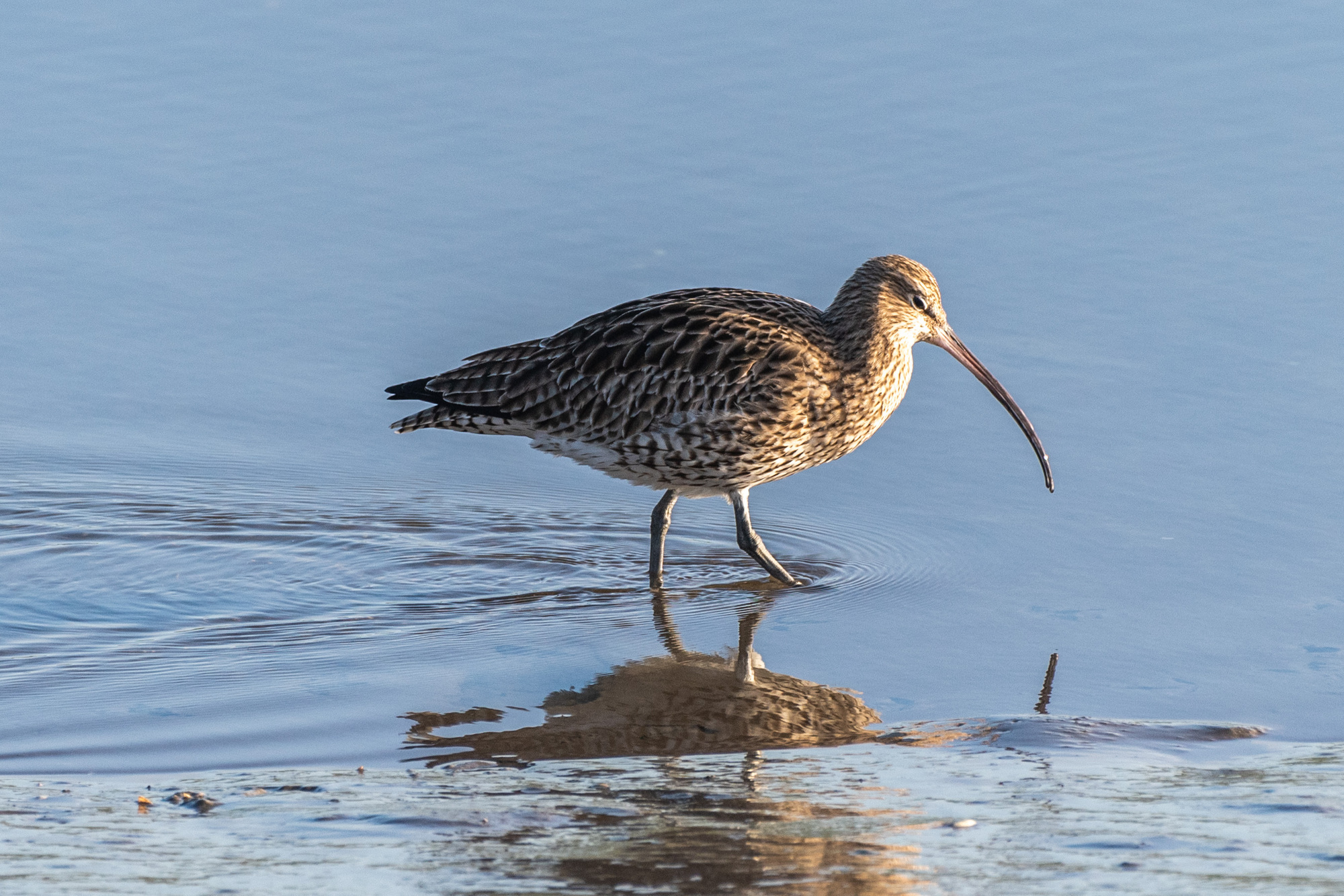
Curlew at the Timoleague estuary in January, 2023. Picture: Andy Gibson
Now is a great time to see birds that come here each winter, drawn by our relatively mild weather and a shoreline washed by warm Gulf Stream waters.
We get hundreds of thousands of migrant waders, some from as far away as Siberia — though numbers have dropped by around 20% in recent years, according to the Irish Birds report and Birdwatch Ireland.

Following a recent column on the protection of curlew nests, a couple of regular beach walkers contacted us to say they spotted curlews on the foreshore in Ballinskelligs and Rossbeigh, both in south Kerry.
Black-tailed Godwit, Sanderling, and Curlew on the Shannon estuary, Co Kerry, September 2022. This entire estuary is designated as a Special Protection Area under the EU Birds Directive, and as a Special Area of Conservation under the EU Habitats Directive. pic.twitter.com/2BUMDSEOGi
— Ecofact (@EcofactEcology) October 12, 2022
As our native curlew is on the brink of extinction, our callers were quite excited. However, it is almost certain the curlews they saw were among our winter visitors and could be from Scotland, northern England, Finland, or Sweden.
While Irish curlews are counted in the low hundreds, it is reckoned from surveys that around 28,000 migrant curlews come here annually. And, like all the other waders, they leave in the springtime.
Maps in the Migrant Atlas show large numbers of curlews ringed in Scotland and north-west England turn up here. But, there are very few records of curlews ringed in Ireland being found in other countries.
British expert, Iain Bainbridge, says there’s not enough data to determine where Irish curlews go in winter, but it‘s ‘presumed’ most stay here.

The curlew has red list status in Britain, placing it among birds in most need of help. It is believed about 60% of its breeding population is in Scotland where the highlands and islands are also home to a healthy eagle population.
Lapwing and golden plover are numerous among our migrants. The oystercatcher is also common, coming from Iceland and the Faroe Islands.
And it's prominent with its black head and upper parts and orange beak as it pokes out cockles and mussels on sandy shores. We also get a wide range of duck species.

The Cork coastline offers many excellent viewing areas and the number of people out walking on beaches, year-round, seems to be growing all the time. On a recent, chilly Sunday, for instance, a trip to Garrettstown, near Kinsale, revealed surprisingly large crowds, just like you’d have on a fine day in summer.
Courtmacsherry Estuary, also in West Cork, is good for bird-watching, with reports of plenty black-headed gulls, grey herons and many other birds. Ring Strand, Ballymacoda, County Cork, is another important location for waders and where golden plover and an unusual visitor like the white-rumped sandpiper may be observed.

Birders advise, meanwhile, the best time to go looking for waders is around an hour before high tide.