Richard Collins: New year, new start for Rathlin's ferret-catcher
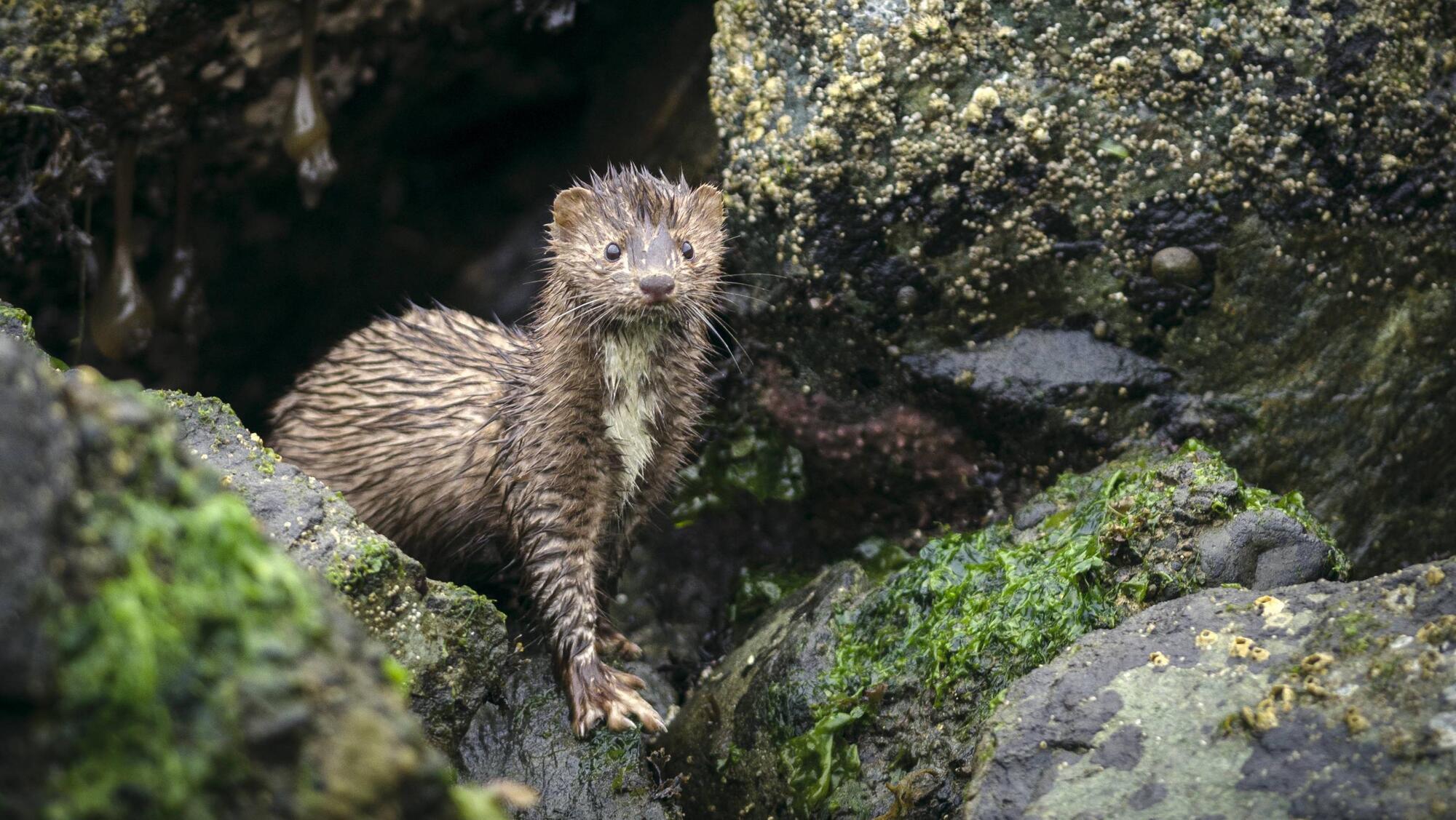
Kept as working animals since Roman times, ferrets have long flexible snake-like bodies which make them ideal underground hunters.
The Royal Society for the Protection of Birds is currently appointing a ferret-catcher for Rathlin.
Ferrets were released on the County Antrim island during the 1960s, in the hope of controlling the rabbit population. Unfortunately, these relatives of the stoat also take birds’ eggs and nestlings.
With avian populations declining everywhere, rogue ferrets can no longer be tolerated on Rathlin, which has important bird communities. £4.5 million (approx €5.14 million) will be spent on the project over the next five years.
Animals, captured alive during the eradication programme, can’t be relocated to the mainland and will have to be ‘put down’. Applicants for the job were required to have a firearms licence — an unusual requirement for a wildlife conservation role.
The number of ferrets on Rathlin isn’t known; they hunt mainly around dawn and dusk so are very difficult to observe. Ferrets sleep for 18 to 20 hours a day.
The ferret is a domesticated polecat, a distant relative of skunks, also known as the ‘foul mart’, because of its notoriously smelly glandular secretions. Individuals recognise each other and communicate by smell. Although native to Britain, the species is not found in Ireland. Its closest Irish relatives are the stoat and the pine marten.
Kept as working animals since Roman times, ferrets have long flexible snake-like bodies which make them ideal underground hunters.
A trained one, released into a warren, will chase rabbits out into a net placed across the mouth of a burrow. This is one of the few creatures to have given its name to a verb: ‘to ferret out’ is an expression with slightly forensic connotations.
When returned to the wild, ferrets revert to the ways of their ancestors.
The Rathlin project won’t be the first of its kind to be carried out in Ireland. In 1949 Michael Neale, the owner of Great Saltee, introduced foxes and ferrets to his island in an attempt to reduce the burgeoning rabbit population.
The foxes died of distemper and the ferrets died of starvation during the winter, so Neale decided to use cats instead. In their 1977 book, , Richard Roche and Oscar Merne describe how 46 cats were supplied ‘from an RSPCA home’ and airlifted to Saltee.
Letters alleging cruelty to the cats, and the island’s birds, began appearing in newspapers, leading to questions being asked in the Dáil. A task force, consisting of several Gardaí, a vet, and ‘a neutral observer’, was sent to Saltee.
The Gardai were expected to catch any cat which appeared to be suffering. The vet would report on the cats’ health. In the event, no cat, healthy or suffering, was seen.
But the more domesticated of the cats, being used to people, attached themselves to picnic parties and found new homes on the mainland.
Some of those which remained on the island survived for up to eight years, which is about the life expectancy of a feral cat. Adult cats, it’s thought, survived the winters by catching rabbits but their kittens were too light to do so.
Like the Taliban, who have managed to survive everything thrown at them, the bunnies triumphed in the Saltee rabbit-wars; they are still on the island. The Rathlin ferret-wars will be a difficult assignment.
CONNECT WITH US TODAY



Be the first to know the latest news and updates