Islands of Ireland: Avoid Roe Island in spring so you don't disturb nesting birds
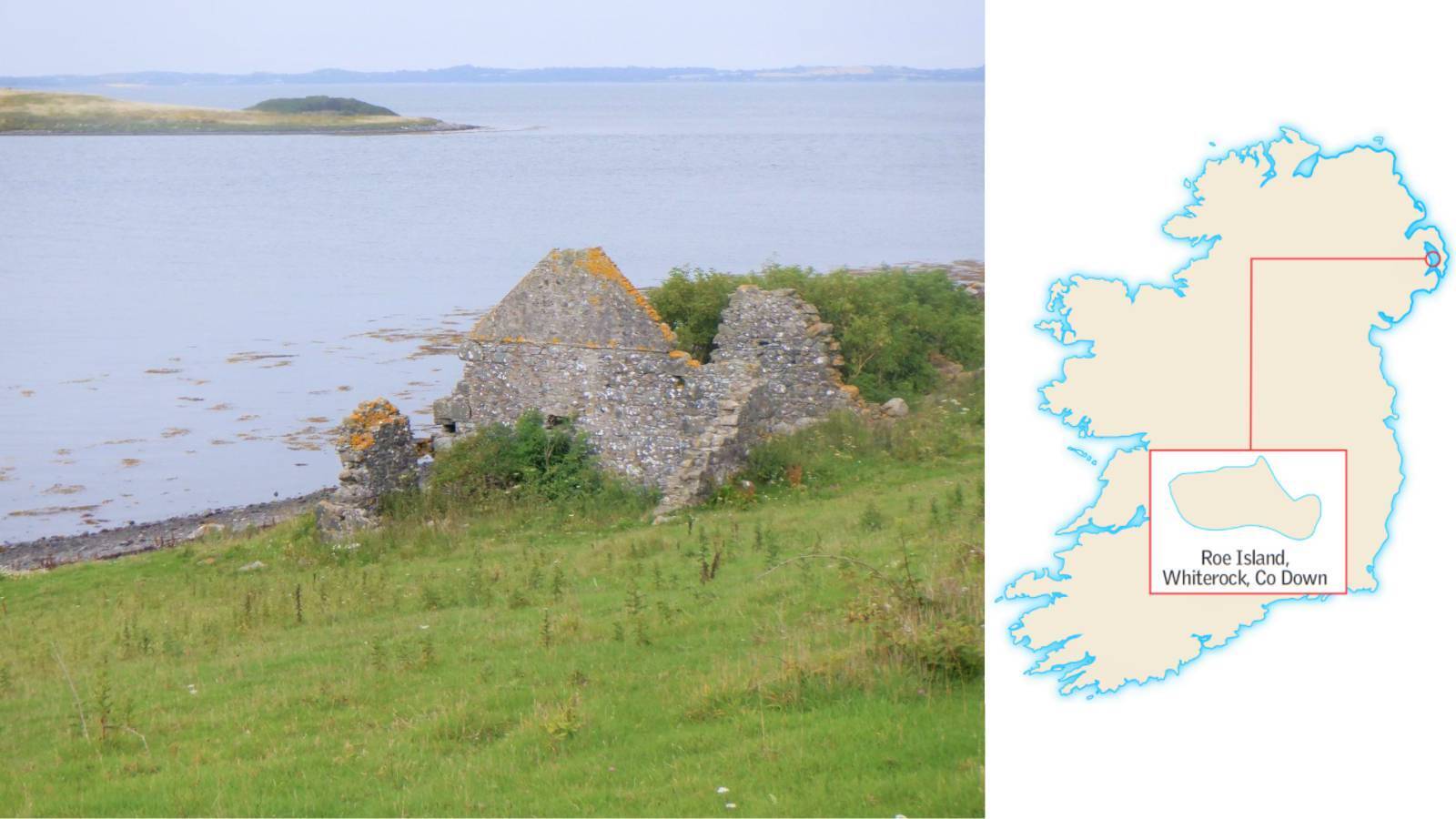
Islands of Ireland: Roe Island Whiterock, Strangford Lough, County Down. Dan MacCarthy
They have been described as drowned drumlins (if drowned though, they wouldn’t be islands) but the islands of Strangford Lough really resemble a stationary pod of whales.Â
This lengthy lough in County Down has been subject to the same 365-island myth as Clew Bay in Mayo and Lough Corrib in Galway/ Mayo. Alas, the matching symmetry with the number of days in a year is inaccurate: there are about 90 in Strangford Lough, depending on your definition of an island.Â
The number is closer to 160 according to songofthepaddle.co.uk which counts many of the low-lying, grass-covered (his defining characteristic for an island) islets called pladdies.
Strangford Lough is the largest sea lough in Ireland and contains numerous eroded drumlin islands known as pladdies. It's narrow entrance features a tidal race running up to 8 knots and was the site of the world's first commercial tidal turbine. #DownWeek #YearofGeography pic.twitter.com/Y2LmYw9PP3
— Geography and Environmental Sciences (@UlsterUniGES) November 12, 2019
Roe Island or Ruagh Island (Red Island) is a sizeable hilly island not far from the village of Whiterock on the western shores of the lough about half way up the lough. It is surrounded, dutifully, by a series of much smaller islands including Inisharoan, Drummond Island and Parton Island.
All of these islands, with the exception of a few low-lying ones were, and are, part of an extensive sheep-grazing operation by farmers on the mainland with the sheep brought on and off seasonally by boat.Â
The historic evidence of the old-fashioned sheep farming survives in the form of ruined bothies where farmers could shelter from the inclement weather. Such vestiges of former farming practices can be found on many of the Strangford Islands with a prime example on Salt Island.
Considering the size of some of the islands in Strangford Lough their respective populations have been quite minimal, especially when compared to the islands of say, Clew Bay, where many of the islands had dozens and dozens of people living on them.

One explanation for this is the historic scarcity and demand for land in the west of Ireland which saw large Catholic families producing many offspring. Protestant families with fewer children resulted in less demand for land and hence less pressure to divide and subdivide holdings. However, a rider here is that about a fifth of the population of the Strangford islands over the years was Catholic.
Additionally, land management in Ulster tended to more managed use of the land — so much so that it came to look almost manmade in comparison to the wilder, vernacular appearance of many farms in Connacht and Munster.
A comprehensive body of research on the Strangford islands by Beverly Brown in 2015 shows a maximum population on an island in Strangford Lough as being a family of 13 on Sketrick Island. Her research shows that between 1800 and 1911, a total of 23 of the islands were inhabited by at least one person.
Most recently, the 1911 census showed 12 of the islands as inhabited, not including Roe. The 1901 census showed a further four, making a total of 16. The Griffith’s Valuation of 1863 to 1864 shows a further four: Quay, Trasnagh, Wood, and Roe.Â
Beverly Brown’s research even provides a name for this person who lived alone on Roe Island: a John Patton. However, these records may not form the entire picture and it is entirely possible that Patton had one or more companions with whom to share the island.
John Patton’s house was on the shoreline in a magnificent setting partly surrounded by a copse. Just the lichen-covered gables stand now, the rest has been worn away by time. His job was very likely to have been as a shepherd on his own, or on someone else’s, behalf.
Though probably alone on the island, it would not have been a solitary existence for Patton as he would have had regular contact with people living on other islands. And there would have been further contact with fishing boats, pleasure craft, and the regular regattas that were once very popular from Whiterock. The island is still used today for sheep grazing.
Strangford Lough is a vast and varied landscape with nearly 100 islands within its shores. Get exploring and discover somewhere new this weekend, like Gibbs Island. Here's Ranger Tomasz to tell you more. #StrangfordLough #DiscoverNI pic.twitter.com/FJZvBTisZe
— NT Strangford Lough (@NTStrangford) February 4, 2022
: About 25km southeast of Belfast. Best avoid this group of islands in the spring for fear of disturbing the nesting birds. At other times kayak from Whiterock Bay, east of Killinchy, County Down. Or kayak with strangfordloughactivitycentre.com
: The Strangford Islanders, Beverly Brown, North Irish Roots Vol 26, No. 1