Spectacular gannets have great muscle and staying power — it's sad to see bird flu hit them so hard
Gannets swallow their catch headfirst and consume many times their own weight
Spectacular gannets have great muscle and staying power — it's sad to see bird flu hit them so hard

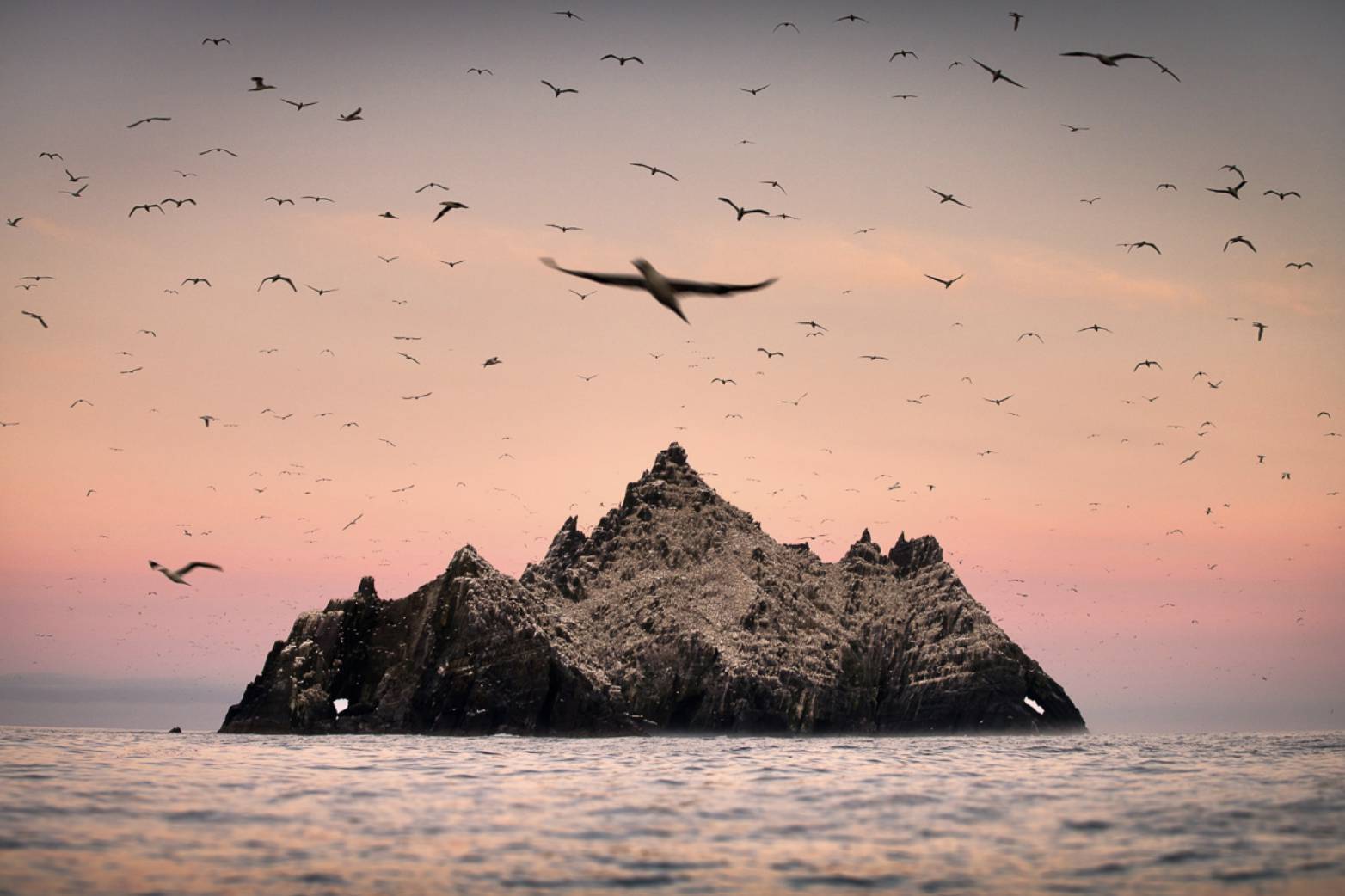
Sunrise at Skellig Rock, the second largest Gannet colony in Europe. Picture: George Karbus Photography

Most fishers have a trained eye for nature-watching. Even those who don’t have much interest in marine wildlife have a very practical reason for at least observing the movement of nature — hovering seabirds can tell them where shoals of fish are to be found.

One of the biggest and most noticeable of these birds is the gannet. For a distance of a mile or two when skies are clear, gannets can be seen high above the waves when fish are in deep water, but they fly low when fish are near the surface.

Then, suddenly and spectacularly, they can close their wings and dive straight as an arrow before entering the water like spears and catching their prey.

The late fisherman, farmer, naturalist and writer, Michael Kirby, was a keen student of seabirds. He would be saddened by the deaths of so many gannets from bird flu, with their carcasses now being found along the coastline.

Kirby’s native fishing grounds were off the south Kerry coast, including the Little Skellig rock which has a population of around 30,000 gannets. Few people knew the seas around the Skellig rocks (Skellig Michael of recent Star Wars fame is the best known) as well as Kirby; fewer still wrote so elegantly and authoritatively about them.

Gannets and other seabirds crowding on coastal cliffs

Growing up in sight of the Skelligs, he developed an ardent interest in his local environment early in life. 

Describing the gannet, he said it was full of muscle and staying power, could cruise above the water for hours, wheeling high over its prey whilst awaiting the right moment to strike. Gannets swallow their catch headfirst and consume many times their own weight.

Skelligs Calling by Michael Kirby

“The white of its plumage stands out when seen against a background of blue sky, or the green of the ocean, becoming like some astral white light glinting in the sunshine,’’ he wrote in his book, Skelligs Calling.

Gannets on Bull Rock, Beara Peninsula. Picture: Dan MacCarthy

Kirby also visited the huge gannetry where the birds nest on Little Skellig, gaining insights into their breeding habits and romantic nature.

“Before the couple starts nest-building, they enjoy a long courting season, and can be seen like human lovers with necks and wings entwined. This is like a long honeymoon period before they mate and, long after their offspring is raised, this amorous display of lovemaking continues," he noted.

A dead Northern Gannet (Morus bassanus) in Tramore. Picture: ORCA Ireland Observers App, Facebook

The advice to people, meanwhile, is to stay away from dead, or sick, wild birds which are being found on many beaches and other areas all along the coastline.

The Department of Agriculture and National Parks and Wildlife Service also says that people should not touch such birds, should not bring them home and that pets should be kept away from them.

More in this section

Revoiced

Newsletter

Sign up to the best reads of the week from irishexaminer.com selected just for you.

Cookie Policy Privacy Policy Brand Safety FAQ Help Contact Us Terms and Conditions

© Examiner Echo Group Limited