Richard Collins: The impact of wild weather on wild creatures
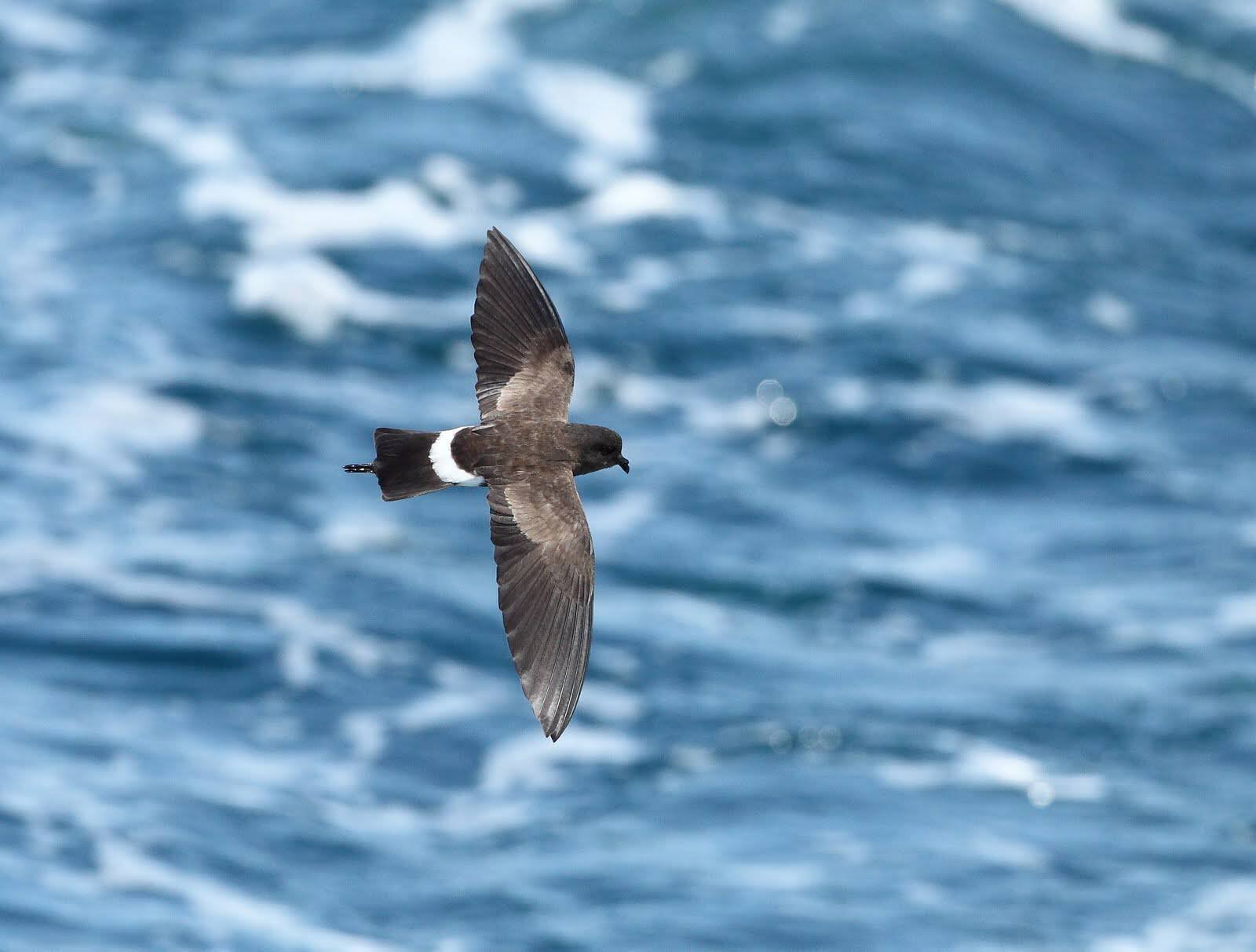
Storm Petrel: Ireland's smallest seabird. It gets its name as it's driven to shore by winds
Hurricanes and gales are wreaking havoc on people all over the world. But to what extent do storms also threaten wild creatures? Land-dwelling mammals and reptiles can shelter during rough weather and, unless migrating across water, birds do likewise. Seabirds, however, live out on the turbulent ocean with no place to hide. A flying bird risks being swept onto cliffs or carried inland.
Our smallest Irish seabird is called the ‘storm’ petrel because it’s driven to shore by winds. Other little petrels sometimes come to grief. Robert Ruttledge mentions Leach’s petrel ‘wrecks’ during severe gales in September and October 1891. There were particularly disastrous wrecks in October and November 1952; seabirds were found dead or exhausted in many parts of the country. An old problem is being acerbated by climate change.

Petrels are not the only seabirds to run the gauntlet of storms. Sea-dwelling species are adapted either for diving or for flying. Divers, such as puffins and guillemots, have difficulty fishing during severe weather. The flyers, petrels, shearwaters and gannets, face an even greater challenge; they must take to the wing to find food, risking being carried far and wide when airborne. So what should a seabird facing a gale do?
A paper, just published, suggests that at least some of them adopt a radical approach to the problem. Researchers from Swansea University studied the responses of shearwaters to cyclones in the Sea of Japan. Shearwaters are among the world’s most efficient flyers; they use the wind to maximum effect. If the wind is too strong, however, they are at its mercy and risk being blown onto land.
A piece on our study lead by @Manos69188358: How we tracked one small seabird species' remarkable flight into a typhoon https://t.co/MmKR45LSbW via @ConversationUK @SwanseaUni @PNASNews
— Emily Shepard (@ELCShepard) October 6, 2022
The team tagged birds over an 11-year period and used GPS data to map their movements. The shearwaters’ journeys were then correlated with the wind conditions the birds encountered when travelling.
It seems counter-intuitive but a swimmer, caught in a current and being swept out to sea, must swim at right angles to the flow if he or she is to break free of it and survive. The research results showed that shearwaters, encountering a typhoon, did something rather similar. Instead of heading away from the approaching mayhem, or trying to skirt around it, most of them flew instead towards the eye of the storm.
Typhoons, known as hurricanes when in the Atlantic, are huge circulating air masses. A bird enveloped by one will be carried along in a great circular arc. Although shearwaters will sometimes try to bypass a storm, the GPS-tagged ones, like the swimmer caught in a current, tended to fly across the flow towards the centre of the typhoon, rather than fight their way out of the gale. Displacement is greatest towards the periphery of a rotating mass and lowest at its centre. By heading towards the storm’s hub, the risk of wide displacement is minimised.
Juvenile birds are more prone to ‘wrecking’ than adults. Seabirds, the authors suggest, gradually come to know where the land masses are: "Juveniles lack this map sense, making them susceptible to wrecking in some scenarios."
- Emmanouil Lempidakis et al. Pelagic Seabirds reduce Risk by flying into the Eye of a Storm. Proceedings of the National Academy of Sciences. 2022