Islands of Ireland: Mason Island — is it named after buttocks?
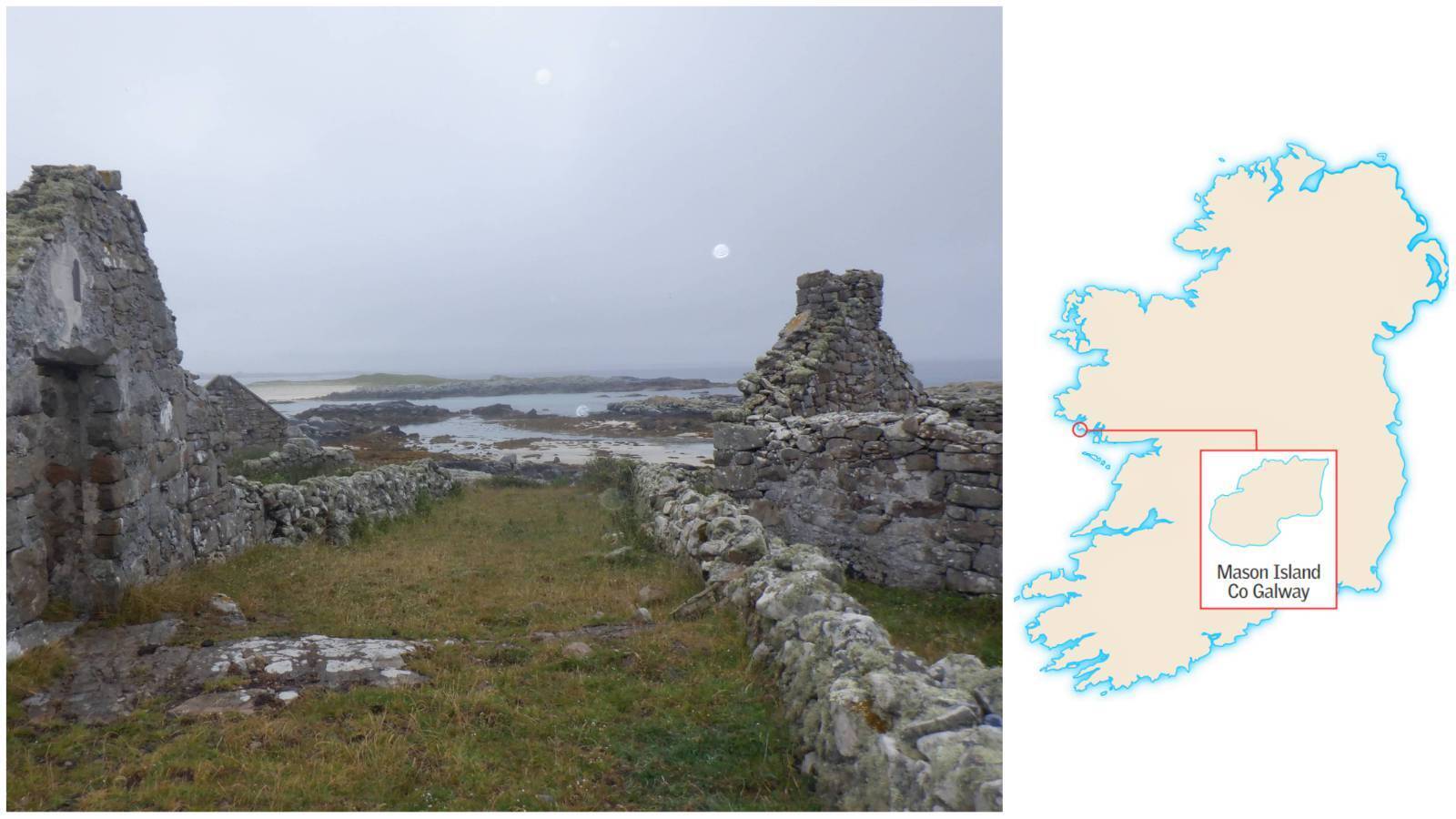
Mason Island County Galway. Picture: Dan MacCarthy
The small pier on the western side of this Connemara island provides a perfect starting point to explore this lovely place. Where the roads on some islands have disappeared completely or got submerged in bracken and furze, Mason’s roads feel like they have been well maintained — but no one walks them now apart from a few summer visitors and perhaps the ghosts of old. A veritable thoroughfare rises and falls the length of the (admittedly small, 1km) island and several avenues lead off from it enticing the eye over the next hillock or around the bend. The late writer, Tim Robinson, wrote that the roads’ pattern was designed by the Congested Districts Board which also parcelled off parallel strips of land as a way of maximising farming efficiency.
Like several of the islands midway between the town of Clifden and the Aran Islands, Mason explodes with wildlflowers in the spring and summer, not least several varieties of colourful orchids. Fair enough, this landing was in summer when everything looks good, even the ruins, of which there are no shortage.
The population reached its maximum in 1881 at 127 people. Thereafter, a steady decline beset the island with the population decreasing sizeably per decade until the last person bade farewell in 1954. Near a lakelet are the ruins of an early Christian church and the ruins of a graveyard. The lake has two names, writes Robinson: Loch na dTaisbhsi (Lake of the Ghosts) so named by schoolchildren, and Lochán an tSeanduine (Little Lake of the Old Person). Mason, like its much more famous neighbour, St Macdara’s Island, has also some early Christian cross slabs of which to boast.
The last people to leave the island were mentioned in a Connacht Sentinel article in prose worthy of vibrant Connemara short story writer, Liam O’Flaherty: “When a frail canvas currach rode in from the Atlantic and touched ashore on the sandy beach at Mynish, Carna, Connemara on Saturday, two pathetic figures, sixty years old Patrick Cloherty and his fifty-nine years old sister, Mary, arrived in a new and strange world.”
The siblings had decided to move to the mainland to live with relatives owing to the hardship of living on the island. Both were deaf since birth and had never previously left the island. Their elder brother had just died and this prompted the departure.
Oileán Máisean[ has had many versions of its name including Illanemasshuie in 1585, Illmunassan in 1610 and Ellane-Masson in 1667. Its current name came into usage in 1819. Robinson was of the view that the name derived from the Más (Mace) headland opposite, meaning ‘thigh’ or ‘buttock’.
Mason is flanked by some gorgeous islands, satellites in effect. Ardnacross Island, to the east, can even be waded to at low tide from Mason, and is possessed of a Carribbeanesque beach with the requisite golden sands and turquoise waters. Robinson wrote that there were stories of bones being washed along the beach there after some vigorous storms, very likely to have come from an old graveyard. And to the west are the rugged Avery Island and Wherroon Island. Mason itself is a satellite of the much larger island of Mweenish though that has long since been connected to the mainland by causeways.
At a maximum height of 14m Mason Island is not exactly flat, but a lot of it is low-lying. In the winter of 1881 a huge hurricane struck the west coast and devastated some parts. The Connaught Telegraph reported that: “The sea also rose, and was agitated in a manner never witnessed before by any living man. It washed over Mason Island carrying away the provisions of 26 families, and now the island is turned into three lakes of salt water. It carried away their furniture, and you may be able to form some idea of the destruction it did when I say it carried away the hens of those poor people which were perched on beams across the humble dwellings.”
The account stated that beds, dressers, etc, were found miles away, smashed on the mainland shores.
: No ferry. Kayak from a small strand at Mace Head or inquire in village of Carna.
: Logainm.ie; Connacht Sentinel, April 27, 1954; Connaught Telegraph, December 31, 1881
CONNECT WITH US TODAY



Be the first to know the latest news and updates