Illegal plant is everywhere and thriving
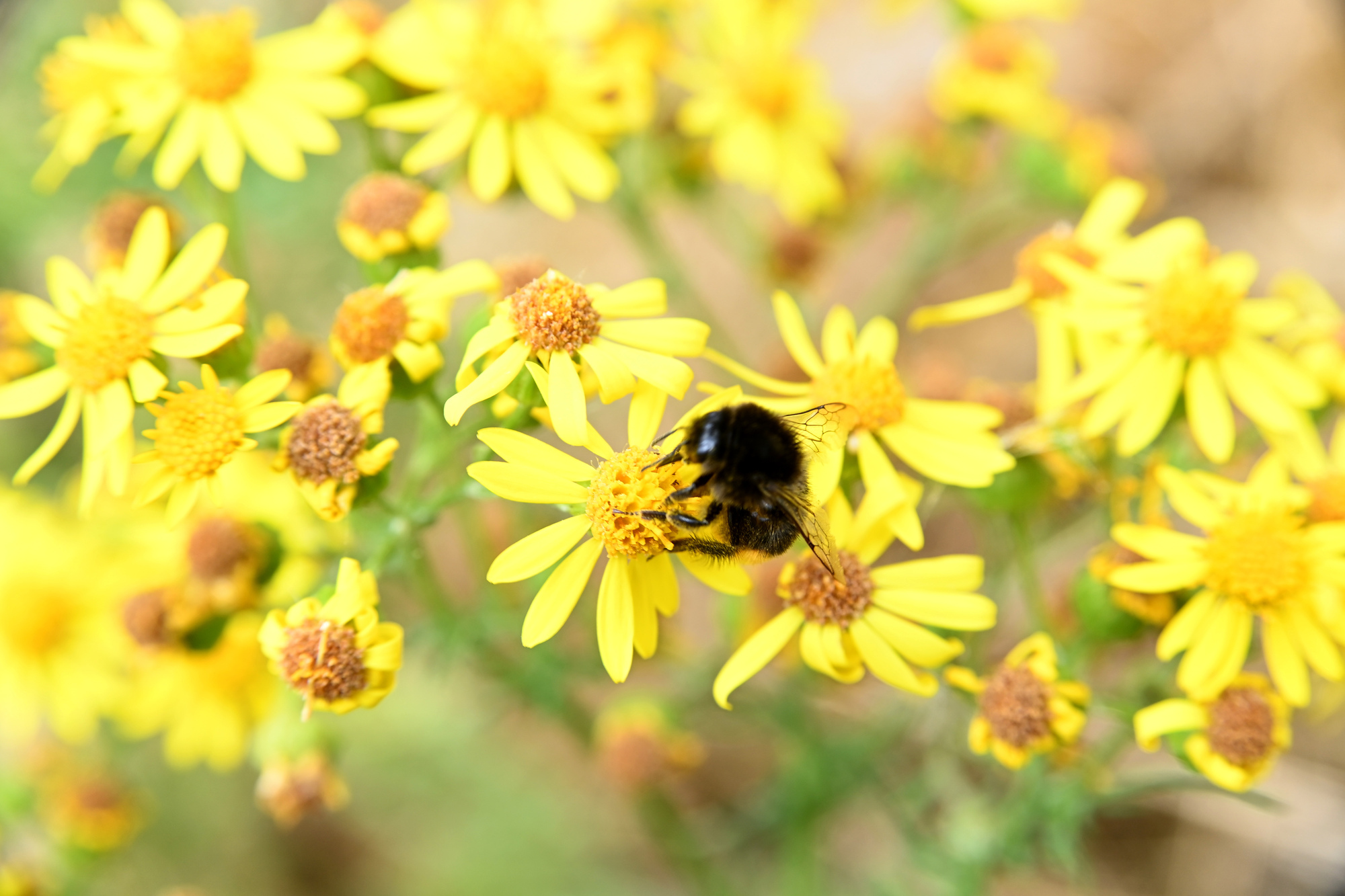
A bee on ragwort at Sun Valley Drive, Cork city. Ragwort attracts pollinators and is also an important host plant for the cinnabar moth. Picture: Larry Cummins
Anybody travelling around the country during the holiday period must have surely noticed a certain yellow plant growing in abundance.
Visiting several counties in the west and south, I’ve never seen such a proliferation of ragwort (buachalán) — an illegal plant lethal to horses and cattle.
It’s on farmland, in the middle of dual carriageways and motorways, on chimneys, in urban housing estates and on roadsides, and along some of the country's leading tourist routes for instance.

And it’s outshining beautiful, colourful plants such as fuchsia and montbretia, which are so emblematic of places like West Cork and the Kingdom.
Failure to stop the spread of poisonous plants like ragwort is an offence under the 1936 Noxious Weeds Act and landowners can be fined up to €1,000 if they don’t deal with it, after being notified.
Once upon a time, gardaí were responsible for enforcing the law on such weeds, but that has long since been passed to the Department of Agriculture. Our eyes tell us there’s widespread non-compliance with the law and not much evidence of enforcement.
At the same time, a department spokesperson says it continues to engage with all local authorities and the National Roads Authority "to ensure a consistent programme of treatment and disposal of such weeds on an ongoing basis". According to the department, notices to destroy are issued when it becomes aware of the presence of noxious weeds and follow-up action is taken to ensure particular weeds have been dealt with.
Farmers are obliged to keep their land free of these weeds and failure to do so can result in a reduction in their payments.

Despite the dangers of ragwort — a member of the daisy family — it features in many, old folk cures. The juice was used for treating jaundice, cuts, inflammation, burns and scalds.
Niall Mac Coitir, who has studied folklore associated with plants, says ragwort was also used for coughs, colds, sore throats and sore joints. It also had other, practical uses. “In West Cork, ragwort was used to make brooms and brushes for sweeping the house," he writes in his book, .
A firm health warning, however: people should not try out these prescriptions from folk medicine which, after all, are based on a toxic weed.
In keeping with the best traditions, ragwort was also closely linked to the fairies. It was believed the feared and mysterious 'little people' used ragwort like a horse to ride around on.
Another popular belief was that the favourite place for a leprechaun to mend his shoes was on top of a ragwort on a summer’s morning, Mac Coitir reveals.