Islands of Ireland: A bit of a hike before you can kayak to Mayo's Frehill Island
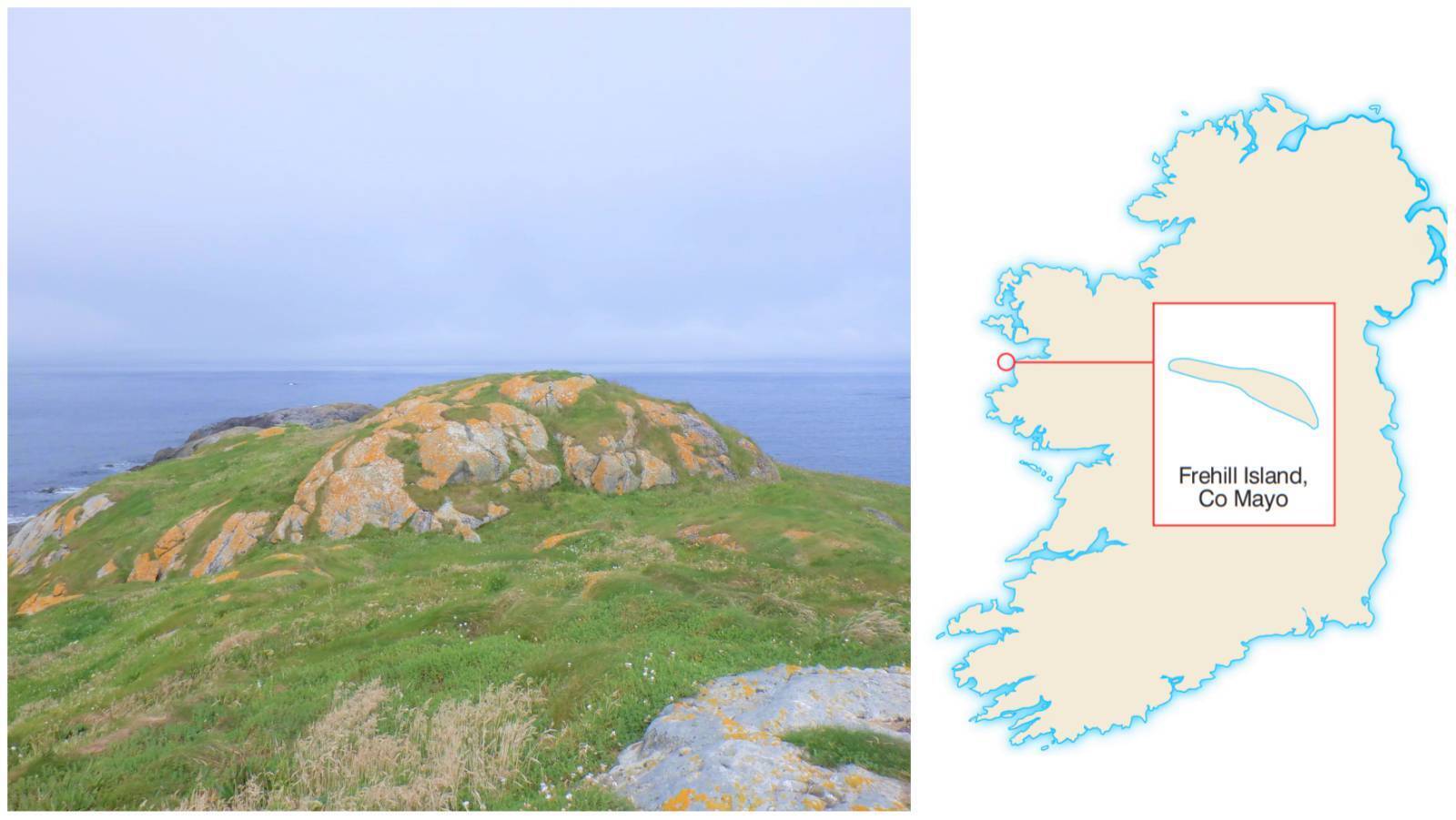
Frehill Island off the coast of County Mayo has had many name changes over the last few centuries but its current name may come from the heather which grows there
It is an old chestnut that the journey to a destination turns out to be of more value than the destination. Not that there is anything amiss with Frehill Island, County Mayo — it is as charming a hunk of rock as any visited for this column — but the sheer effort in getting to it makes the place itself pale into insignificance compared with the quest.
Frehill Island may seem like it is the last island between Ireland and America but much further out lie the three comparatively enormous islands of Clare Island to the north, Inishturk to the northwest and Inishboffin to the west. To the south, lie Inishdegil More and in the distance at the mouth of Ireland’s only fjord in Killary Harbour, the island of Inishbarra.
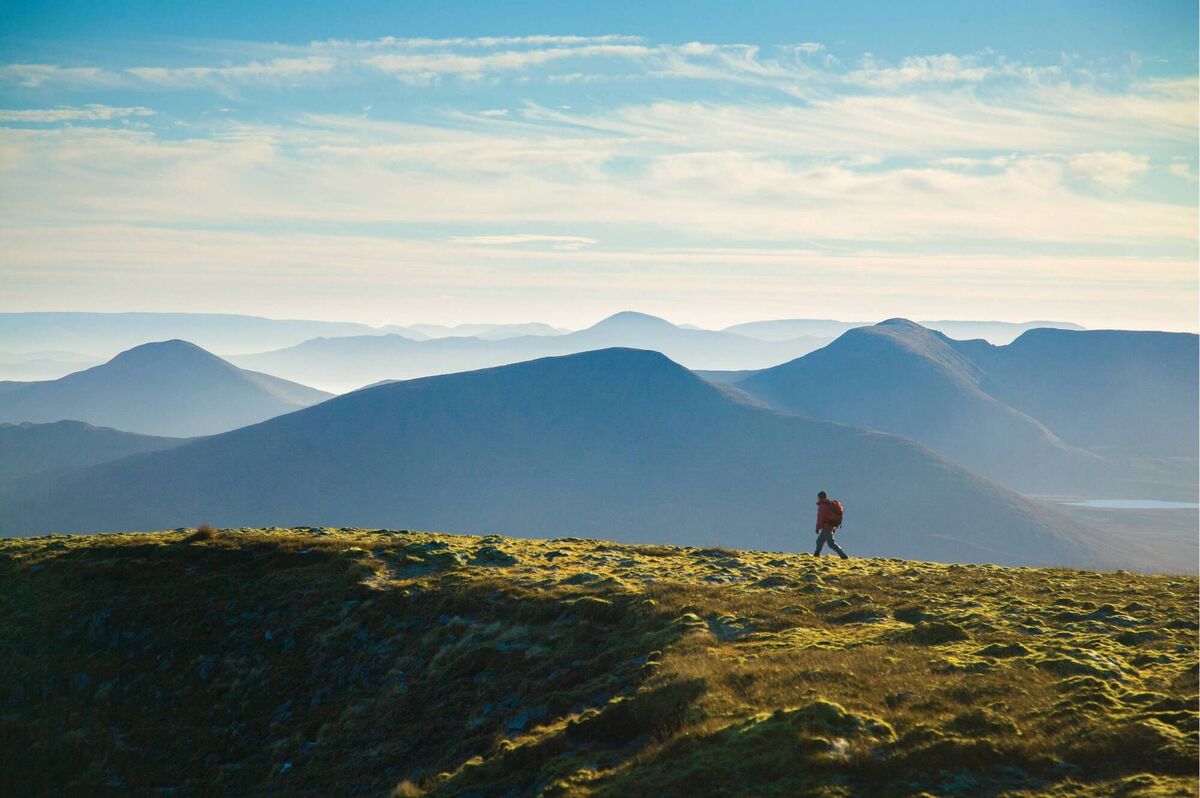
There are two obstacles to overcome in reaching Frehill Island from beneath the fastness of Connemara’s highest mountain, the hulking giant of Mweelrea. The second is of course, the sea. The first is the seemingly endless beach of White Strand whose vast proportions make insignificant any ant-like humans who dare to cross it. Dragging a kayak across it through heaps of either dry sand or wet sand, though aided by a kayak trolley, is a feat in itself. The sheer variety of sand is bewitching: Sand covered with sea shells left by the tide or dropped by gulls; hard sand with ripples that mimic the surface of wind-blown water; heaps of dusty sand high on the beach; soft wet sand where possibly billions of lugworms burrow feed on organic matter.
And if there are billions of worm-holes, there are trillions of grains of sand. It is a place subject to huge changes in the landscape and where a flood of sand has engulfed the former island of Tallavbaun.
The landing at Frehill Island is inhospitable and there is no welcoming committee to congratulate you for your efforts in visiting. The island’s five acres are about 500m long and with grassy areas abundant enough to support grazing sheep. There are the usual wildflowers and grasses you would expect: sea campion, cow parnsip (hogweed), and cinquefoil.
For such an apparently inconsequential island Frehill Island has inspired many name changes since the 14th century. Back then it was known in a series of Italian maps as Confrenchlan then Constachelin, then Congeforlan, By 1513 it was Confrendlam. The antiquarian TJ Westropp wrote that the Italian Portolan maps were far from accurate “but they form the most important contribution to detailed geography since the great work of Ptolemy appeared in the middle of the second century”.
It is curious that this very small island was included on these maps when many others were not. It is highly unlikely that the Italian sailors stopped there but as the most northerly island on the eastern part of the coast it merits acknowledgement, not least as a navigational aid. In Westropp’s view “when Ireland fails us Italy, strange to say, throws a feeble gleam of light on the record of the island [the nearby Achill]". He says it can be deduced that merchant ships in the wine trade taking hides and furs back to England and France “passed from the Blaskets to the Shannon mouth and on to Aran, thence past Slyne Head to the snug harbour of Bofin". In 1776 Frehill had something akin to its present name in Frechil (which suggests 'island of heather' as in the several Freaghillaun islands in Connemara). In 1830 it was Freehil and by 1839 its present name was adopted.
The bulk of the island lies in a northwest to southeast orientation and fragments of reefs too little to be called islands themselves, but vicious to the unwary, lie to the south amid seething seas. The nearby Govern Island, about a kilometre off in the direction of Killary Harbour is similarly inhospitable, though possessed of an intriguing name. Who would want to govern this rock? Neptune maybe. Or the Irish sea god Manannán mac Lir.
: Kayak from White Strand. No ferry.
: Proceedings of the Royal Irish Academy: Archaeology, Culture, History, Literature; Vol 301912/13; Journal of the Royal Society of Antiquaries of Ireland; Vol 4 No 4; Logainm.ie
CONNECT WITH US TODAY



Be the first to know the latest news and updates