Richard Collins: 'Whispers' in the whale maternity ward
Each year Southern right whales move to a shallow warm bay where mothers and calves can converse without being overheard — and attacked — by orcas 
Richard Collins: 'Whispers' in the whale maternity ward

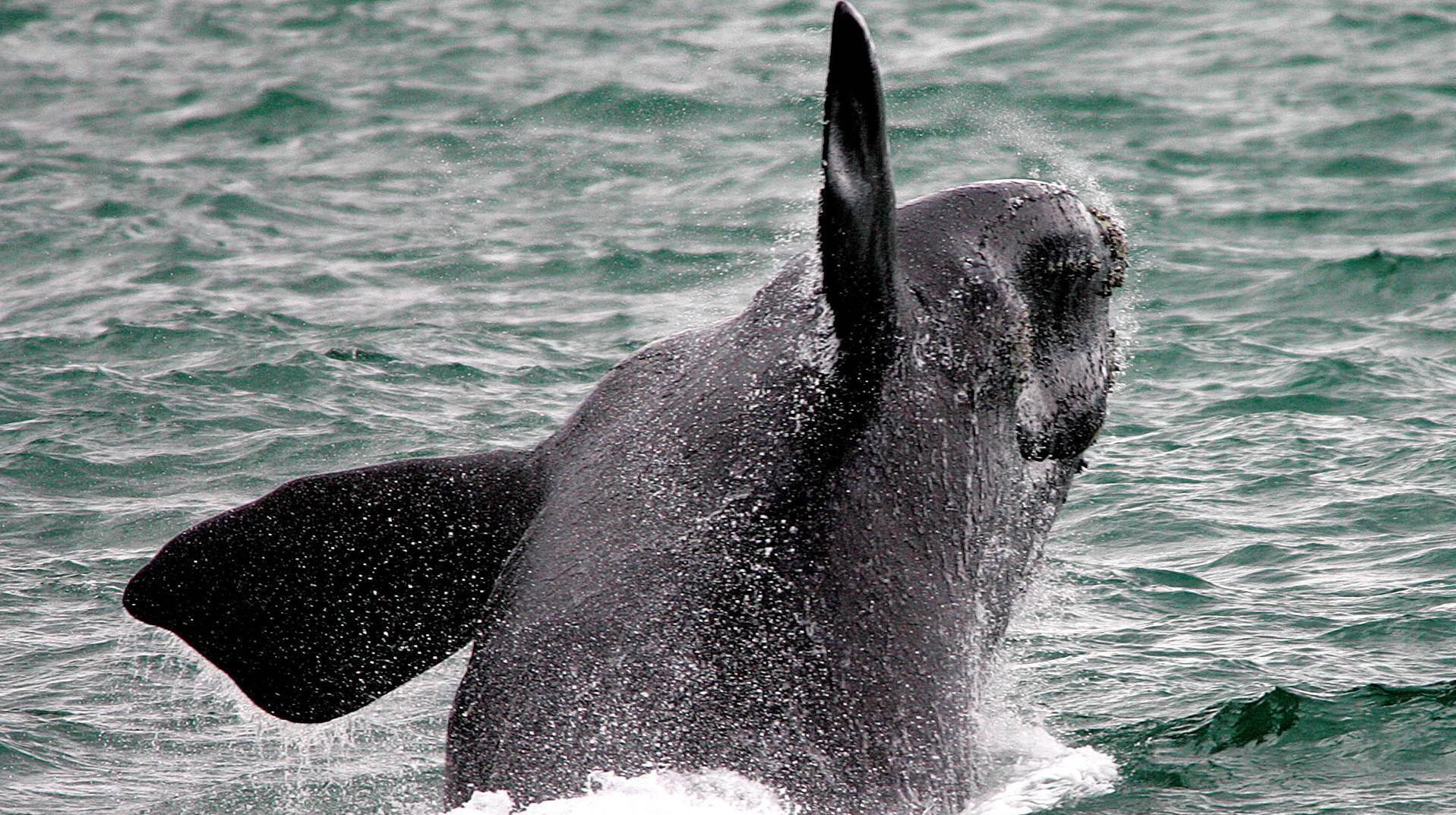
A southern right whale breaches the water at Hermanus, east of Cape Town, South Africa. Picture: Dave Fish/Bloomberg News

Hermanus is a seaside resort on Walker Bay, 122km east of Cape Town. Between June and November, winter in the Southern hemisphere, it becomes one of the world’s most celebrated whale-watching venues. At locations elsewhere in the world, the ocean giants remain well out to sea, requiring boat trips to encounter them but, in Hermanus, the whales come right in to the shore and can be watched, up close and personal, from excellent vantage points. There can be up to 70 whales in the bay on occasion. The local council even employs a ‘whale crier’ who blows a horn, made from local kelp, alerting people that a whale is approaching.

The species which displays itself so readily off the African coast is the ‘Southern right whale’. The whalers deemed it the ‘right’ whale to catch because tame and trusting, it could be approached and harpooned easily. The carcass floated, was easily retrieved, and yielded plenty of oil.

North Atlantic right whale mother and calf in waters near Wassaw Island, Georgia. 

The North Atlantic right whale, seen very occasionally in Irish waters, is a close relative. Unlike this northern species, which is ‘critically endangered’, the southern one has recovered from the massacres of industrial whaling and is now of ‘least concern’ to the IUCN.

Right whales are bizarre-looking creatures; black all over, apart from white patches on the belly. The head accounts for a third of body length and the torso’s maximum circumference equals 60% of the animal’s length. As with baleen whales generally, females are larger than males. Southern right females can be up to 15m long.

Southern Right Whale. Picture: hermanus-tourism.co.za/whale-and-shark-viewing/

But why does the southern whale venture so close to shore?

Calves need warmth; cold-water currents, flowing from the Antarctic along the South African coast, don’t suit them, whereas the bay’s inshore waters are relatively warm. Walker Bay is therefore the ideal whale maternity ward.

The bay also offers protection from the right whale’s sworn enemy, the orca; mothers and their calves are safe there from these ‘killer whales’. This may seem somewhat implausible, since orcas are capable of hunting in relatively shallow water and the locations of whale nurseries must surely be well known to them. But researchers at Syracuse University have found further evidence supporting the calf-security idea. They measured acoustics and sound propagation at sites on three continents frequented by right whale mothers and calves.

Whale songs are extremely loud and travel long distances, but they are not the only whale vocalisations. A Danish team fitted acoustic recorders to nine female whales. When the animals submerged, they produced quiet calls which could be heard close to them but became masked by background noise even 200m away. Right whales use these calls to ‘whisper’ to their calves. An orca would have difficulty overhearing such conversations.

But sounds propagate less well in shallow water than in the open sea; the sea bottom and rocky shoreline block transmission and the noise of waves breaking on beaches masks whale sounds. By moving into Walker Bay, mothers and babies reduce their risk of detection by eavesdropping orcas.

The researchers suggest that mothers of other whale species may also use such ‘ acoustic crypsis’.

More in this section

Revoiced

Newsletter

Sign up to the best reads of the week from irishexaminer.com selected just for you.

Cookie Policy Privacy Policy Brand Safety FAQ Help Contact Us Terms and Conditions

© Examiner Echo Group Limited