Richard Collins: How fear alone can impact birds and lower population growth
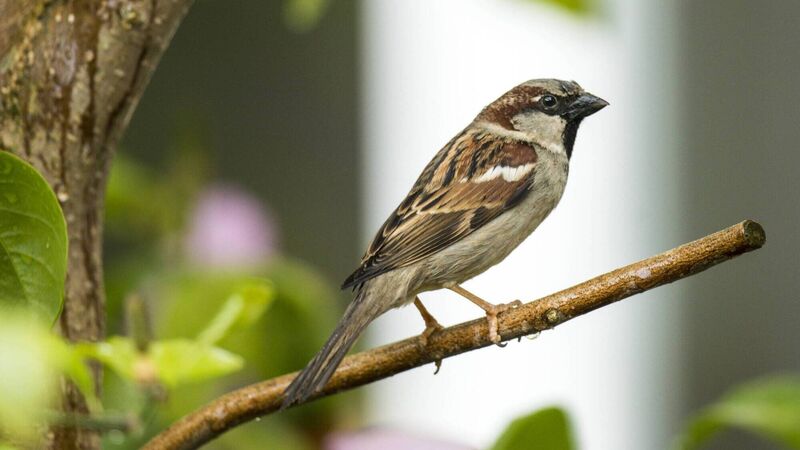
Parent birds hearing predator call play-backs produced 53% fewer recruits to the adult breeding population than those hearing non-predator calls.
"The only thing we have to fear is fear itself," declared Franklin Roosevelt during his inaugural address in 1933. It became his most famous utterance.
Eleanor his wife, when asked about its origins, said that Roosevelt had read Henry Thoreau’s work. "Nothing is so much to be feared as fear," was an entry in the great naturalist-philosopher’s journal.
But is fear to be feared? The results of a Canadian study, just published, suggest that it is, at least if you are a bird.
Predators impact their prey directly, but do they affect them also in less obvious ways? Could stress, induced by the mere presence of predators, take an additional toll on wild creatures? If so, how significant is the threat?
In a paper just published, Marek Allen and researchers from the University of Western Ontario address this question. They measured the effects of fear on a population of wild song-sparrows. These distant relatives of our own house-sparrow frequent bushes, gardens and roadside hedges throughout North America.
Although not everyone would approve of subjecting wild creatures to artificially induced stress, Allen and his colleagues decided to put ‘the fear of God’ into song sparrows and record its effects on them. They chose sparrows living on five small coastal islands in British Columbia for the experiment. Some song sparrows migrate, but these island ones are year-round residents.
The team broadcast "predator vocalisations at high but naturally occurring rates" to sparrows over three breeding seasons. The calls were transmitted on 54 of the birds’ territories, while vocalisations of non-predatory birds were transmitted at 51 locations.
Electric fencing and netting ensured that every nest was protected from predators so that variations in nesting performance would be down to the broadcast calls and not to other hazards. Each nest was visited daily. Video cameras provided constant surveillance.
Both adult and young sparrows were given colour-coded leg rings. Radio-tags enabled the movements of 151 young sparrows to be tracked from fledging onwards. Singing "is predictive of survival during adulthood’" so the numbers of songs produced by each of 24 ‘recruits’ to the breeding population were logged.
The fate of each of 564 eggs and 507 nestlings was determined "with certainty".
Fear, the results showed, "significantly reduced population growth rates". Numbers were "projected to halve" in just five years. Parent birds hearing predator call play-backs produced 53% fewer recruits to the adult breeding population than those hearing non-predator calls.
Fear, the researchers conclude, "may constitute a very considerable part of the total impact of predators." The fear factor has implications for all stakeholders.
Predators must keep as low a profile as possible, to "avoid frightening the horses"; ambush and stealth hunting methods are needed. Vulnerable prey, on the other hand, must be hyper-vigilant to survive; "discretion is the better part of valour" for them.
Zoologists modelling natural populations, must not only record the number of victims predators kill and the production of young to compensate for the losses. These reveal only part of the true picture. Was Roosevelt wrong; have we, in fact, much to fear from fear itself?
Read More
- Marek Allen et al. Fear of predators in wildlife populations reduces population growth over generations. Proceedings of the National Academy of Sciences. 2022.


CONNECT WITH US TODAY



Be the first to know the latest news and updates