Islands of Ireland: Named for a saint, Dunsy Island in Co Down was once held sacred
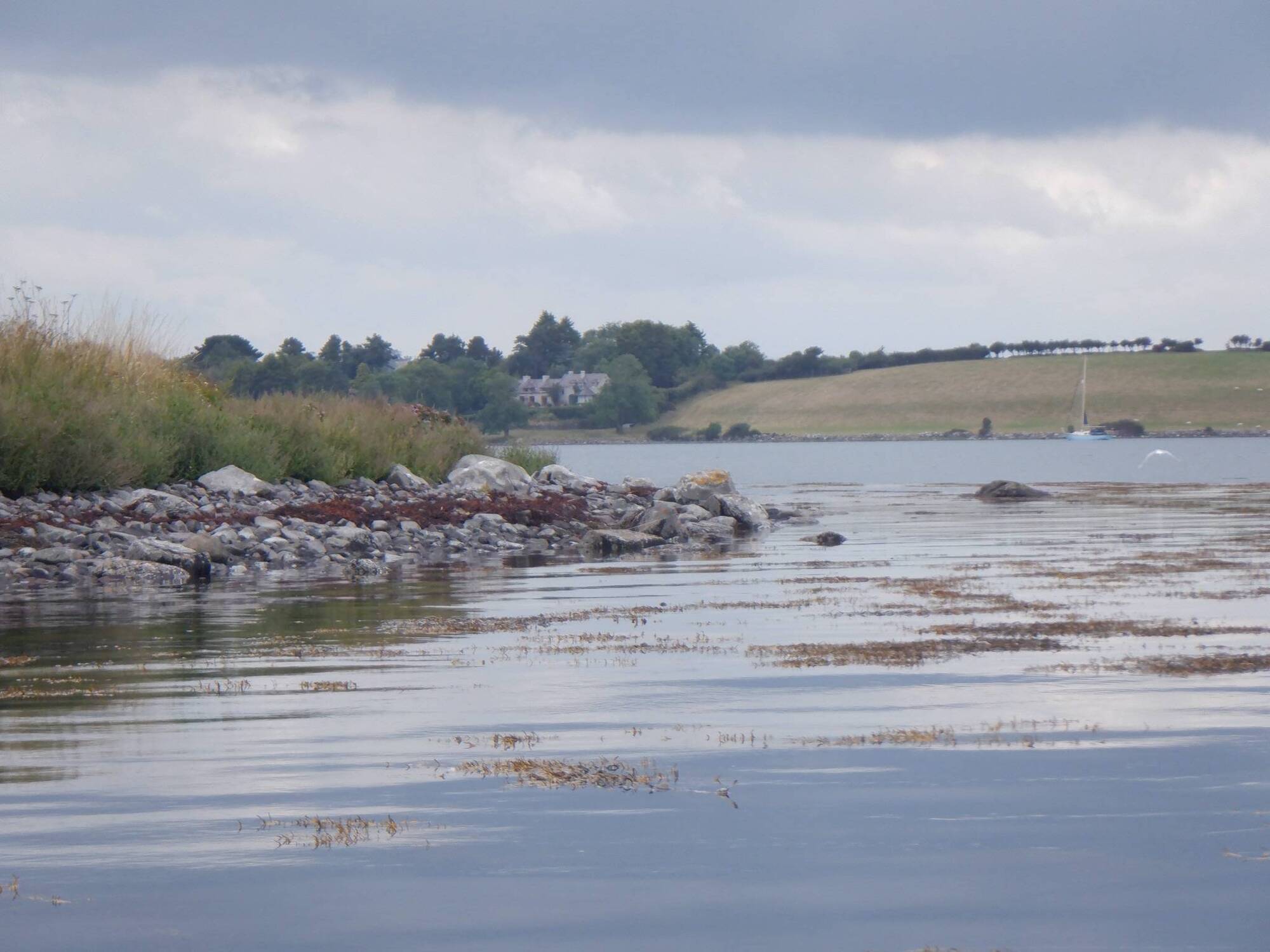
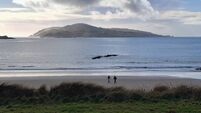
The central part of Strangford Lough, Co Down has dozens of islands including Dunsy Island. Picture: Dan MacCarthy
While we have only one Hermit Island, located in the bountiful Lough Key in Co Roscommon, there are several others that served the same purpose in the early years of Christianity on this island: namely, to offer isolation from society to those seeking solace and a sense of being closer to god.
As these were for solitary pursuits the hermitages were usually found far from the prying eyes of the curious, though the very curious would seek them out for spiritual guidance. A hermitage comprised of usually a basic stone house of small size and occasionally included an altar for worship.
Such islands are distinguished from the many other islands that had monastic settlements of some kind, most famously Skellig Michael in Co Kerry.
An ecclesiastical historian of the late 19th century, George T Stokes, identified 100 such sites, the majority being in the west of the country.
Dunsy Island in Strangford Lough, Co Down, is part of a group of a northern cluster of monastic islands as illustrated by the historian Annette Kehnel.
“Of the 51 island monasteries in inland waters, more than half are situated in the North. The Fermanagh region with Upper and Lower Lough Erne appears to have been an El Dorado for monks,” she writes.
The bell-shaped Dunsy Island is at first sight just another drumlin in the myriad of islands in this largest inlet in Ireland. Today, the 33-acre island is exclusively farmland where long fields stretch across its width and a farm is situated at the southwestern corner. The island is close by to Ringhaddy Cruising Club which is one of the several boating centres in the lough. Islandmore, Darragh Island and Pawle Island The lough is the largest inlet in Ireland covering 80sq nautical miles.
Dunsy Island was once home to a hermit as was another island in Strangford Lough, Chapel Island. A commentator wrote about this island that “it was an ideal location for such a hermitage offering ample food via fish traps and shellfish and a freshwater source that enabled self sufficiency, along with island isolation”. And what is true for Chapel holds true for Dunsy.
With a lovely view of the Mourne Mountains and benign waters lapping at the shore it is indeed a place that offers serene contemplation (as do many others, of course). However, there is even evidence of far older human settlement here in the form of flint artefacts dating from the Mesolithic period. Dunsy Island went through many variations of its name with one of the earliest references rendering it as Dunshagh-Ile. Other versions were Ilandunshagh, Iland Duns and by 1744 Duncey-Isle.
The temptation here is to ascribe its suffix to the all-conquering Norse whose toponymical footprint can be seen all over the not-too-distant Scotland in Orkney, Rousay, Westray where ‘ay’ and ‘ey’ refer to island. Ireland has several such examples too in Lambay, Dursey, and Ireland’s Eye. Dunsy Island is a much later description than those of the previous millennium. The island’s name derives from the Irish saint Dunshach (Duinseach) according to a 19th century Bishop of Down, William Reeves.
And the Irish Examiner can endorse that lack of evidence as a short trip last summer presented little more than hilly grassland to supplement the farm. There is little doubt though, that it once supported a hermetic way of life for at least one individual the last traces of whom appear to have been erased from the map. However, it is hoped that one day excavations may yield evidence of the time when the virgin Dunshach cogitated on things cosmic.
- Kayak from Whiterock Bay, east of Killinchy, Co Down; http://www.canoeni.com/canoe-trails/strangford-lough; strangfordloughactivitycentre.com/outdoor-activities/sea-kayaking/
- Ecclesiastical Antiquities of Down, Connor, and Dromore, 1837, William Reeves; List of Medieval Religious Houses on Islands: Ireland, in: Inselkloster / Klosterinseln, Annette Kehnel, Berlin, 2019
CONNECT WITH US TODAY



Be the first to know the latest news and updates