Working Life: Research shows that babies benefit when parents talk, sing, and read to them
Ciara O’Byrne, neonatal clinical specialist speech and language therapist, The Coombe Hospital
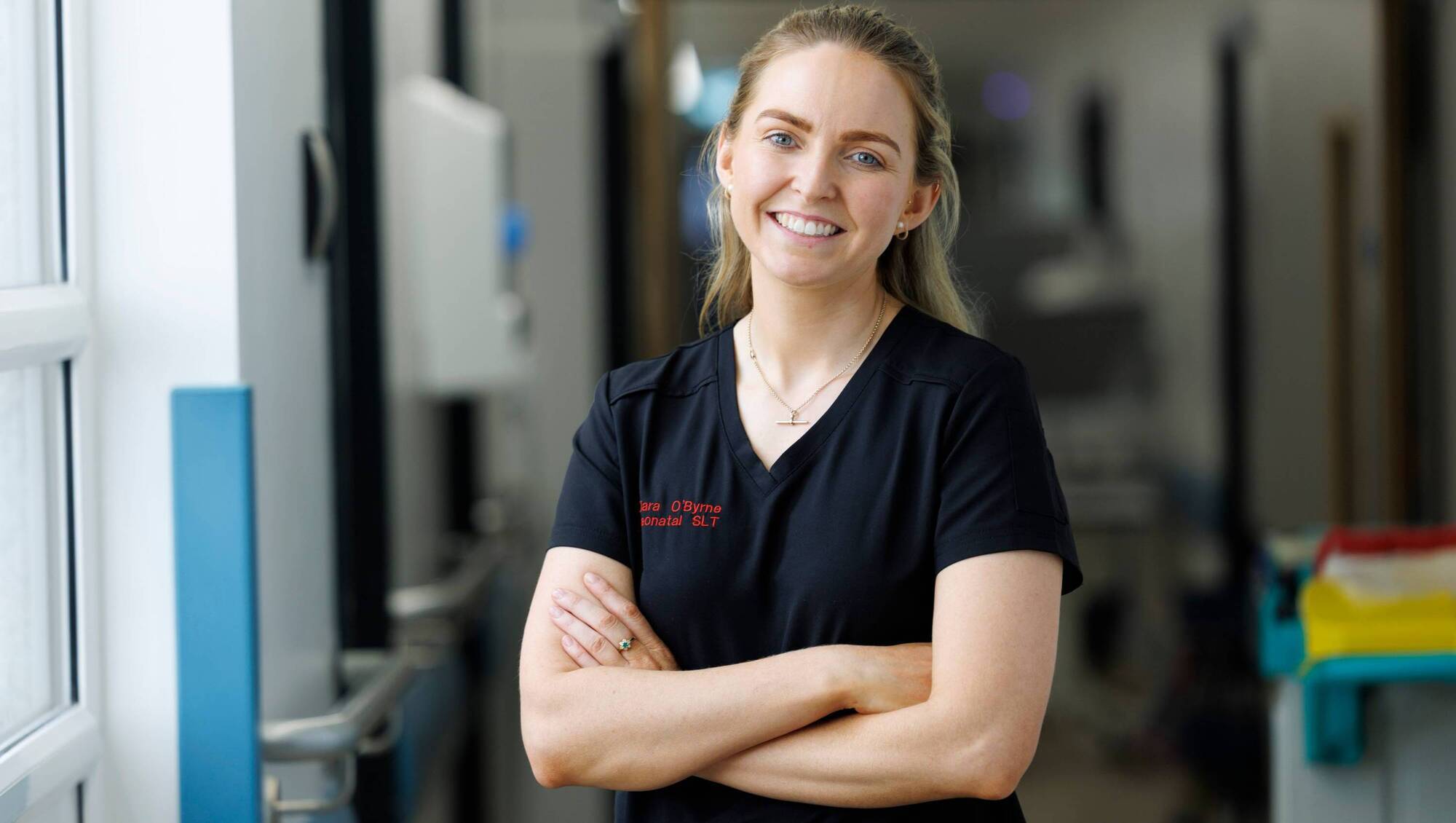
“The role of the neonatal speech and language therapist is relatively new and evolving, but there is growing recognition that feeding and communication go hand in hand from birth. With more babies surviving from as early as 22 weeks’ gestation, I support infants with complex feeding and communication needs, including those born prematurely or with cardiac abnormalities and cleft lip and palate. This is in collaboration with the wider multi-disciplinary team.
“My role is less about speech in the traditional sense and more about helping parents and staff recognise and respond to a baby’s communication cues. Babies communicate from birth through eye contact, facial expressions, body movements, and the sounds they make.
“Many premature babies have difficulty coordinating sucking, swallowing, and breathing required for safe feeding. I work closely with infants and families to support feeding development and reduce risks such as aspiration, where milk enters the airway, and oral aversion, where a baby develops a negative response to anything involving the mouth.
“I work in The Coombe, but also in Children’s Health Ireland at Crumlin. In both locations, we use the ROSE framework, which stands for readiness, oral skills, safe swallow, endurance, and efficiency. This helps assess whether a baby is ready for oral feeding and how they are managing when they feed. The baby should demonstrate appropriate skills in all of these areas.
“Parent education is a key part of my role. Small changes can make feeding safer, more efficient, and less stressful. I aim to help set up infants and their families for a lifetime of positive feeding experiences.
“Many babies in the neonatal unit require respiratory support or tube feeding for periods of time. We often use positive touch, soother dips or expressed breastfeeding trials to encourage feeding skills through non-nutritive sucking while awaiting the right time for oral feeding trials. While soothers can be controversial, they can help babies practise sucking without the challenges of milk flow and swallowing.
“There are many opportunities for connection and responsive interaction in the neonatal unit. Research shows that babies benefit when parents talk, sing, and read to them.
“My choice of profession was influenced by my love of working with babies, but also by my childhood experiences — I didn’t begin speaking until I was two or three years old.”
Read More