Your body clock knows the best time to run

The main benefit to exercising in tune with your body clock is that it can help you stay consistent with your exercise says personal trainer Sam Quinn. Picture: iStock
In a recent study, approximately 150 adults with at least one cardiovascular risk factor were assigned to exercise in the morning or evening for 12 weeks. While all participants improved, those who exercised in line with their body clock (chronotype) showed greater reductions in blood pressure and larger gains in heart health, fitness, and sleep quality. The findings are published in the journal
We spoke to personal trainer Sam Quinn about whether we should sync our exercise with our chronotype, which is our tendency to be more active or wakeful at certain times of the day:
Chronotypes are often simplified into ‘morning larks’ (early birds) and ‘night owls’ (evening types).
“Morning people, or early risers, are people who find that their energy levels are optimal first thing in the morning and often find that they are more productive during the first part of the day,” says Quinn. “Whereas, a night owl, or someone who is more of a night person, would be someone whose energy levels are optimal later in the day or the evening. These are people who like to stay up late.”
“The main benefit is that it can help you stay consistent with your exercise,” says Quinn. “We’ve all got busy lives, and everyone’s got different preferences, but the best programme is going to be the one that you’re going to be able to stick to.
“For example, if you set a workout programme where you have to go to the gym at eight o’clock in the morning, and you’re a night person, you might fail before you’ve even started.
“However, if you select a time which is more suited to your preferred time of day and your body clock, where you feel more energised and it works better for your schedule, you’re going to be much more consistent and much more likely to achieve your goals, whether that’s improving your mental health, an aesthetic goal, or a performance-related goal.”
“The main physical signs to look out for are to do with energy levels and performance,” says Quinn.
“For example, someone’s output might be affected. They might be struggling to train that day, are not turning up consistently, and are struggling to hit their designated reps or loads, therefore might not be able to accomplish their physical goals in the gym. Sometimes, people look visibly deflated. Their energy levels are depleted, they’re looking lethargic, and might not be engaging with conversation. If someone is feeling lethargic and tired, they’re not going to get the most out of their session, and not going to enjoy it.”
The quantity and quality of your sleep can have a big impact on your energy levels during a workout.
“If you’re training regularly, but you’re not sleeping and recovering adequately, you’re not going to be energised and are not going to be able to perform at your best during your workouts,” says Quinn.

Stress can also sabotage your workouts.
“I would say that lifestyle-related stress is one of the biggest factors that impacts people’s energy levels, focus, motivation, and frequency of workouts,” says Quinn. “When people come in to train, they might vent about their work-related stress and might only get through 50% of the work that was planned for that session. So, stress can be a really big obstacle.”
Fuelling yourself adequately is also key.
“Make sure that you’re recovering appropriately from your workouts with the correct nutrition and are fuelling yourself appropriately, depending on what your goal is,” says Quinn.
“Try to educate yourself on these variables that are going to impact your goals — such as your sleep, nutrition, hydration, and recovery — so you can utilise all of this to help you to achieve your long-term goals.”
“Many people think they are a morning person or have read that the best time of day to train is the morning, but when they train in the morning they feel tired and lethargic,” says Quinn. “Some people also don’t sleep as well because they’re anticipating trying to get into the gym in the morning.
“Finding the right time to train and exercise can take a bit of trial and error and can sometimes take quite a long time to figure out,” says Quinn. “Be flexible and try a few different times to see what’s optimal for you, what works with your lifestyle, and what is going to enable you to be consistent over time.”
Let how your body and mind feel guide you. “I regularly have to communicate with my clients and ask them, ‘How are you feeling? Is this the most suitable time for you’?” says Quinn.
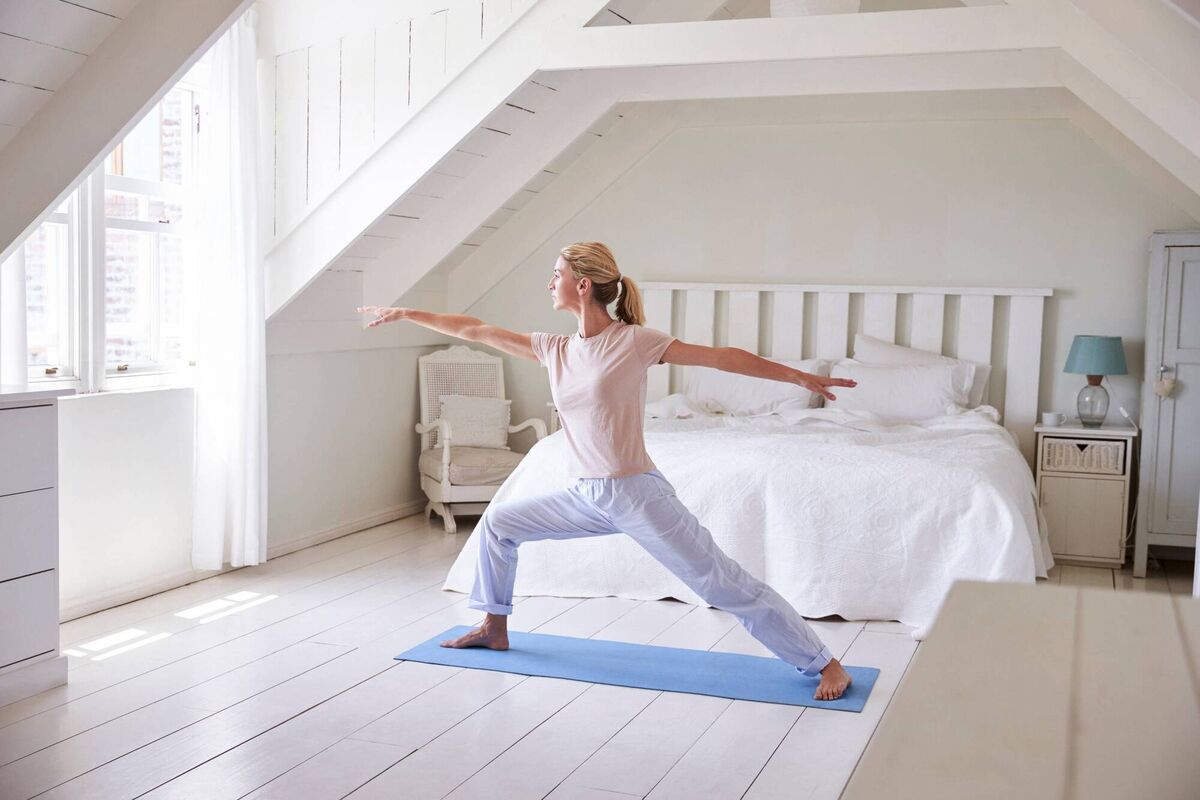
Most importantly, he reminds people to choose an activity they actually like.
“Find out what type of exercise you actually enjoy and that you are going to be consistent with,” says Quinn.
“It doesn’t have to be strength training — it could be a dance class, yoga, or endurance running.”

CONNECT WITH US TODAY



Be the first to know the latest news and updates