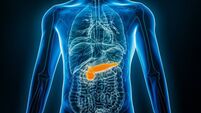
Bowel screening is a powerful tool in preventing cancer, so why is Irish uptake so low?
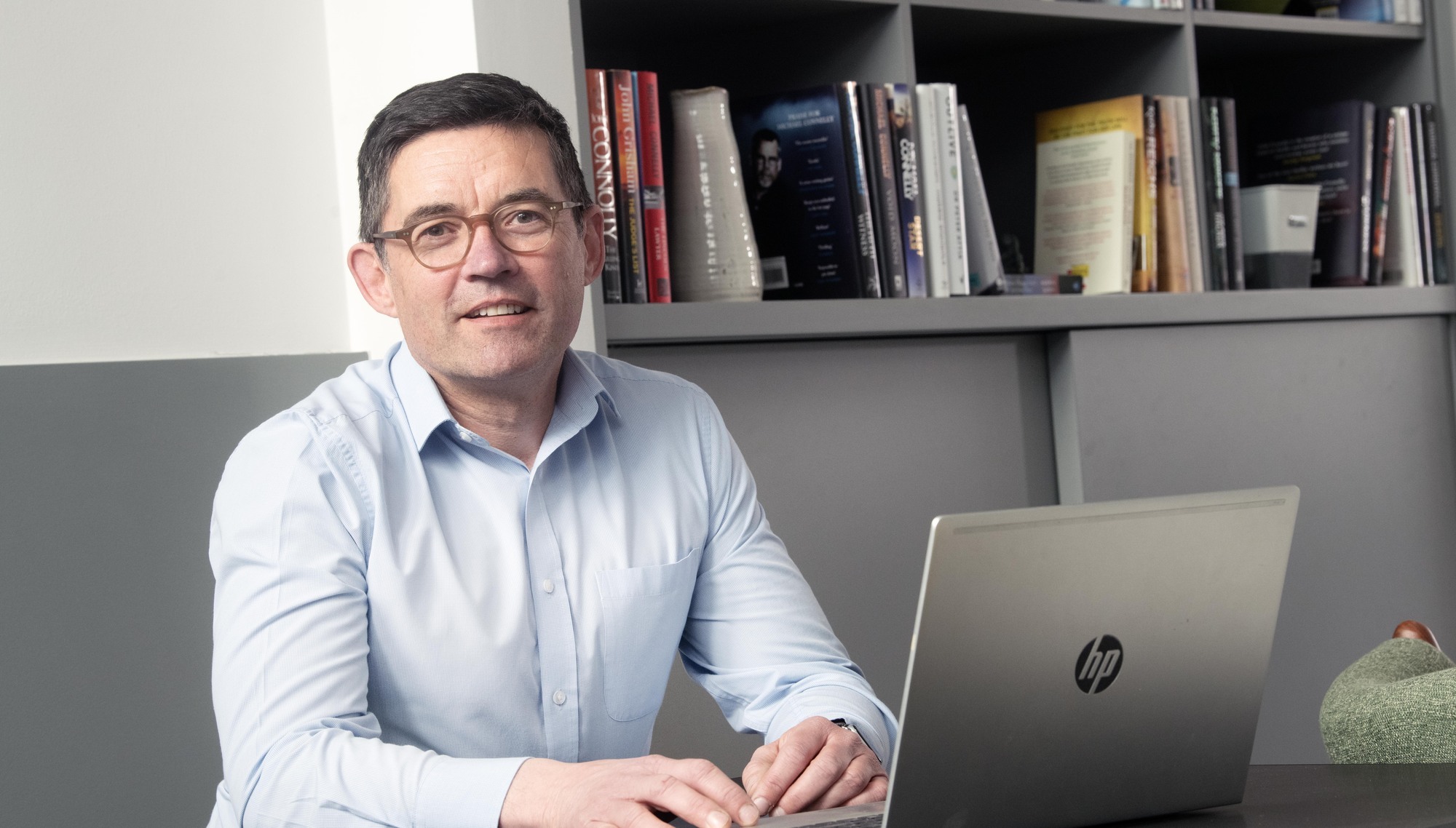
BowelScreen, Ireland’s national bowel cancer screening programme, offers people aged between 58 and 70 a free at-home screening test every two years. Pictured: Dr Alan Smith, Consultant in Public Health Medicine - NSS Population Screening Programmes. Picture: Moya Nolan
However, fewer men than women are participating. This is despite males being at a higher risk of developing bowel cancer.
Approximately 2,500 cases of bowel cancer are diagnosed in Ireland every year (1,500 in males and 1,000 in females), statistics from the National Cancer Registry (NCRI) show. This makes it the second most common cancer in men and the third most common in women.
NCRI statistics also show that bowel cancer accounts for an average of 1,012 deaths annually.
Yet only one in three women in the eligible age group take up the first BowelScreen invitation, and only one in four men do. Dr Alan Smith, a consultant in public health medicine with the National Screening Services, recognises that both figures are low.
“Our initial target is a 50% overall uptake, and in the last BowelScreen programme report 2022-2023, the uptake was 46.4%,” he says. “Uptake among people invited for the first time remains our biggest challenge, particularly in men.”
Irish figures compare poorly with international screening programmes. For example, 67.6% of people invited for screening in England took up the offer, as did 66% in Scotland.
However, like in Ireland, there was a greater reluctance among males. Some 70.3% of eligible women took part in the screening programme in England, compared to 64.9% of eligible males. The discrepancy in Scotland was similar, at 68% to 63%.
Smith suggests three possible reasons for men’s reluctance. To begin, BowelScreen is the first screening programme that includes men. “Women are more used to screening, because of CervicalCheck and BreastCheck,” he says.
The second factor is squeamishness. When you take part in BowelScreen, you are sent a faecal immunochemical test (FIT) kit in the post. It consists of a test tube with a screw-top lid to which a stick is attached. There are also simple instructions on how to use this stick to collect a small stool sample and then return it by freepost for analysis.
“People — both men and women — are embarrassed by poo,” says Smith. “We know it puts some people off.”
The third reason is men’s less frequent interaction with the health service. Smith says that “international research shows men generally avoid preventative healthcare and are more likely to wait until there is something that needs to be fixed”.
Dr Nicholas Clarke is a public health researcher at the Royal College of Surgeons in Ireland. He studies cancer prevention and survival, with a particular focus on population-based cancer screening.
In 2016, he published a study based on the pilot project that preceded the introduction of BowelScreen. It found that the people least likely to engage with the screening were men and both genders from the lowest socioeconomic backgrounds.

“We run the risk of further widening health inequalities if we don’t convince men and people from the lowest socioeconomic backgrounds to take part in screening,” he says.
Clark has since trialled a way to do this. In a 2025 paper, he outlines how, instead of sending people an information letter about BowelScreen and asking them to request a FIT kit, sending them the kit at the same time as the information letter resulted in a 6% higher uptake than sending the letter alone.
“Some 48% of those who received the information letter went on to take part in BowelScreen, while 54% of those who received the FIT kit at the same time as the information letter did,” says Clarke. “Removing one step from the process could bring the uptake rate from where it is now — 46.4% — to over 50%, which exceeds the current target.”
This recommendation has yet to be implemented by BowelScreen, but Clarke explains that “its cost-effectiveness has to be investigated first. If 54% use the kits, then 46% are going in the bin. That’s a lot of waste and we need to see if that waste is balanced out by improvements in health and consequent savings to the health system.”
Other countries with low uptake rates of bowel cancer screening programmes are also experimenting with ways to encourage more people to take part. In Australia, a novel approach is tackling people’s squeamishness about poo. Men who have sent off a stool sample can download an app and make short videos using the poo emoji to send to their friends to raise awareness.
While there are no plans to introduce such an app in Ireland, Clarke believes there is a need to spread the word about the effectiveness of the FIT kit tests.
“And by the time we do have symptoms, it’s usually at a later stage and more difficult to treat, resulting in higher rates of mortality,” he says.
“But a FIT test, followed by a colonoscopy, can detect cancer at an early stage, or even before it becomes cancerous. More people taking part in BowelScreen would significantly reduce the impact of the disease.”
The FIT kit used by the BowelScreen programme is internationally regarded as one of the best non-invasive screening methods for use across the general population. Smith says that because most cancerous or pre-cancerous cells bleed, the test works by testing each person’s stool sample for traces of blood.
In 2022 and 2023, 3.1% of FIT kits tested positive for blood, and some 11,000 people were referred for colonoscopies. These colonoscopies found and removed abnormal tissue growths — known as polyps or adenomas — in more than 4,000 people and also detected 448 cases of cancer.
“What we want people to realise is that the FIT kit test is one of the best and simplest things you can do for your health,” says Smith. “It’s free, takes five minutes, and you can do it in the privacy of your bathroom. It can find cancer at a very early stage, before you ever show symptoms, and can even stop cancer from developing in the first place by removing polyps. Bowel screening is one of the most powerful tools we have in cancer detection and prevention.”
“And those who have cancer detected during the process can have years added to their lives, all because they took five minutes to put a bit of poo on the end of a stick. They and their families are thankful for the FIT kit.”
Smith has seen preliminary figures from the next BowelScreen Programme report and says that uptake rates are “rising slowly, which shows people are beginning to understand the benefits of the screening programme”.
If they need further convincing, he points to the five-year survival rates for bowel cancer. “They have increased from 50% to 66% over the past 20 years, thanks to earlier detection, more targeted treatments, and greater awareness of symptoms,” he says. “To those improvements, we have added BowelScreen, and the NCRI data show the largest survival gains have occurred in the screening age group.”
There has been a 20% increase in the five-year survival rate in the screening cohort.
“This shows screening is having an impact,” says Smith. “That’s why we’re trying so hard to increase the uptake in screening. For every percentage increase, lives will be saved.”
Smith’s final message is that, regardless of the strength of the BowelScreen programme, people still need to be aware of bowel cancer symptoms.
“The FIT test isn’t perfect,” he says. “It detects blood in the stool, but if you have a polyp that doesn’t bleed or only bleeds intermittently, it may not detect it. So take symptoms seriously. It doesn’t matter if you participate in BowelScreen today; if you get symptoms tomorrow, talk to your GP.”
Symptoms include changes in bowel habits, diarrhoea, constipation, blood in the stool (which can be red or black), tummy pain, and discomfort.
“You know your body better than anyone,” says Smith.
“So if it’s telling you something is off, tell your doctor about it.”
- Changes in bowel habits — diarrhoea, runny bowel movements, constipation, needing to poo more or less often than usual.
- Blood in your poo, which may look red or black.
- Abdominal issues — cramps, general abdominal pain, bloating that doesn’t go away.
- Weight loss when you’re not trying to lose weight.
- Tiredness and lack of energy when you’ve had enough rest.
- Any unusual change you know isn’t right for you.
- If you experience one or more of these symptoms, you should make an appointment to see your GP.
- For information on bowel cancer screening and using home test kits, see: hse.ie/conditions/bowel-screening

CONNECT WITH US TODAY



Be the first to know the latest news and updates