I'm glad I said yes to BowelScreen invites — my fourth routine test found cancer
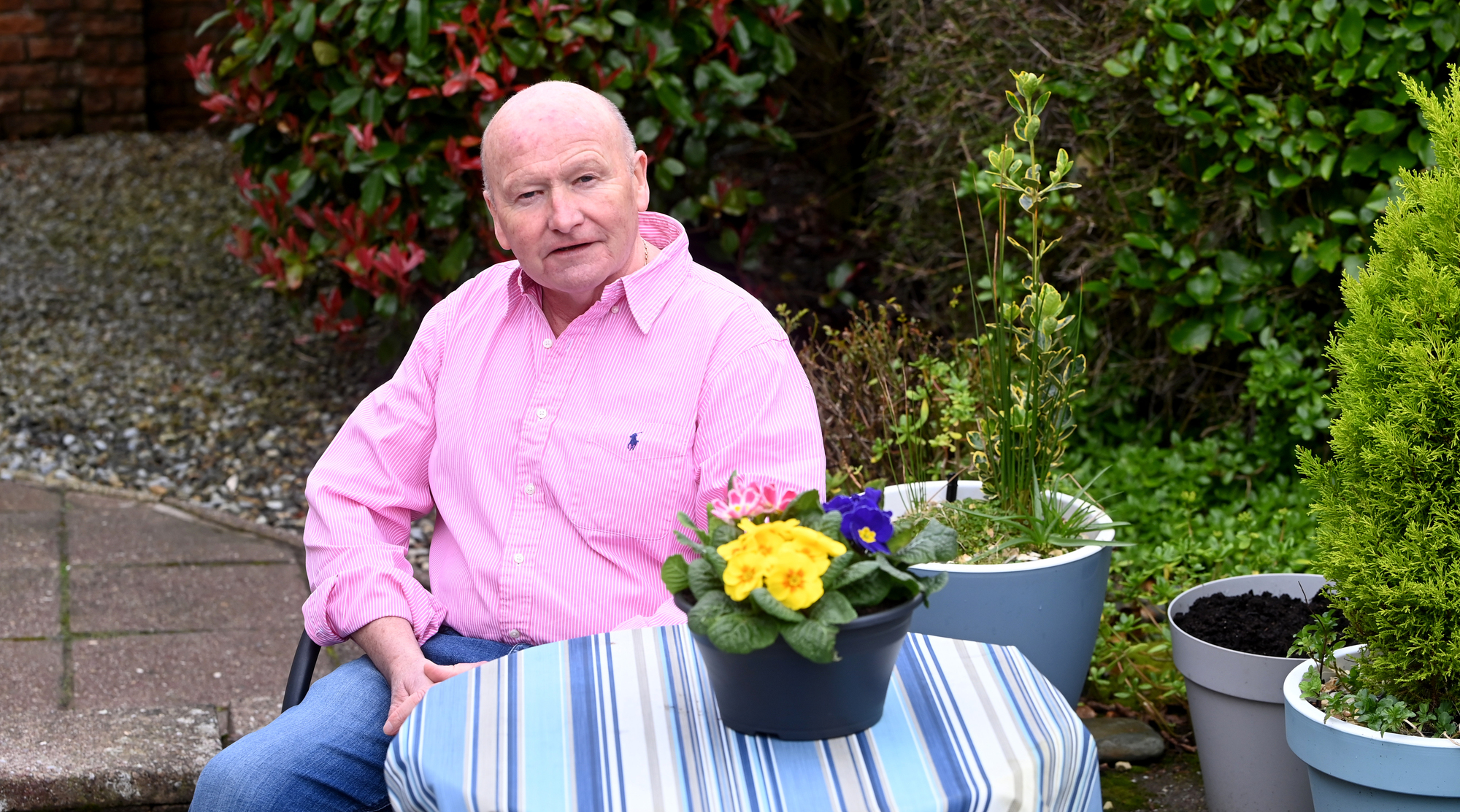
Mike Brady, whose bowel cancer was found through the BowelScreen programme. Picture: Larry Cummins
Only a month before Midleton man Mike Brady was diagnosed with sigmoid rectal cancer, the 67-year-old was in New York for a week.
“We walked everywhere. I had no symptoms at all,” says the dad of two grown-up daughters, who is married to Dorothy.
Brady’s cancer was detected last summer through BowelScreen — he had been doing the home test every two years since first being invited at 60. “It would have been very simple for me to say ‘I’ve done this test three times now — I’m OK’.
“In fact, it was this fourth test that showed I had a problem.”
Retired from the motor trade where he’d worked for 35 years, after which he was a bus tour driver and guide, Brady had led a determinedly healthy lifestyle. “I did all the usual blood tests from a young age. Regularly every 12 months, I got my cholesterol, blood pressure, and PSA test done.
“I was on blood pressure and cholesterol tablets, I’d had a hip replacement — but there was never any indication of an issue with my bowel. I was fit and walked up to 7km a day — walking is my happy space. I eat a well-balanced, high-fibre diet. I gave up smoking when I was 20.”
When Brady received a letter from BowelScreen within two weeks of doing the test to say he needed further investigation, it was totally unexpected. “I was shocked to hear something was going on.”
Very soon, he got a phone call from BowelScreen at CUH, inviting him to come for colonoscopy. “A BowelScreen clinical nurse manager went through the results with me. He explained how everything was going to work, about how the colonoscopy procedure worked.
“I asked what they’d normally find when these tests are done. Obviously, he couldn’t say, but I understood it could be something simple — or more sinister. I was nervous but I also felt confident everything would be OK.”
Colonoscopy over, Brady was told the doctor would speak to him. “I started to twig something was a bit astray … I was told they’d seen something of concern, and I’d need more investigation to diagnose exactly what. I was surprised, shocked. They weren’t saying cancer, but they’d found something.”
With a biopsy taken during colonoscopy, Brady then underwent CT and MRI scans. “Unfortunately, I had sigmoid rectal cancer — the tumour would have to be surgically removed. It was in the lower part of the bowel. There was a question as to whether I’d end up with a temporary or a full-time stoma bag afterwards,” Brady says. “It was shocking news. But they’d found it early. As far as the doctor could see it hadn’t spread anywhere else — it was contained.
“I said to the doctor that I was feeling good, I had no symptoms, I could actually continue on, feeling like this. My concern was if they operated, would I somehow give myself problems, or speed something up? I said, ‘What happens if I don’t have treatment?’.
“She said I could end up with a blockage within six to 12 months. This could lead to an unplanned emergency operation and the cancer could also spread. I decided to go ahead with surgery.”
A cancer diagnosis almost immediately puts you “in a different existence”, Brady says. He didn’t share his news with many, other than his family. “My daughters knew about it, of course. My family were upset, worried. When you hear ‘cancer’, you don’t know the outcome. All I could do was keep positive, but the worry was there.”
Brady had his colonoscopy on July 11 — surgery took place on August 18. “It was major surgery,” he says, describing how pre-operation he was measured for a stoma bag, the nurse measuring two locations on his torso. If the stoma bag were on the left side, it would probably be permanent. If it was on the right, it would be temporary, he recalls being told.
“When I woke after surgery, I put my hand down to see which side it was on. It was on the right. That was a great confidence boost.
“I had robotic surgery, which I believe helps with recovery. Within four or five days, they were able to tell me I didn’t need radiotherapy or chemo — they’d succeeded in getting all the margins of the tumour. A huge relief.”
Brady had the stoma bag reversal in January this year. “I’m working to get my bowel back to normal. I’m on medication for urgency, frequency. I follow an exercise regimen to get all the muscles back working. I’m walking again. I’m back up to 6km or 7km most days.
“Psychologically, I don’t think it has affected me too much. That’s just me. It has happened, and I could have been a lot worse. When I came out of hospital after the stoma reversal it was difficult — I felt I couldn’t leave the house because I had to be near a toilet. Then I started to go out and to prepare for how to manage it.
“Walking in the countryside, there have been times when I was caught out, but if I don’t go out, I’ll be sitting inside feeling sorry for myself. The doctor says it will all settle down — it could take six months — all I can do is trust.”
After he began sharing his story with friends and neighbours, some reported they had got the BowelScreen test and completed it, on the strength of hearing about his experience. To anyone reluctant to take up the BowelScreen invitation, Brady says: “The test only takes a few minutes. It’s simple to do. Literally scrape a sample stick in your poo, put it in a container and then into a self-addressed envelope. It’s that simple.
“When you get the test in the door, stick it in the bathroom and next time you’re in there, do it. And if you’ve done it three times and it’s been fine, don’t ignore it the fourth time.”
The CUH endoscopy unit began providing endoscopy services for BowelScreen in summer 2025 —Brady was one of the first to go through the BowelScreen service there.
Speaking about the need for locally based services, Dr Philippa White, consultant in public health medicine at the HSE National Screening Service, says the initial screening test for BowelScreen is sent to your home and performed at home. “It couldn’t be any more convenient or local. For the small proportion who need to have a colonoscopy after the home test, there are 16 hospitals across the country that provide colonoscopies for BowelScreen participants.
“This increases our capacity to invite more people — [it means] our services are accessible.”
BowelScreen is for people without bowel cancer symptoms. White urges anybody experiencing symptoms — such as changes in bowel habits like diarrhoea, constipation or needing to go to the toilet more or less often than usual, blood in the stool or bleeding from back passage — to visit their GP. “They shouldn’t wait until they’re invited to go for BowelScreen.”
For every 100 people who take the BowelScreen home test, 96 will have a normal test result — and four will have an abnormal result. The test detects blood above a certain level in the stool sample. If blood is detected, the person is invited for further testing by colonoscopy.
“And for every 100 people who have a colonoscopy with BowelScreen, 95 will not have cancer detected,” says White, who explains that blood in the stool can also be due to issues like diverticular disease, inflammatory bowel disease and haemorrhoids.
White says even if no cancer is detected during a colonoscopy, the procedure has a cancer-prevention benefit. “It can detect growths or polyps in the bowel that over time can become cancerous. These can be removed during colonoscopy, preventing them from becoming cancer.”
Asked about the significance of cases like Brady’s where cancer is detected through routine screening rather than symptoms, White says: “He was well, he had no symptoms — he wouldn’t have known if he hadn’t done the screening. And because it was picked up early, it hadn’t gone beyond the bowel.
“With early-stage bowel cancer, there are more treatment options, treatment is more likely to be effective, and there’s a greater chance of being cured.”
She says among those who participate in BowelScreen and who discover they have cancer, 63% of the cancers are at an early stage. Whereas if bowel cancer is picked up through another route — for example, going to the GP with symptoms — 38% of these cancers will be early-stage.
But like any screening programme, BowelScreen has limitations. “The home test detects blood in your sample; however, not all bowel cancers will bleed, not every bowel cancer bleeds all the time, and not every bowel cancer bleeds sufficiently to be detected by the screening.”
But — while you can have a false negative and some cancers can be missed — White says it is a very effective test that will detect the majority of bowel cancers. “We encourage everyone eligible to participate.”
The current eligible age for BowelScreen is 57-71. “The National Screening Service is committed to expanding it to people aged between 55 and 74. Giving more people an opportunity to be screened is positive because there’s a relatively high burden of bowel cancer in the 55-74 age group,” says White.
See: exa.mn/HSE-BowelScreenVideo
- Changes in bowel habits — diarrhoea, runny bowel movements, constipation, needing to poo more or less often than usual.
- Blood in your poo, which may look red or black.
- Abdominal issues — cramps, general abdominal pain, bloating that doesn’t go away.
- Weight loss when you’re not trying to lose weight.
- Tiredness and lack of energy when you’ve had enough rest.
- Any unusual change you know isn’t right for you.
- If you experience one or more of these symptoms, you should make an appointment to see your GP.
- For information on bowel cancer screening and using home test kits, see: hse.ie/conditions/bowel-screening


CONNECT WITH US TODAY



Be the first to know the latest news and updates