What is your thinking type? Why we have differing interpretations of the same reality

Marius Ostrowski says we all fall into one or more of these 10 memorably-named distinct mindsets — from the Keen Bean to the Agoniser, the Happy Camper to the Worrywart, the Cool Cat to the Gloomster.
If you've ever been with a work colleague and suddenly realised, ‘we’re just talking past each other here’ — or with a friend and wondered, ‘how can he think like that, I don’t get it’, Marius Ostrowski’s new book, could well have the answer.
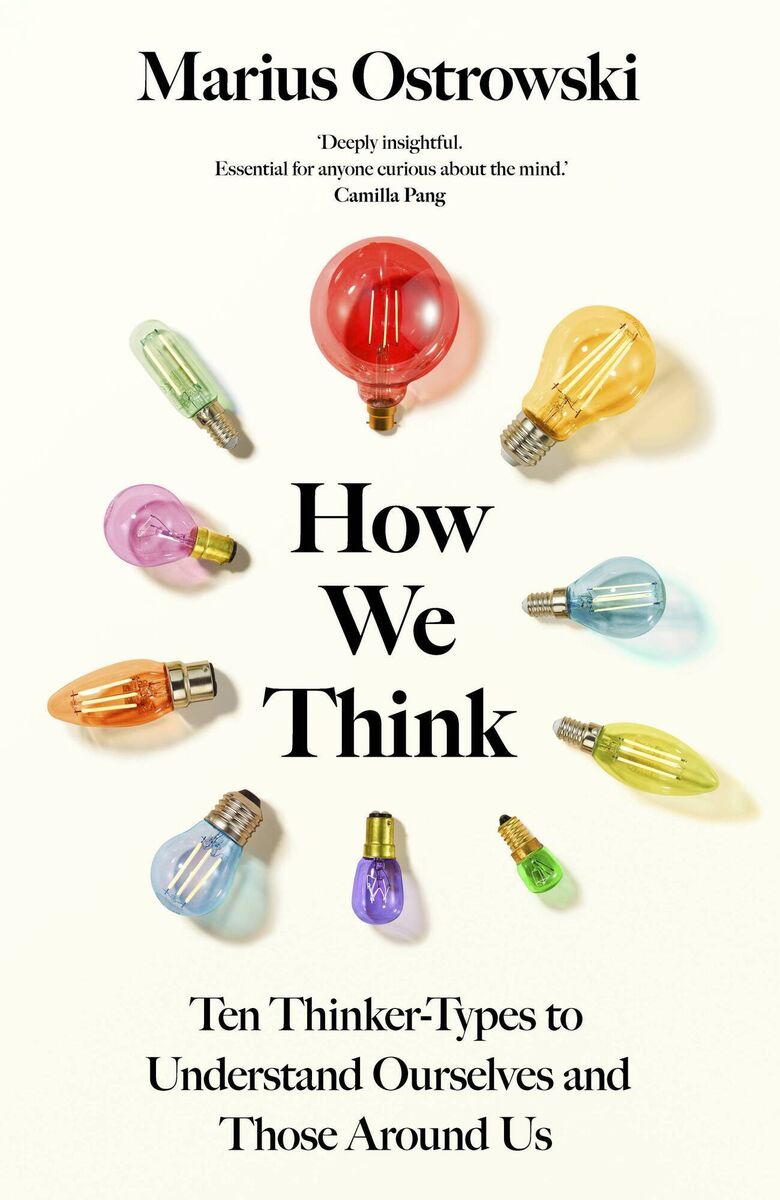
Bringing together evidence from psychology, philosophy, sociology, and political science, the Oxford-based academic breaks down our thinking into 10 "thinker types". He says we all fall into one or more of these 10 memorably-named distinct mindsets — from the Keen Bean to the Agoniser, the Happy Camper to the Worrywart, the Cool Cat to the Gloomster.
Ostrowski became fascinated with questions like, ‘Why do we think the way we do?’, ‘Why do other people think their particular way?’ and ‘Why does how they think and how we think so often not align?’ while doing research soon after the 2011 London riots.
“What stood out to me was the very different responses [to the riots] from various newspapers and media outlets. Social media was just starting then, and Twitter was abuzz with discussion. You could tell the left-right divide and that each was looking at different realities. I wanted to look at how public opinion takes shape.”
Ostrowski’s interest was reinforced by some momentous and largely unexpected events — Brexit, the first Trump election, and the Conservative victory in the 2015 British general election.
“Why were we misunderstanding public opinion? Why did we keep getting it wrong? I wanted to understand the psychology, sociology, and emotions feeding into that. We had a collective assumption about these big events, and that assumption was called into question.
But it was when he began to see these different ways of looking at the same reality come to life in his own friends and colleagues that the 10 thinker types began to crystallise for him. “I saw it in public figures, celebrities, and politicians. I felt I had a better sense of why they were doing and saying what they were if I thought in terms of these thinker types.”
Which thinker type we are is the result of our experiences over the course of our lives — through our childhood, schooling, jobs, where we grow up, the places we call home, the friends and families we gather around, and the lifestyles we choose.
“Occasionally, you find someone who falls into one thinker type but most people predominantly fall into two or three,” says Ostrowski, who sees himself as a blend of two: the Happy Camper — they’ve just lost their job, have no idea what their next move will be, but think things will turn out alright — and the Worrywart (the person who overthinks a disagreement, stewing long after it has passed, convinced they’ve said the wrong thing).
He explains we are not “locked into” any one thinker type. “We’re in control of this,” he says as he describes his dual aim for the book — to help people get a better sense of who they are on the inside, and to “give a bit of a taster” of other ways of thinking that, if embraced, could benefit them.
“They might say, ‘Well, I’m this particular set of thinker types but I’m reading about this other type — the Keen Bean. I’d love to have a bit of Keen Bean in my life’.” (The Keen Bean is the creative constantly on the move, meeting people, building grand palaces of the imagination, and posting them online for the world to see).
Ostrowski himself admires work colleagues who are a mix of Quibbler and Cool Cat. “They’re sceptical, calm and reflective — more than my Happy Camper and Worrywart are. They see problems right through to the end without getting too worked up either negatively or positively, whereas the Happy Camper moves on quite quickly. So yes, I’d like a bit more Quibbler in my life.”

While he hesitates to identify his favourite thinker type, there are several whose voice he really respects, in particular the Agoniser, who sees injustice, pushes strongly for positive change and is unfazed by pushback. And also the Reveller, for being able to see the wonder in the world. “Interestingly, my partner embodies those two thinker types very well.”
Whether you identify strongly with the Jokester (throws the best parties, cracks the sharpest jokes, always pulls you into another round of games — knowing they have to win), the Gloomster (feels how heavy the world can get, looks out for tearaway friends and family), or the Hothead (just has to be right and do things their way), Ostrowski sounds a note of caution: light and shade run through all 10 thinker types.
While the Keen Bean’s curiosity and the Hothead’s protectiveness of what’s important to them are highly visible, Ostrowski avoids categorising people into thinker types as soon as he meets them. “It takes more than a short encounter to really get to know someone. I’d want a bit of their life story before I’d make a call on it.
“We’re pulled between different influences, and we’re capable of great change through our lives.”
While we might relate strongly to two or three thinker types, Ostrowski says there will often be a few on the side where we can also glimpse definite elements of ourselves. “These residues on the side can be really helpful starting points if we want to reshape how we think — ‘I know I’m a little bit Cool Cat now and then, I’d like to dial that up’. It’s about allowing our budding potential to relate to different thinker types to really come to fruition.”
He would like to think his book has potential for conflict resolution. “I want it to be a helpful guide to understanding why we might find each other confusing, why we might think past and disagree with each other. A helpful guide to understanding ourselves better — recognising where our own failings lie and where other people’s strengths are in how they think about and approach the world.
“And in the process become more charitable to others around us.”
The creative, constantly on the move, dreaming big and sharing widely online;
Spotlights injustice and pushes hard for positive change, unfazed by resistance;
Upbeat and optimistic even in uncertainty — trusts that things will work out;
Overthinks interactions and dwells on disagreements long after they’ve passed;
Calm, sceptical, reflective; thinks problems through without drama;
Feels the weight of the world and looks out for troubled friends and family;
The entertainer — witty, competitive, and always ready with a game or a joke;
Insists on doing things their way and fiercely defends what matters to them;
Sceptical and meticulous; admired for their calm, thorough, reflective thinking;
Sees wonder in the world and embraces joy and delight.


CONNECT WITH US TODAY



Be the first to know the latest news and updates