The two ways to make food: the right way, or the ultra-processed way
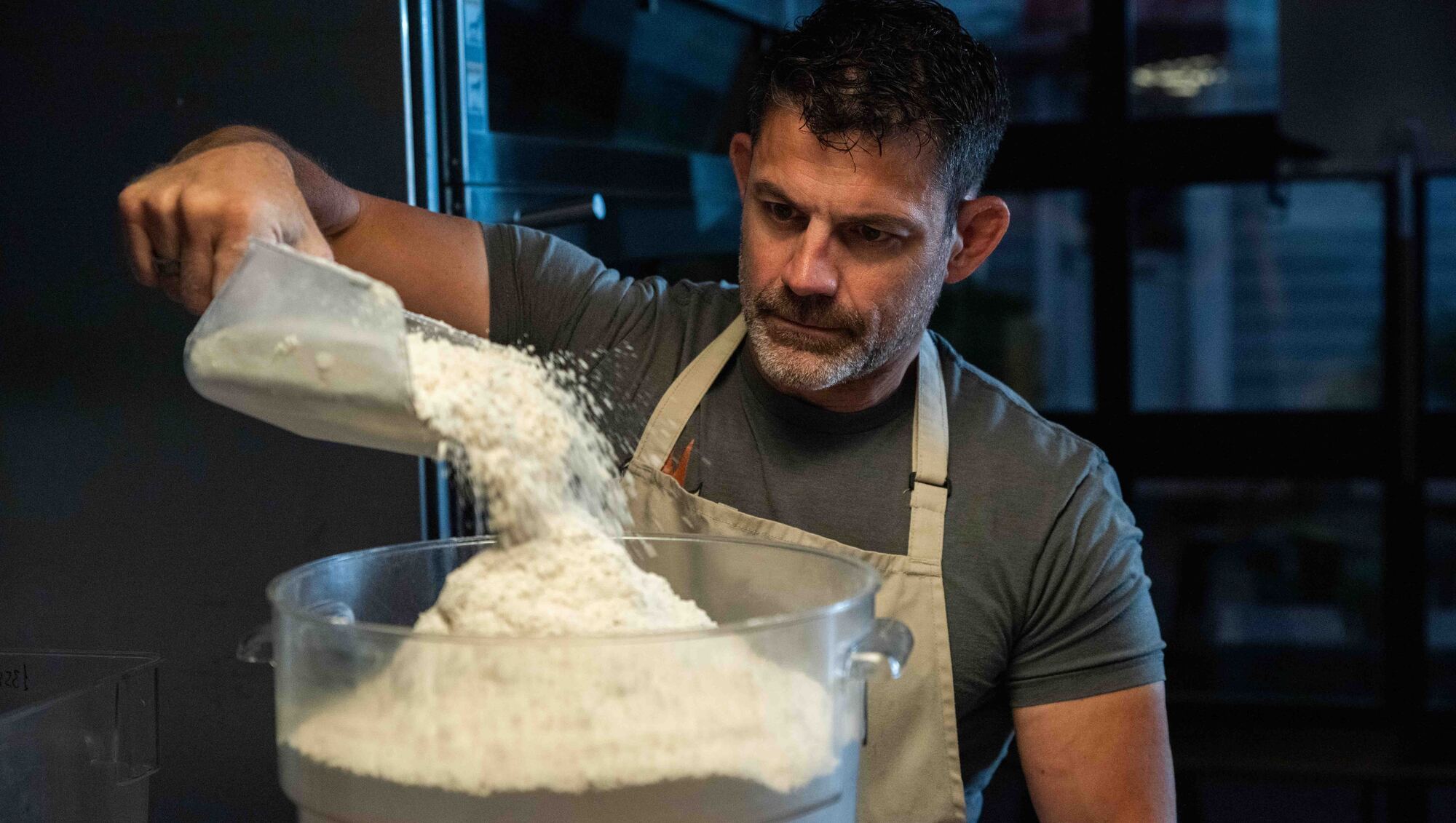
American chef, experimental archaeologist, and author Dr Bill Schindler, co-ordinator of an innovative UCC food enterprise course, explains how traditional food practices can nourish us into the future.
The two ways to make food: the right way, or the ultra-processed way

Dr Bill Schindler explains how looking at tradition can help nourish the future

American chef, experimental archaeologist, and author Bill Schindler is noted for using ancient foodways to inform his diet, research, and work.

Now he’s bringing that knowledge to co-ordinate a new course for the adult continuing education (Ace) programme at University College Cork.


Working with food and culinary historian and Ace programme manager Regina Sexton, Schindler has put together a dynamic line-up of Irish and international guest lecturers to examine different perspectives on why going back to our past can help us eat better in the present day.

“Food Heritage in Action: Turning Tradition into Sustainable Enterprise” is an online 10-week course that blends academic research and real-world applications, focusing on using food heritage as an impetus for innovation and to encourage sustainable food businesses.

It’s something Schindler has real experience in, as a researcher, writer, and co-founder of the Modern Stone Age Kitchen, a successful destination restaurant in the historic town of Chestertown, Maryland, in the US.

He’s passionate about working to reconnect people with real and nourishing food through reviving traditional foodways.

American chef, experimental archaeologist, and author Bill Schindler

“As an archaeologist,” Schindler explains, “when I look back, I’m looking back really, really far. In some cases, millions of years. I am one 100% convinced that we require processing of our food to nourish our bodies as humans.

“I’m convinced that the majority of that processing, for the majority of the time we’ve been on this planet, has been to our benefit 
 making food safer and more nourishing.”

But, humans being humans, we didn’t stop there, he notes.

“When we turned from processing to ultra-processing, a lot of that changed. The focus, the reason, the intent of the ultra-processing is for different reasons, but unfortunately the worst part is that it is to the detriment of nutrient density or bioavailability, all those things that made our food wonderful.”

American chef, experimental archaeologist, and author Bill Schindler

For people who want an alternative to ultra-processed food for themselves, their families, and their communities, Schindler’s 2021 book, Eat Like A Human, is a thought-provoking read.

In it, he explores how our ancestors developed ways to make their food safe and nutritious, combining historical context and research with personal experiences such as documenting traditional tortilla-making in Mexico City and bringing his family to Thailand to eat protein in insect form. On a quest to find a sustainable way of feeding himself and his loved ones, Schindler discovered that his answer lay in the past, involving activities like foraging in the wild, using a nose-to-tail approach to eating animals, and also perfecting sourdough — the recipe for which he developed during a year’s sabbatical spent at Dublin’s urban farm Airfield Estate.

Schindler has taken his research into ancient food practices and translated it into practical dietary action at the Modern Stone Age Kitchen, the restaurant, cafe, and sourdough bakery he founded with his wife Christina. Upstairs is the Modern Stone Age Food Lab, a teaching kitchen which hosts classes on cheesemaking, butchery, fermented dairy, and even making a nose-to-tail hotdog. The operation is a testament to how this knowledge of traditional foodways can work in a business setting.

American chef, experimental archaeologist, and author Bill Schindler

“We started our restaurant almost six years ago as a small, traditional sourdough bakery,” explains Schindler, “and now we are a full-service restaurant making everything from scratch.

Every single thing 
 there are no two ingredients put together outside of our walls. Literally everything is made in-house, all of our cheese, all of our breads, we do all of our butchering in-house, fermentation, everything.

“Every single thing we do is based on research we’ve done somewhere in the world.

“Every single thing that we produce, we wholeheartedly believe in. We have grown from our family doing this 
 to now having 32 employees, who are not only making food, but they understand the entirety of the production of that food.”

At a time when so many restaurants are struggling, it’s good to hear of a place that’s bucking that trend.

“We’re in a rural, rural area,” says Schindler, “and what’s cool is that when you come to our register and put money down to pay for the food that you’re eating — in addition to it being really healthy — you’re actually putting that money directly into the pockets of your neighbours, because there are people in the community that are working for us.

“We can source so incredibly locally because we’re doing it all from scratch. That money’s going to the local farmers and the local ranchers. It is a win-win-win across the board that I would have never imagined. On paper, it wouldn’t have looked like this restaurant should work — but it’s actually thriving.”

American chef, experimental archaeologist, and author Bill Schindler

For students in the course, Schindler hopes they take away what they need.

“It might be just an intellectual exercise and they’ve learned something 
 it might change the way that they’re approaching food in their own home or in their own family,” he says.

“For [others], they might decide that they can take some of this information and do something with it at a commercial level, teach with it, or own a restaurant or produce food. By doing so, and if they do it right, they’re literally making the world a better place.”

  • Food Heritage in Action: Turning Tradition into Sustainable Enterprise (€600) runs for 10 weeks online, starting on April 1, 2026. More details are available at: ace.open.ucc.ie
  • Schindler will deliver the 2026 Myrtle Allen Memorial Lecture - The Nourished Table: Terroir, Tradition, and the Future of Real Food - at UCC on March 25, 2026. The event is free, but ticketed. Bookings are through EventBrite.com


More in this section

Lifestyle

Newsletter

The best food, health, entertainment and lifestyle content from the Irish Examiner, direct to your inbox.

Cookie Policy Privacy Policy Brand Safety FAQ Help Contact Us Terms and Conditions

© Examiner Echo Group Limited