'We’re nearly five years on': 11-year-old makes remarkable recovery from brain cancer
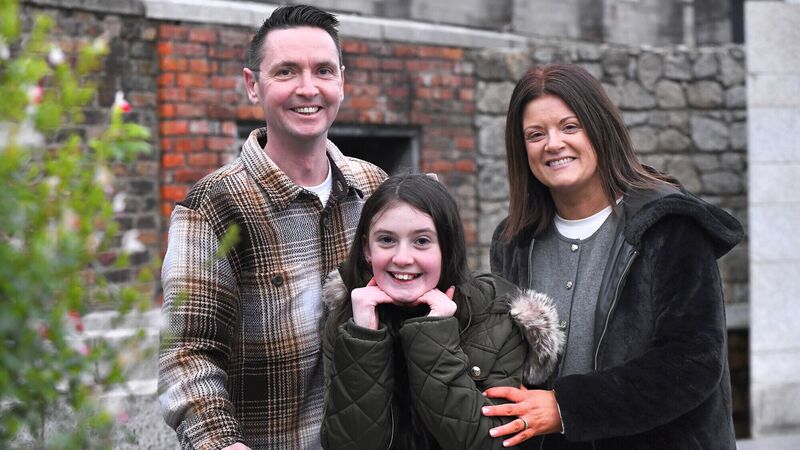
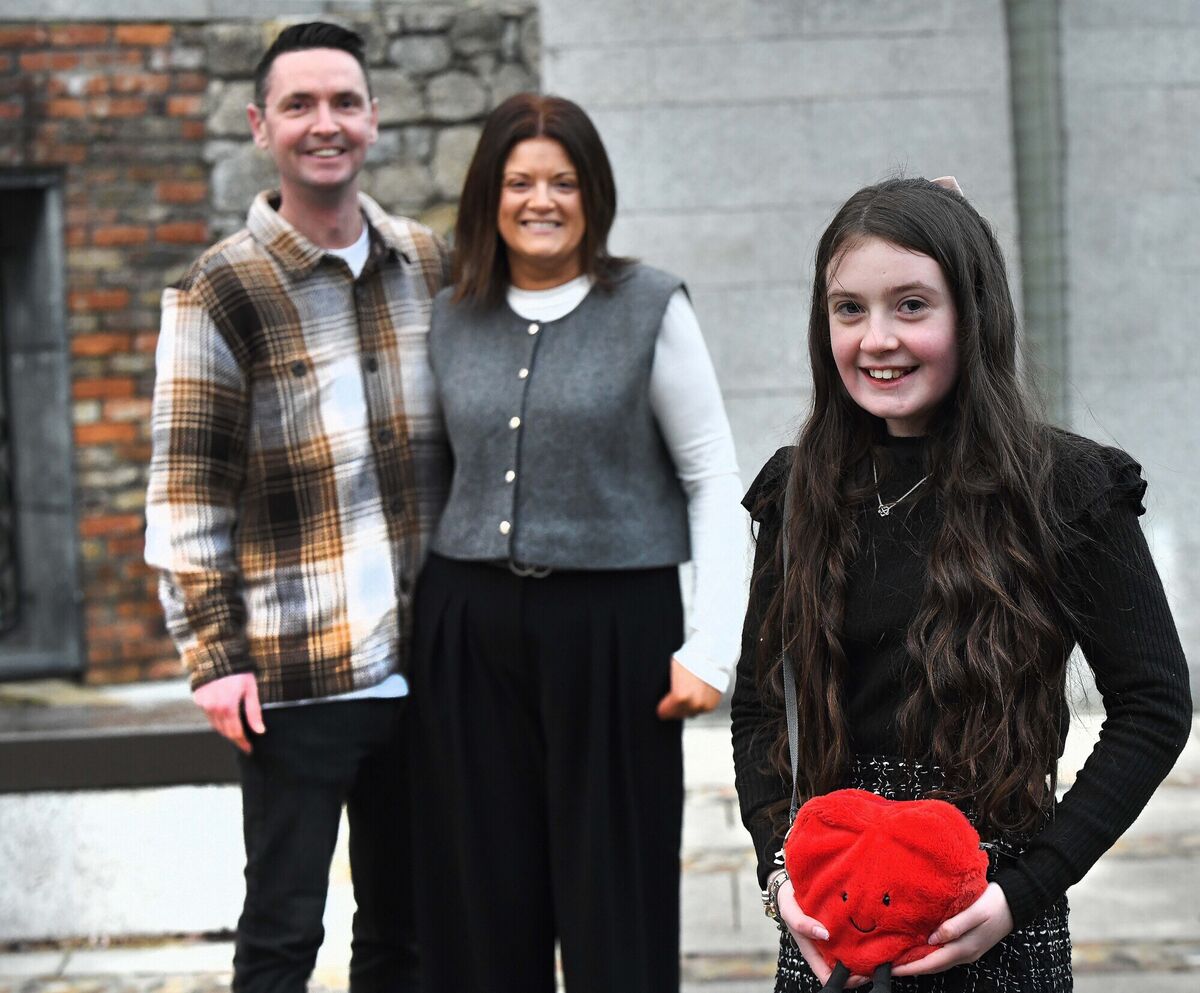
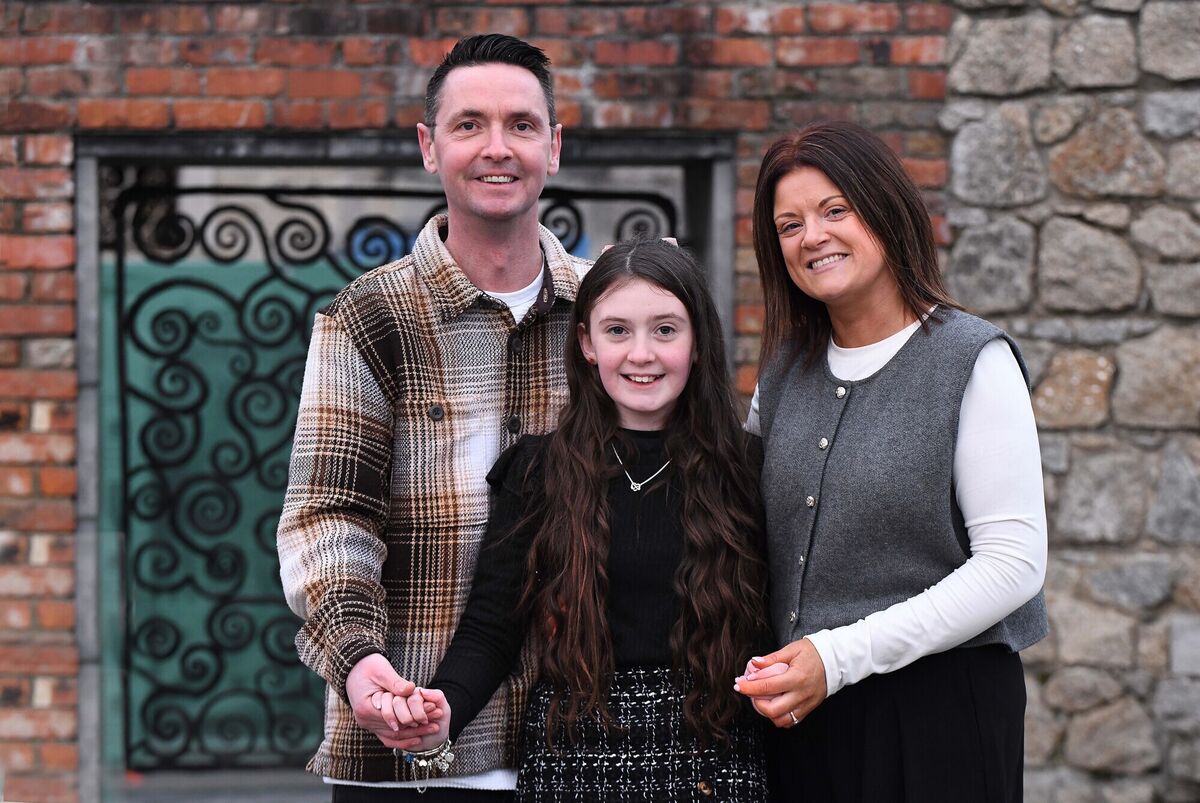
Michelle Kelly and partner Martin Conway from Nurney, Co. Kildare with their daughter, Sophia, 11, who experienced childhood cancer. Picture: Moya Nolan
Sophia spent one week in the hospital, one week at home. That was quite tough. She was five and starting to realise what was going on
In 2017, a little over two weeks before Christmas, Sophia Conway from Kildare was diagnosed with a brain tumour at age three. But her story began weeks before that, when her parents first noticed something wasn’t right.
“One day Sophia started vomiting. She was initially diagnosed with an ear infection, but the vomiting continued and got to the point where she was losing weight,” says Sophia’s mom, Michelle Kelly, who was pregnant with her second child at the time.
“We were back and forth to the hospital, but every time we were told not to worry: It was an ear infection, a virus she picked up, reflux. At one point, they even suggested she was making herself sick.”
This continued for 10 weeks, during which time Sophia lost up to a stone in weight and started complaining of headaches. Kelly and her partner Martin Conway knew something very wrong with their daughter: “We knew instinctively that it was something more serious, so we insisted on a scan.”
On December 8, 2017, Sophia had a CT scan: “Later that day, the hospital rang us and told us to come straight back to the hospital. There, they told us they’d found a mass in her brain.”
The family were immediately referred to Temple Street Children’s Hospital: “They said, ‘Don’t break any red lights, but you need to get there as quickly as you can’. You can imagine our panic.”
At Temple Street, Kelly and Conway learned that Sophia would require surgery to remove the tumour from her brain.
Claire McCall, childhood, adolescent, and young adult cancer nurse coordinator at the Irish Cancer Society, says: “The incidence of childhood brain tumours and tumours of the central nervous system is quite rare, with about 40 new cases in Ireland per year.”
Kelly says they were told to go home and celebrate Christmas early: “It was going to be such a massive surgery, and the risks were high. It was so hard, but we tried to make it special and magical for Sophia. We organised a Santa to come to the house.”
Eleven days later, the family returned to Temple Street for Sophia’s 11-hour surgery. For her parents, it was a long wait until the surgeon arrived to tell them the surgery had been a success: “He came in to tell us that everything had gone well, and she was back recovering in the ICU. It was the biggest relief ever.”
However, the ordeal was still not over. Sophia would require post-surgical treatment. In her case, because of her young age, the doctors recommended proton beam radiotherapy.
McCall explains: “Proton beam radiotherapy works by depositing a high dose of targeted radiation directly at the tumour while sparing surrounding healthy cells. Because a child’s brain is only developing, it is more sensitive to potential long-term effects, so using proton beam radiotherapy may improve their long-term quality of life.”
Proton beam radiotherapy is not available in Ireland, so Sophia and her parents had to travel to Germany in January 2018. The cost of treatment was covered under the Travel Abroad Scheme and The Gavin Glynn Foundation covered the family’s flights and accommodation.
“The treatment was five days a week for six weeks. It was very intense,” recalls Kelly.
But what was originally meant to be a six-week stay extended dramatically when Kelly got a severe form of pre-eclampsia called HELLP syndrome: “My boy arrived eight weeks early, while we were in Germany. Martin had to continue to bring Sophia to her treatment while I stayed in the hospital with little Martin, who was in intensive care there.”
In April 2018, the family, including the new arrival, arrived home in Kildare. Early scans following treatment were negative, with no new mass detected. But then, in January 2019, a new tumour was detected.
“We were facing into it all again,” Kelly recalls. “Sophia had another surgery to remove the tumour, followed by radiation in St Luke’s in Dublin, as it was too soon to get the proton beam therapy again.”
Once again, early scans were promising, but in January 2020, a scan revealed a new tumour in a different location in Sophia’s brain: “At this stage, we were obviously very worried. She’d done proton beam, she’d done radiation, and so much time has to be left between treatments. What options were left to us?”
Another successful surgery was this time followed by chemotherapy: “Our oncologist said she would need a year and a half of chemotherapy — Sophia would spend one week in the hospital, one week at home. That was quite tough on her. She was five at this stage and starting to realise what was going on. She also lost her hair, which is so hard for a little girl.”
There were other side effects. Sophia suffered hearing loss in one ear, and she developed Horner Syndrome, where a damaged nerve caused a drooping eye. For the young family, this was a difficult time. Kelly was staying in the hospital in Dublin with Sophia while partner Conway stayed at home to mind their young son.
Both parents had to give up work during Sophia’s treatment and Kelly says financial help from the Irish Cancer Society (ICS) made all the difference
In February 2021, Sophia finished her chemotherapy treatment. Now 11, she is thriving in school after a period of anxiety, which was helped by a creative arts therapy programme provided by the ICS.
“We’ve moved on to a scan now every nine months, and we’re nearly five years on from the final round of chemotherapy,” says Kelly.
“There’s always that fear, it’s always hanging over you. But you learn to appreciate things more, and don’t sweat the small things.”
- Anyone with questions about the Irish Cancer Society’s children’s cancer support services can contact the ICS on freephone 1800 200 700 or visit cancer.ie

CONNECT WITH US TODAY



Be the first to know the latest news and updates