Inter-Firm Dragon Boat Challenge builds teams beyond the desk and across the River Lee
Events promoting workplace relationships are an ideal way to encourage communication and trust between staff members. But it’s best to match the challenge to employees’ abilities
Inter-Firm Dragon Boat Challenge builds teams beyond the desk and across the River Lee

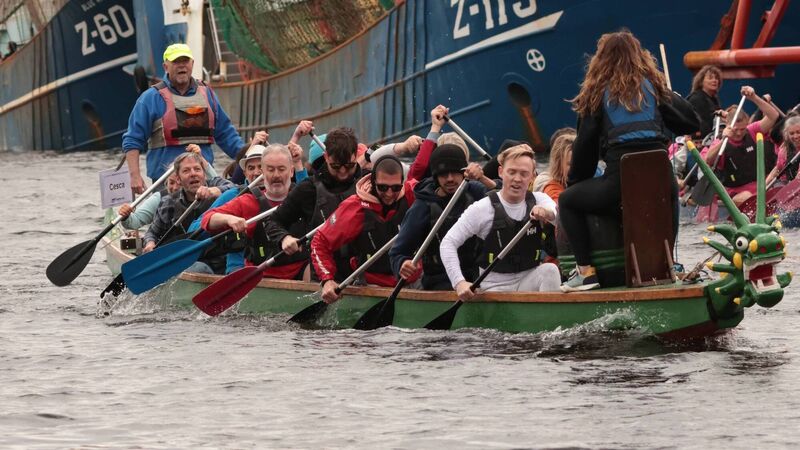
The Inter-Firm Dragon Boat Challenge will involve groups of 16 paddlers working together to race 40ft boats, urged on by the pounding beat of their on-board drummers.

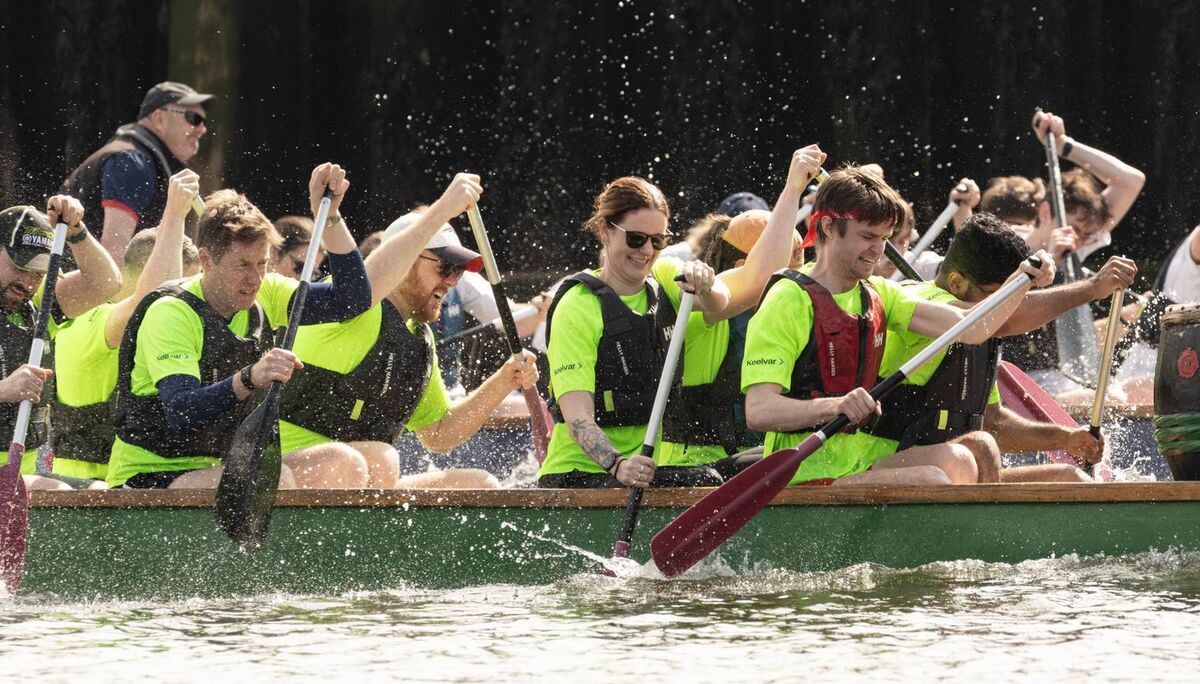
Crews representing companies and organisations from all over Cork will converge on the River Lee on Saturday, April 18, for a team-building day with a difference. The Inter-Firm Dragon Boat Challenge will involve groups of 16 paddlers working together to race 40ft boats, urged on by the pounding beat of their on-board drummers.

Joya Kuin came up with the idea for this challenge in 2013. She is the communications and strategic development manager of Meitheal Mara, the community boatyard and maritime training centre in Cork that organises the event.

“We were fortunate to have four dragon boats and recognised they gave us an opportunity to bring groups onto the water for corporate team building, physical exercise, networking and a healthy dose of competition,” she says. 

“So we held our first-ever dragon boat challenge as a fundraiser and inter-firm event in 2013. We’ve run one or two challenges a year since, and this next one will be our 19th event. It’s become one of Cork’s most popular corporate outings with teams from the likes of Pfizer, Amazon, and Cork City Council taking part.”

Dr Andreea Corbeanu, an assistant professor at the Department of Work and Employment Studies at the University of Limerick, says there has been a growing trend for organisations to arrange for their employees to take part in team-building activities like this one.

Andreea Corbeanu: ‘Employers stand to gain significantly from well-designed team-building activities.’

“Companies are no longer relying on the occasional team lunch or after-work drink to bring people together,” she says, citing a 2024 stud ywhich found that such events show limited influence on measurable performance outcomes.

“Instead, many are designing experiences that spark collaboration, develop vital soft skills, and strengthen employees’ emotional connection, both to one another and to the organisation’s wider purpose.”

The chartered work and organisational psychologist Kathleen Halligan ran team-building events for organisations in the late 1990s and believes the trend began around then.

“That was when the big tech companies moved into Ireland, and they invested hugely in team building here,” she says. 

“Others followed their lead, and since the changes in working practices that resulted from the pandemic, companies have only become more innovative about how they build connections between their teams.”

Halligan adds: “There’s an undeniable body of evidence that proves the importance of having a strong team and the benefits that accrue from team-building activities.”

This evidence includes a 2012 study published by the Massachusetts Institute of Technology. Researchers asked two call centre teams to wear electronic monitors for six weeks and collected data on who team members spoke to, how long they spent talking and other details such as their tone of voice and body language. Their conclusion? The more communication at all levels of a team, the better that team’s productivity.

'Since the changes in working practices that resulted from the pandemic, companies have only become more innovative about how they build connections between their teams.'

What’s more, there were further improvements when management proactively improved communication by arranging for everyone on a team to take their coffee break at the same time. This increased productivity and employee satisfaction by 10%.

Measurable outcomes like this encourage employers to invest in team-building activities, says Corbeanu. “They stand to gain significantly from well-designed team-building activities through stronger collaboration, more effective teamwork, improved productivity and smoother day-to-day performance. By giving employees the chance to work together in new environments, they can also break down departmental silos and encourage better communication and trust in the workplace.”

Employee engagement and retention improve, too. Corbeanu says that “when people feel valued, connected and invested in, they’re more motivated and less likely to leave, which reduces turnover and recruitment costs”.

She adds that team building can also “reveal emerging talent and strengths that may not be visible in routine office settings” and that participating in activities that emphasise wellbeing, inclusivity, or social purpose can “enhance an organisation’s brand, making it more appealing to both current staff and future hires”.

“Increasingly,” says Corbeanu, “employers view team building not as a perk or discretionary expense but as a practical investment in culture, performance, and long-term organisational resilience.”

In many ways, Halligan views the Inter-Firm Dragon Boat Challenge as a great team-building event.

“It’s a charity fundraiser, which means being involved will make you feel you’re doing your bit as a good corporate citizen,” she says.

Kathleen Halligan views the Inter-Firm Dragon Boat Challenge as a great team-building event.

“Your employees will benefit from being out in the fresh air and on the water, which has a strong positive correlation with wellbeing. They will have to learn to communicate with one another during the practice sessions and the race itself to ensure they all pull at the same pace.”

However, Corbeanu adds that it’s important to remember that not every activity suits every team.

“The wrong choice can unintentionally exclude people or even undermine the goals of the event. It’s important to consider factors like physical ability, personality differences, cultural background, neurodiversity, and comfort with competition.

“Activities that are overly physical, highly competitive or socially demanding may leave some employees, such as those with different abilities, health needs or personality types, feeling anxious or marginalised rather than included, and that’s the opposite of the intention.”

Halligan advises anyone planning team-building activities to be “intentional” about why they are doing it. “Being clear on the outcome you want to achieve increases your likelihood of achieving it,” she says.

“It could be as simple as celebrating an achievement and rewarding everyone with a fun day out. If that’s your intention, you then need to identify what constitutes a good day out for your particular team.”

Don’t make the mistake of simply choosing an activity at random. “If an activity feels disconnected from team needs or organisational goals, people can view it as a box-ticking exercise rather than a meaningful experience,” says Corbeanu.

Communications and strategic development manager of Meitheal Mara, Joya Kuin, hopes teams taking part in the Inter-Firm Dragon Boat Challenge gain all these benefits and more. Picture: Clare Keogh

Nor should you organise activities outside of business hours. “Run them at a time when people would be at work anyway,” says Halligan. “Otherwise, you’re asking extra of employees.”

Halligan discourages making participation mandatory as “it can backfire by creating resentment or discomfort if individuals feel pressured into activities they’re not comfortable with”.

Instead, she recommends “challenge by choice” and gives the example of a particular team-building event she ran where one person refused to join in.

“The team had been asked to build a wind-operated apparatus that could lift a weight off the ground,” she says. “The activity was designed to promote communication, decision making, and innovation and to test teams in terms of dealing with setbacks. But this person thought it was childish and sat off to the side. After a while, they sidled over and started adding their contribution.

“Later, the facilitator of that activity asked if they ever acted similarly in a work context, which prompted a discussion about how people can react to new challenges and tasks.”

That question posed by the facilitator illustrates why Halligan believes it’s important for teams to take time to reflect on team-building exercises afterwards.

“Rather than having fun, which is important, the real value comes from realising what has been learned and what can be built upon,” she says. 

“How did you all work together? What could you have done better? And how can that be applied to the everyday work context? It’s about starting a conversation that can lead to real improvements in a team.”

Kuin hopes teams taking part in the Inter-Firm Dragon Boat Challenge gain all these benefits and more.

“This isn’t just a fun day out,” she says. “It’s an inclusive team building event that can strengthen collaboration while supporting a local charity and giving company employees a memorable shared experience on the River Lee.”

  • Entry to the Inter-Firm Dragon Boat Challenge costs €680 per team of 17, and teams can register by contacting dragons@meithealmara.ie

x

More in this section

Lifestyle

Newsletter

The best food, health, entertainment and lifestyle content from the Irish Examiner, direct to your inbox.

Cookie Policy Privacy Policy Brand Safety FAQ Help Contact Us Terms and Conditions

© Examiner Echo Group Limited