I gave up alcohol for a month — here's how it impacted my sleep, health, and more
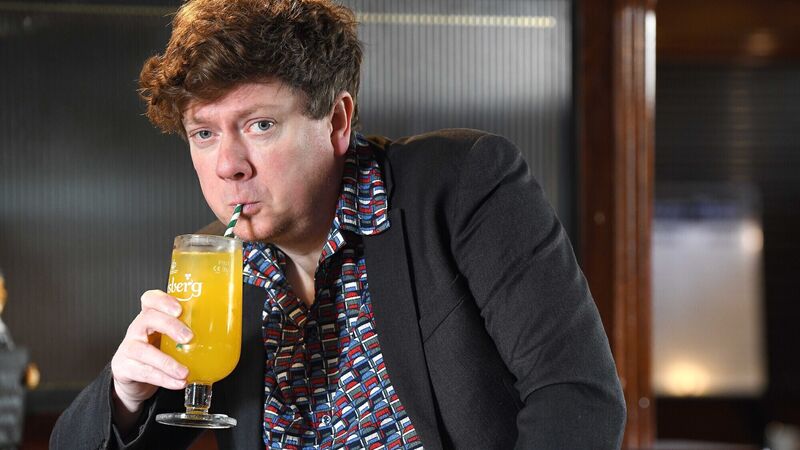
Jonathan deBurca Butler 'enjoying' a soft drink in the Stoneboat public house in Kimmage. Picture: Moya Nolan

AS FIREWORKS crackled in the Kimmage night, the faint murmurings of a familiar melody came through my sitting room walls.
Nearby, neighbours muddled through the lyrics of Auld Lang Syne, and I imagined them popping corks or pulling open cans to ring in the new year.
I stared down at the almost empty bottle of Saint-Émilion before picking up its cork and jamming it firmly into its neck. It was midnight, January 1, and for the rest of the month, I was off the booze. Dry January had begun.
Phenomena such as Dry January, as well as increased awareness and education on the hazards of alcohol and a desire among younger people to both look and feel better, are just some of the factors cited as reasons for Ireland’s recent decline in alcohol consumption.
Latest figures from a report issued by Drinks Industry Ireland show a year-on-year fall of almost 5% recorded in 2024. This mirrors a trend over the last quarter of a century, which has seen consumption down by more than a third since 2001.
The report echoes OECD data suggesting alcohol consumption in Ireland is now at average European levels, with consumption here behind France, Spain, and Austria. Of course, according to the WHO, the best amount of alcohol is zero.
I’ve always been fond of a tipple. It sounds outrageous now but my first pint was in the summer of 1991 when, as a 15-year-old, I sat in a pub in Clifden with a mate and a pint of Carlsberg. Now that I look at my soon-to-be 14-year-old son, I wonder how we got away with it. The bigger questions might be: Why did we bother? What personal or cultural influences motivated us?
Like many of my peers, my 20s and 30s saw some excess. I spent much of that time living and working in Rome, where I was fully immersed in the drinking culture that clings to expat communities the world over. By the time I was back home, and my first child Fionn came along 13 years ago, I had calmed down but I was always up for a pint or a glass of wine if offered.
In recent years, I’ve fallen into a routine. On Thursdays, I take my youngest to karate and head to the local for one or sometimes two pints of Guinness. The family joke is that Luke’s success in this martial art (he’s 11 and nearly a brown belt) is down to my dedication to those Thursday pints.
On Fridays after work, I’ll nip into a nearby pub for a scoop and later pop into the offy for a bottle of red, which is usually finished, sometimes with a little help from herself, by the time Patrick Kielty says goodnight. Depending on how that’s gone down, I might get a ‘slow bottle’ for Saturday or go into town for a settler and a read of the paper — an Irishman’s heaven.
At least once a month, this pattern changes when a close group of five male friends, The Sisters (named after a local pub), meet for a session and catch-up that can run into the wee hours and typically leads to a medically imposed ban the next day. By Sunday, I’m finished, and then it’s nothing until Thursday (special occasions excepted), with a strict no-drink rule on Mondays ahead of my regular News From Around the World slot with Seán Moncrieff on Newstalk.
Enjoying deep sleep
“The new drinking limits recommend less than 17 standard drinks per week [for an adult male], which is about eight pints or maybe two bottles of wine,” says Dr Bernard Kenny, the Irish College of General Practitioners’ addiction clinical lead.
“So if you’re having a few pints and a couple of half bottles of wine, you’re probably about there or a little over it. But you’re doing the right thing, which a lot of Irish people don’t do, and that’s having the two to three days alcohol free within the week. That makes a huge difference.”
Last December, that routine was turbocharged with the spirit of Christmas. So by the time those fireworks were shooting into the New Year’s Eve night, my body and my brain were ready for a break from the booze.
I had attempted this type of thing before. Last year, the first 21 days of January were alcohol free, interrupted by a Champions League match involving my beloved Celtic, and there have been other spells where I’ve gone without for two weeks. But a whole month? Honestly, not since I was in school, I’d say.
The first few days were tough. The new year landing on a Thursday meant the holiday vibe for many continued into January’s opening weekend.

There were invitations from the aforementioned Sisters to go out for a quiet one. They had to be rejected. I watched the year’s first Old Firm derby (Celtic vs Rangers) in the local. While others around me drowned their sorrows as the Hoops took a pounding from their old rivals, I got through it with a pot of tea and two digestive biscuits.

In truth, kick-off in that game was so early that I was unlikely to have had a pint anyway. But I slightly resented the choice being removed.
The first real challenge came 10 days in, on my mother’s birthday. My brothers and I were treating her to lunch, and I do enjoy a glass of wine on occasions like this. When I got there, nobody else was drinking, and now I had the upside of being in the car instead of taking a bus and a train.
Four days later, I was out again. This time for my brother’s birthday and a meal on a Tuesday night. I would normally help out with the consumption of wine but tonight, as my brother, his partner, and my better half indulged in a few glasses of white, I looked on. It didn’t bother me one bit. It was great to wake up the next day without even a hint of a hangover.
Sleep was one of the biggest things I noticed throughout the month. It felt deeper, longer, and there were definitely fewer interruptions. But that’s not the only benefit.
“There are short-term benefits and long-term benefits,” says Dr Kenny. “When you have a long-term pattern like yours, and you suddenly stop, sometimes you can initially sleep worse, you can get mild appetite changes, even a little fatigue. But after a few days, that improves immeasurably. Drinking will often initiate sleep but the quality of sleep is usually very poor. You get far less REM, that deep restorative sleep, so when you quit booze, it improves.”
Kenny also mentions improved heart rate, blood pressure, and, because “alcohol is highly calorific”, there is often a reduction in weight. Though the scales were telling me that my weight wasn’t coming down as much as I would have liked, my better half and children noted a significant reduction in my protruding belly. I was certainly less bloated, and my puffed-up cheeks were thinning out. I looked better than I had in a while.
The biggest benefit for me was a noticeable decrease in my levels of anxiety. I still worried about the same things — work, family, money, Celtic’s lack of activity in the transfer market — but the physical manifestations of those anxieties, whether it’s tension in the body, mild palpitations, or stomach pain, were simply not as evident.
Bank on healthy outlook
With the third weekend down, everything was going great and, more than anything, I had stopped thinking about it. This was getting easy.
One morning, I woke up and was convinced it had all come crashing down. I’d had a vivid dream (probably as a result of better sleep) about downing a pint in one gulp in some unknown pub. For a moment, I sat on the edge of the bed, disgusted with myself. Had I really given in to my weaknesses? I was relieved to discover that the incident had not been real.
In a strange way, that dream galvanised me. I felt so sure of myself that when the monthly bat signal from The Sisters went out, I answered the call. This would be the truest test yet. Meeting the lads, sitting down with them, and watching them have pints while I sipped on Ballygowans. I passed with flying colours and, with seven days left to go, I knew I was home and dry.
Not only was I feeling pretty good but my bank balance was also in a much healthier state. When I sat down and totted up the numbers, I was a little astounded to find that, going by my routine, allowing myself €20 per bottle of wine and what I might have consumed at the lunches, dinners, and nights out, I had saved the guts of €250 in January.
“Dry January does give people that gap,” says Dr Kenny.
Even just a month off can give you elements of physical recovery and improvement that aren’t lost, even if you return to drinking.”
It’s helpful to disrupt the cues that typically lead us to drink, he adds. “You finish work after a long week, you get home, and crack open the wine. Lots of us have those patterns. So taking a gap allows you to break those rituals. Then when you go back to drinking, you’ll often find you take a healthier approach to it and maybe adopt different patterns.”
With more money in my pocket, less fat in my belly, and less anxiety in my head, I toy with the idea of stopping for a whole year. But not for long. By 5pm on St Brigid’s Day, I’m sitting at the bar in my local with a newspaper and a pint of stout. It turns out to be one of the most satisfying pints I’ve ever had.
CONNECT WITH US TODAY
Be the first to know the latest news and updates