The stress should be on our work-life balance

Social-media photos of ‘successful’ lives often mask the painful struggle of managing career and family, with some teetering on the brink of burnout
The stress should be on our work-life balance

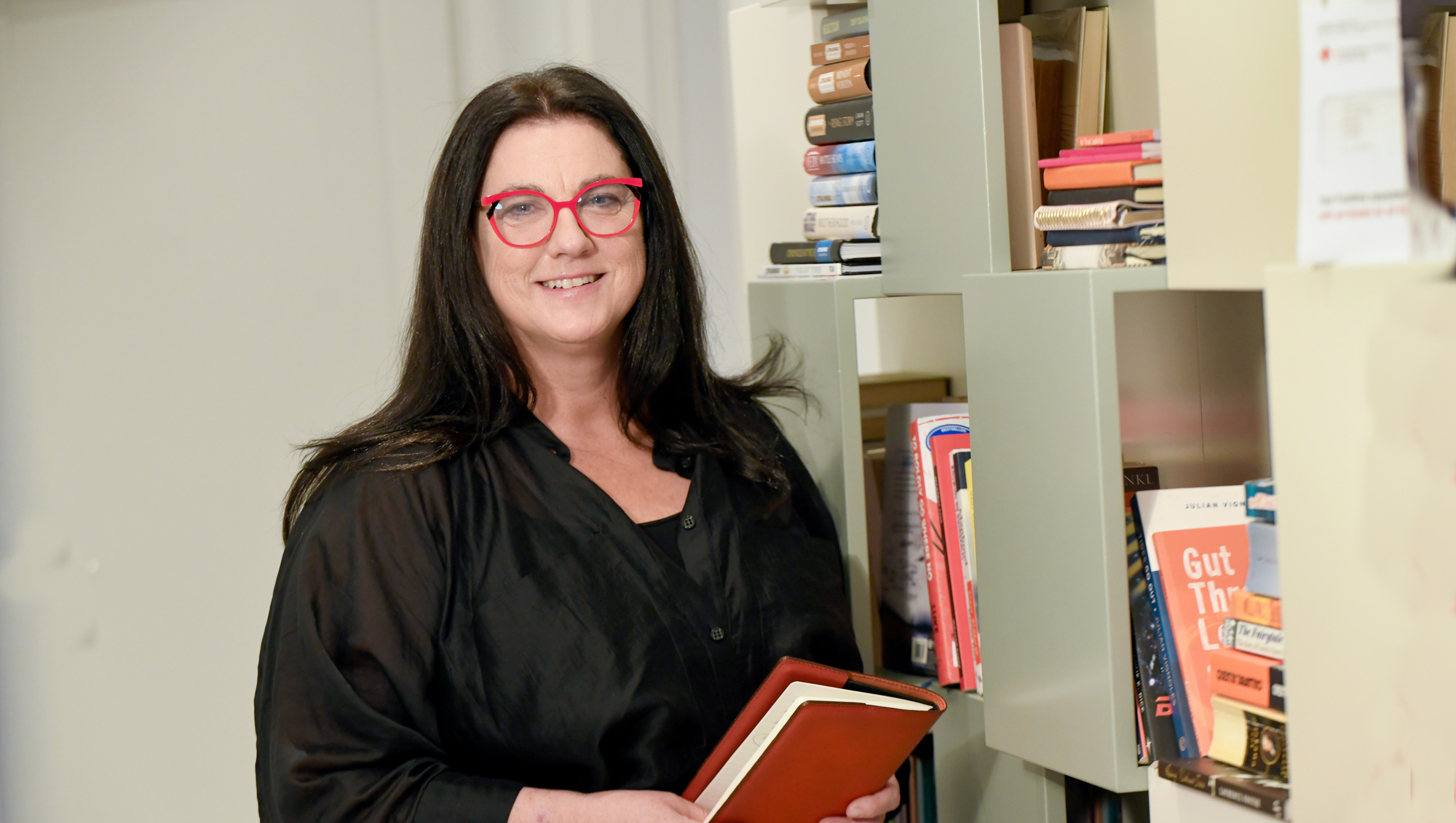
Eibhlin Johnston: 'I felt constant pressure to hold it all together at work and at home.' Picture: Moya Nolan

Instagram's throwback trend made 57-year-old Eibhlin Johnston, from Blackrock, in Dublin, realise that the photos from 2016 she presented to the world bore little resemblance to how she had felt.

“There are pictures of me celebrating the new year in Malta, doing yoga, and competing in triathlons,” she says. “But I was so stressed and managing that stress through constant activity only added more stress. My body couldn’t keep it up and I ended that year with a collapsed lung, due to pneumonia.”

As a mother of three, the Johnston of 2016 was juggling parenthood with a career in financial services. The pace was “relentless”.

“I felt constant pressure to hold it all together at work and at home,” she says. 

I’m a perfectionist, so I felt I should be on top of things and was always thinking ahead to issues to do with work, or things like picking children up from various activities. I never switched off.

This stress affected her physically and mentally. She suffered from digestive problems and says she was “constantly tired, wired and on edge”.

Organisational psychologist Lynne Forrest: 'Too little stress causes boredom, but too much stress leads to overwhelm, anxiety, and burnout.'

Johnston isn’t the only one whose health has suffered due to stress. A 2025 survey of 1,000 employees in Ireland found 24% took mental-health leave in 2024. Some 50% said they found their work mentally demanding or stressful, and 29% reported working in their organisation negatively impacted their mental health.

The situation may be even more worrying among the youngest people in the workplace.

A recent survey carried out by AXA in Britain found one in three 16- to 24-year-olds expected to retire early because of ill-health, and another third believed their workplace prohibited them from leading a healthy lifestyle, because it caused them stress.

Employers and their employees should aspire to a better work-life balance to manage stress, says organisational psychologist Lynne Forrest.

“The Yerkes-Dodson Law explains stress as a bell curve, with performance rising in line with stress to an optimal peak, before it declines if that stress becomes excessive,” Forrest says. “Too little stress causes boredom, but too much stress leads to overwhelm, anxiety, and burnout.”

Physical symptoms

Business psychologist Avril Mansworth says when stressed, our bodies release a hormone called cortisol. High levels of cortisol can cause physical symptoms, such as a pounding heart, elevated blood pressure, sweaty palms, headaches, and digestive issues.

Cortisol affects us mentally, too, with symptoms including a racing mind, a sense of anxiety and panic, a loss of perspective, and difficulty making decisions.

“Stress also has emotional and behavioural effects,” says Mansworth. “It can cause irritability and anger, restlessness, mood swings, and introversion. People’s work can become sloppy, because they are doing it too quickly. Stress affects us all differently.”

Stress can have a long-term health impact if it persists. A US study published in 2021 concluded high levels of the stress hormone cortisol caused inflammation in the body, which increases the risk of developing inflammatory diseases like arthritis and diabetes.

Employers and employees need to aim for a “sweet spot of optimal stress for peak functioning”, says Forrest.

Business psychologist Avril Mansworth: 'Learning to pay attention to our bodies, minds, emotions, and behaviours allows us to identify when stress is becoming a problem and take action quickly.'

To achieve this, Mansworth recommends cultivating self-awareness. “Learning to pay attention to our bodies, minds, emotions, and behaviours allows us to identify when stress is becoming a problem and take action quickly,” she says.

Forrest adds nobody should “judge themselves as weak for feeling stress. Instead, reach out for help. If you have an employee assistance programme or a support system, like occupational health or workplace counselling at work, avail of it.

If not, speak with your GP, who will refer you to a therapist. Many private health insurance companies cover the cost of therapy and you can claim tax relief through Revenue.

Self-regulation, in the form of breath work, can counter the symptoms of stress in the moment. “Paying attention to the breath and taking deeper breaths, with a longer out breath, calms the brain by activating the parasympathetic nervous system, which is what prompts the rest-and-relax response,” says Mansworth.

Exercise and diet play also a role in stress management. Mansworth advises following basic nutritional principles “a balanced diet that contains good fats, enough protein, and not too much sugar”,

She suggests intense exercise such as “jumping jacks for three minutes, which pumps oxygen into the body, regulates breathing, and releases endorphins that make us feel better about ourselves”.

Reaching out to peers and mentors can help, too. “Sharing experiences and realising others have been through similar challenges allows us to gain perspective and also learn their stress-management techniques,” she adds. 

“For some, it might be yoga. For others, mindfulness. Volunteerism can also make people feel a sense of goodwill and impact on people’s stress levels. Experiment to see what works for you.”

However, an individual employee can only do so much to manage stress if their workplace is highly pressurised. “We encourage people to reach out for help, but that only works if their organisation has a culture in which their voices are heard and if managers are attuned to their needs,” says Mansworth.

Forrest cites the CIPD/Simply Health Health and Wellbeing at Work Survey, which found two-thirds of Irish organisations were taking steps to identify and reduce workplace stress in 2025, but only half thought their efforts were effective.

She questions whether the employee assistance programme approach of offering six therapy sessions is the right solution to stress.

“Robert Karasek’s Demand Control Support model may be a better approach,” she says. “It focuses on increasing people’s levels of control and autonomy over how they work, on employers demonstrating they trust employees to do their jobs, providing employees with a positive sense of purpose, and celebrating their achievements, all the while ensuring they get support from their peers, managers, and systems within the organisation.”

Mansworth would like to see employers being proactive in tackling workplace stress.

“Start a process of honest and open communication,” she says. “Bring in people to talk about stress in the workplace. Train managers to be able to have these conversations and let people know their managers are there to support them.”

A coping toolkit

In the decade since 2016, Johnston has developed her own “personal toolkit” for dealing with stress. “Stress never disappears from life entirely, but I now recognise the signs much faster,” she says. “When my mind starts racing, I feel agitated, or I’m not sleeping well, I’ve learned to pause and calm down using breath work.

“Then, I’m better able to identify what’s causing me stress and what I can do about it. I often reach out to others for help, too. An important lesson has been learning I can’t do everything on my own.”

Johnston has also pivoted in her career and now provides wellness support, executive coaching, and leadership development to professional clients (https://www.theresiliencyhub.com]theresiliencyhub.com[/url]). Much of this involves helping them cultivate techniques to manage their own stress.

“So many people are outwardly capable, but inwardly exhausted. We’re living in a time of rapid change and uncertainty. People have heavy workloads and not enough recovery time. Together, we work out ways in which they can build more of that recovery into their working week,” she says.

There is an onus on employers, too. “They need to allow employees to build those moments of recovery into their days,” she says. “They need to stop rewarding constant busyness. In many ways, workplace stress is a system issue and it’s up to them to play their part in fixing it.”

More in this section

Lifestyle

Newsletter

The best food, health, entertainment and lifestyle content from the Irish Examiner, direct to your inbox.

Cookie Policy Privacy Policy Brand Safety FAQ Help Contact Us Terms and Conditions

© Examiner Echo Group Limited