Sanity claus: How to deal with family tensions over Christmas
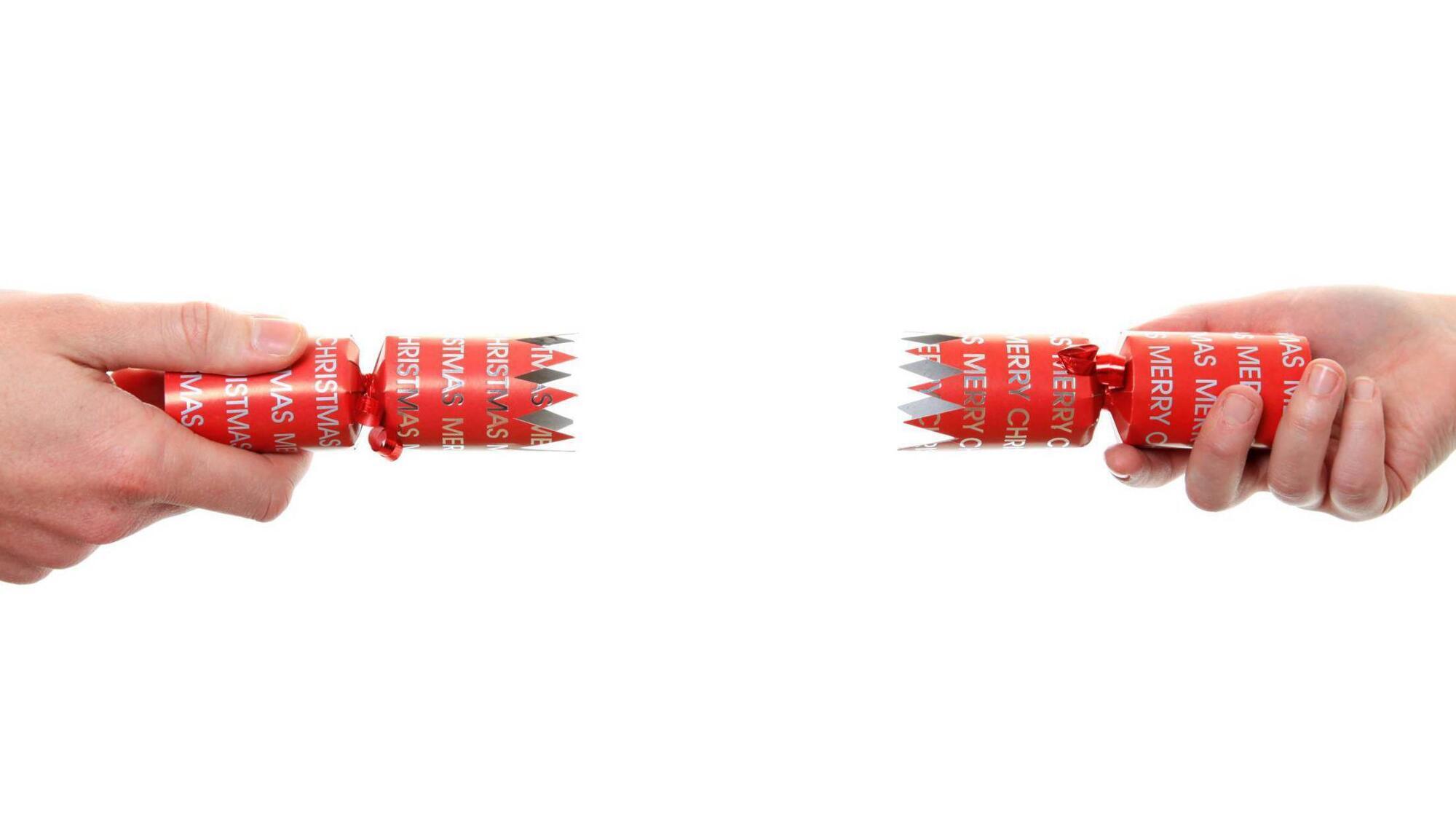
YOUR father-in-law tends to put his foot in it, your granny doesn’t like your partner, and your sister’s veiled comments bring you right back to when you were 12 and ready to lash out.
Sometimes the annual Christmas gathering can be about trying to keep your sanity, rather than welcoming Santa. Which is why we’re asking four experts to share quick wins for dealing with family tensions over the holidays.
This is not your first Christmas – you know what to expect. If you let yourself believe people might just behave differently this year, you’re setting yourself up for disappointment, says Chris Place, psychotherapist with the Irish Association for Counselling and Psychotherapy (IACP) and host of TherapyTalks podcast.
“Expect the potential tensions, the possible arguments. Expecting it gives us space – we can recognise before responding. It’s a chance to prepare rather than despair.”
Place says old patterns in our family of origin get triggered when we meet up at Christmas. “We regress to the different roles we had growing up, the jokes, the rivalries – the certain family member who knows how to get in there, knows how to find the bits we tend to react to.
“Going back into old emotional terrain, we’re tense before anyone says anything. Recognising this anticipation in our bodily system – that it’s completely normal – gives us a bit of space to let go.”
Tipperary-based counsellor accredited with IACP Majella Kennedy advises knowing your triggers – these could be set off by past experiences coming to the fore, or by a situation we’re currently grappling with.
“Maybe it’s the person you needed to sit furthest away from at the table as a child. Or the elderly aunt who says very insensitive things and has no filter. Maybe you’re having fertility issues and someone’s asking, ‘Any sound of little feet?’” says Kennedy, who recommends preparing one-liners for such situations, such as ‘I don’t feel comfortable just right now having that conversation with you’. Or using humour and saying ‘sure the guards wouldn’t ask me that’.”
Or if being quizzed about why your partner hasn’t come along – and you don’t want to say ‘we’ve had a row’ – you could say ‘it didn’t work out for us today’.
“The beauty of one-liners is you’re not being brought into any conversation where you have to explain or defend. One-liners give no invitation to come further into your world.”
Place sees humour as the most underrated emotional regulator. “Seeing something with a hint of amusement, even privately in my head, takes the sting out.”
He suggests having some psychological tricks in your arsenal, like ‘imagining someone in their natural habitat’ – so if someone’s spoiling for a fight, you might purposefully think: ‘here we go again, they’re just doing what they do, like a lion in the wild’.
“You’re not mocking the person,” says Place. “You’re just protecting your peace in that moment.”

Psychologist and president-elect of Psychological Society of Ireland Dr Sarah Cassidy recommends reflecting in advance on why you’re going to this gathering. “You mightn’t muster up a full glass of sunshine, but you may be able to connect with your values around why you’re visiting your family. Twelve whole hours with Aunty Karen talking about her son and his extraordinary rugby career? Why not intentionally focus on why you’re going to Aunty Karen’s house?
“Perhaps it’s a family tradition. Maybe her son is her great joy. Maybe you can relish that Christmas is a time to celebrate family and what we might be grateful for. Some of which might be a warm, welcoming, predictable place to rest – even those predictable stories about a beloved son’s rugby exploits.“
Notice the bright little moments – cute moments with the kids, or an uncle making you laugh, says Linda Breathnach, psychotherapist and IACP member.
She also advises watching out for the contagion factor. “If somebody responds grumpily, you might impulsively reply in the same tone. Be prepared instead not to take it personally. Remind yourself it’s their issue – and not your fault, or your responsibility to fix it.
“This perspective will help you be grounded – not react. If they say something snappy, or are irritable, you can slow down and respond by speaking gently with a calm, steady voice and saying something light.”
Place recommends practising ‘strategic kindness’ to someone who’s being sharp or passive-aggressive. “Offering someone a cup of tea, or saying ‘I really like what you’re wearing’ breaks the tension. Those moments of kindness, of saying something gentle, change how we are in our nervous system.
“By activating the kind social connection piece we’re engaging our para-sympathetic system, rather than fight-or-flight.”
Kennedy says something simple like giving someone a smile will often move things into a different space. “Most people respond to a smile.”
Cassidy practices a grounding technique to help her feel safe in escalated social situations: “I put my hand on my heart so I can feel my heart beating, my chest rising and falling. If I’m sitting, I push my back in against the chair, really feel exactly where the chair supports me. I push my feet down on the ground hard, like I’m taking the solidness up into me.
“And all the time I’m breathing, slowing my breathing, focusing on the in-breath, the out-breath. [It takes only] three or four minutes to really breathe deeply and ground yourself. I ‘come back’ feeling more solid, present – and ready for this crazy family of mine.”
Breathnach says being emotionally aware helps. “Notice [escalating tensions] as they build – the raised voices, the little bit of ‘yes but’, people getting defensive, interrupting.”
Meeting it by slowing our own energy can be effective. “We can lower our voice, speak more slowly, more gently – pause mid-sentence as if trying to find the word. Have open body language, sit down – avoid standing over someone, or too near or in their space. Have a soft facial expression and give up any expectation of trying to win the point.”
She suggests saying, ‘I can see you both feel strongly about this, it clearly matters a lot to both of you’. And then moving to ‘can we take a breath – I’d hate for this to ruin the day. Can we come back to it another time – I’d love to enjoy this moment together’.
“This way we’re validating without agreeing or disagreeing – but we’re not dismissing either.”
Breathnach also encourages using humour but make sure it doesn’t come across as sarcastic: ‘Alright, can we have a truce now ‘til after the dessert’. Or change the focus. “Ask a child to pull a cracker’, or say ‘I’m going to change the music now – what would you like?’”
It can also be helpful to rope in another adult, who’s on the same page as you, as a kind of supportive tag team. “So if you’re struggling to ease the tension, or you feel yourself a bit triggered, they might step in in a positive way.”
Place suggests changing the scenery. “If things are getting heated, suggest a walk, or setting the table together. Movement changes our physiology, it regulates the nervous system and it resets – much more than a heart-to-heart in a hot crowded kitchen.”
He also recommends setting out to understand the other person as a great way to manage conflict. “I don’t have to be understood first. If I set out first to understand, this means I’m really curious about what’s going on for the other person, I’m not reacting from a defensive position. There’s a quality of invitation. This can really disarm someone – ‘oh, you’re interested in what I’m saying’.”
Kennedy recommends using ‘I’ statements. “If I say ‘you never listen’, the defences go up, the person shuts down and formulates how to get back at me. If I say instead ‘I never feel heard’, I’m taking ownership of my feelings – it’s not going to be a defensive conversation.”
Offer choices and solutions, advises Kennedy. “If you know Christmas Day would be difficult, maybe offer to visit on St Stephen’s or New Year’s Day instead. Ask yourself how much time you want to spend in this situation – a day, half a day, two nights – you can put your own boundaries on it.”
Instead of focusing on Christmas ‘should bes’ like ‘Christmas should be sparkling, exciting’, reframe to ‘it’s just another moment in the year’, suggests Breathnach. “We can reframe and manage our expectations – and let go of what we cannot control. Instead of ‘I’m responsible for keeping everyone happy’, reframe to ‘I will model calmness myself, and do what I can to support myself, and if possible I’ll contribute some calm words to the situation’.”
Cassidy recommends viewing ‘meeting family at Christmas’ not as something we have to get through or an obligation, but as a choice. “Most of us choose to spend Christmas with family. Notice what it’s like to purposefully choose spending Christmas with your family. What would it be like to open yourself up to this opportunity?
“To see it as [a chance] to act like the person you want to be, and to practice core values such as patience.”
CONNECT WITH US TODAY



Be the first to know the latest news and updates