Jacqui Hurley on why we all need to prioritise our fitness

The broadcaster's life — at work and home — centres around sport. With the relaxed summer days over, she encourages others to find an activity they enjoy, whether it’s sea swimming, weightlifting, or a park run
Jacqui Hurley on why we all need to prioritise our fitness

Jacqui Hurley: September is a great time to recommit to fitness. Picture: Moya Nolan
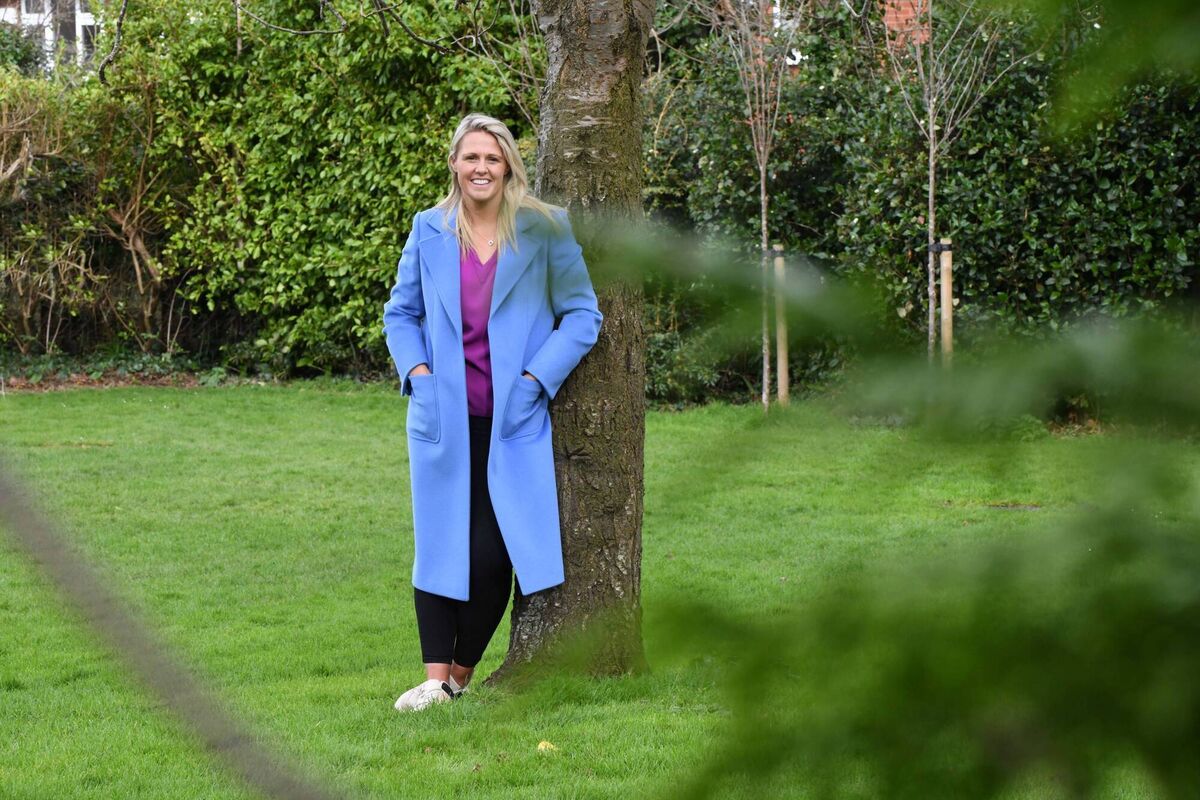
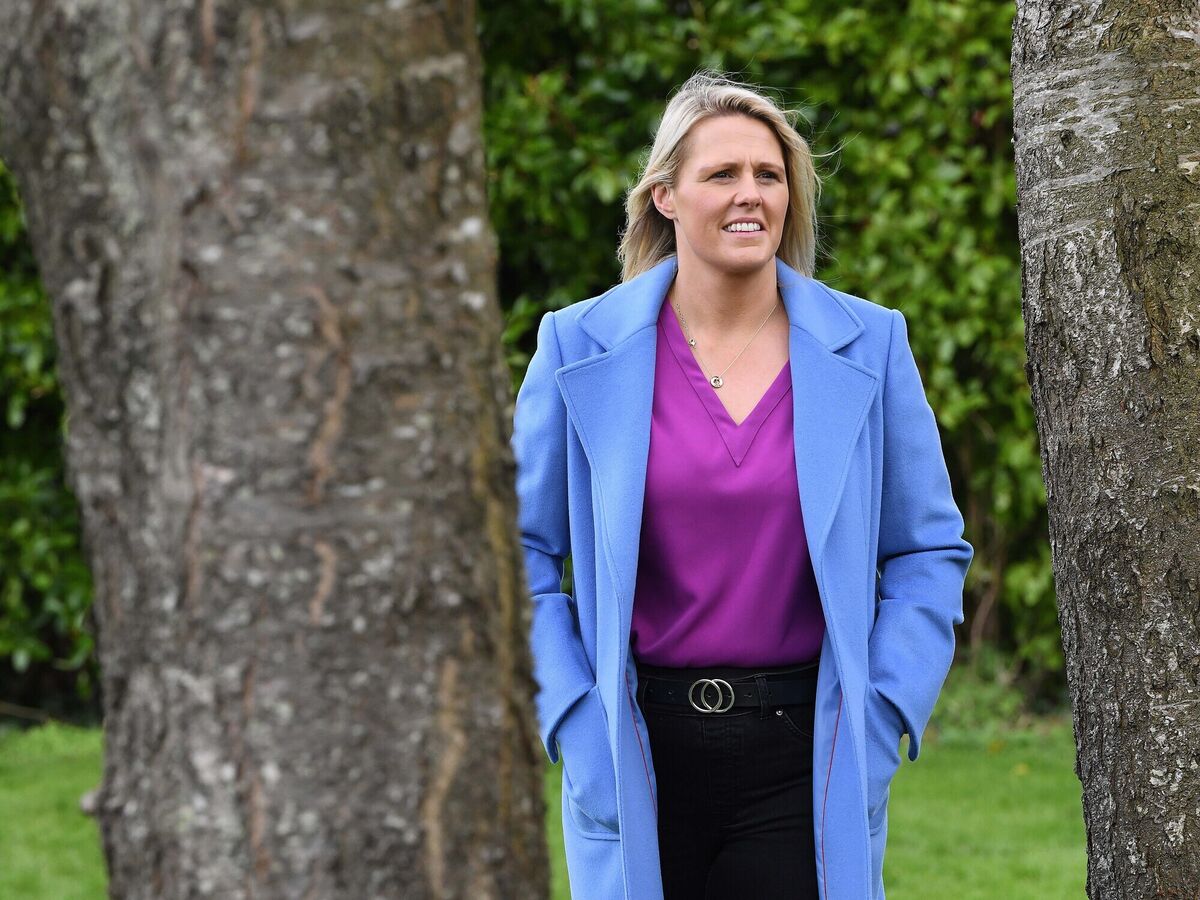
It's September and time for a reset as the kids go back to school and we think about our post-summer routine. As the days shorten, now is the ideal time to get sporty, to get active, to join groups and challenge ourselves so that we feel good as the seasons change. September is an ideal starting point, because we can harness that back-to-school energy.

And who better to encourage and inspire us than RTÉ sports broadcaster Jacqui Hurley, for whom sports and fitness are the main focus of her life and her family’s life?

“I think September is a great time to recommit to fitness because it’s a reset time for everyone,” she says. “Post summer, kids are back in school, the weather is still nice to get outside, so it’s a lot easier to start exercising than starting in January.”

Hurley says two things are crucial to getting into and keeping going with sports and fitness — enjoyment and accessibility. That counts for adults and kids, which is why it’s so important to try lots of things until you find the activities you love.

“It should be fun,” she says. “I always say to kids, if you’re not enjoying it, just try something else. There’s something there for everyone — you just need to find it. It starts with kids and their local clubs, be it Irish dancing, yoga, GAA, gymnastics.”

She says that everyone should have access to sport, so that they can try things out — maybe not polo or yachting, but stuff you can do in the park or the local pool.

“People are much more aware of health and fitness across the world, and Ireland is getting on board with that – we’re adapting to a more healthy lifestyle,” she says.

“It doesn’t matter what you do, it just has to be something that fits for you, whether it’s swimming in the sea or running around the block or whatever. Having access is crucial – if you want to be a skydiver, not everyone has access to a plane or a parachute. That’s why park runs are so popular – they’re easy to do.”

She points out how soccer and hurling are popular with Irish kids because all you need is a football or a hurley and jumpers for goal posts.

“I’d love to see more municipal facilities around Ireland,” she says, mentioning an initiative called Box Up, a sports equipment sharing project rolled out in public parks, where you can borrow equipment - boules, hurleys, basketballs, etc – for free using a QR code.

“We should have these everywhere — everyone should have equal access.”

Women on the rise

Jacqui Hurley:The demographic has changed. Picture: Moya Nolan

Hurley is particularly excited about what’s happening with women’s sport, especially professional football — the mainstreaming of it, so that it’s no longer a niche sideshow, but the main event.

“I went to an Arsenal game recently; it was like an out-of-body experience,” she says. “I’d never been to a WSL game before. On the way to the Emirates, the train was wedged. All the people were flooding out for the match – I’d never seen a women’s event like it, a sell-out stadium of 60,000. There was everyone – women my own age, dads and daughters, groups of twentysomething men. The demographic has changed, which is what excited me – it wasn’t just women. It was men going in to watch women.”

Hurley’s passion for sport spills into every area of her life, from her home life (there’s a gym in her back garden where she works out with her husband and kids) to her work life (she’s recently back from commentating at the Paris Olympics) and everything in between (hotel workouts, with a set of bands always in her suitcase). She’s actively involved in everything from Gaelic football to golf, basketball to camogie.

“It was amazing!” she says of the Paris Olympics. “Seven medals in seven days was outrageous. It was my favourite ever Olympics. My first one was London 2012, and I thought it would be difficult for that to be topped, but Paris was far and above the best Olympics I’ve ever seen.

“The city really worked — the venues were amazing. Beach volleyball under the Eiffel Tower was just spectacular. The Parisiens bought into it, they knew it was their chance to shine. And Ireland went home with four gold medals — that’s not what you or I were reared on. So for my own children to have that kind of success to aspire to was incredible, and to be part of that.”

Primary experience 

Born in Cork in 1984, she attributes her sportiness to spending her formative years in Australia between the ages of three and ten.

“One hundred per cent,” she says. “The reason I love sports so much is because of Australia.” She pauses. “Not that Ireland isn’t set up to love sport, it’s just that in Australia sport is so primary, such a big part of everybody’s lives. Everything is geared to outside. The weather is better, the facilities are better, they’re pushing people from a young age to find their niche. It was such a big part of my family’s lives.”

Hurley and her family returned to Ballinhassig, Co Cork when she was ten. Secondary school was a Bandon convent, followed by university in Limerick; she now lives in Dublin with her husband Shane McMahon and their two kids, Luke and Lily aged ten and seven. She no longer manages Ireland’s U16s basketball team — she’s too busy broadcasting, parenting and training.

“We have a gym in our back yard and the kids have their own little circuit,” she says. “They do the warm-up sessions with Shane and myself. We also coach them. All four of us are actively engaged in sports — it’s totally normal for them.

“It’s very much monkey see, monkey do. If you’re eating shite and living a really unhealthy life, that’s what kids are seeing as well. I don’t do it [live a super-sporty life] to get my kids to do it, I do it because I love it – it makes me feel better. I never wanted a scenario where I forced my kids into sport — if they weren’t into it, that would be cool as well. So it’s been a real pleasure watching them want to do it. It’s their choice, not mine.”

She’s currently into Hyrox, which involves running 1km, followed by one functional work out station, repeated eight times.

It sounds exhausting.

“Maybe it’s people my age having midlife crises who are looking for something a bit different,” she says. “It’s some running, some weights – it’s a group workout you can do in your gym, but also push yourself individually or as a team. It’s a bit different – if you’re doing something monotonous you can get fed up with it, so Hyrox gives people a bit of variety that they seem to crave.”

Golf for all ages

 Jacqui Hurley: Golf is the most inclusive and fun sport I have taken up in my adult life. Picture: Moya Nolan
Jacqui Hurley: Golf is the most inclusive and fun sport I have taken up in my adult life. Picture: Moya Nolan

How about marathons, where middle-aged women seem to excel? Are they next on her list? She’s not at all keen. “No!” she says. “It does not appeal. If you ever saw me running a marathon, it’d mean I’m having a midlife crisis — although I really admire people who do it, who have that mindset.”

She thinks it appeals to middle-aged women because anyone who has ever given birth “will have been through so many pain barriers that this is another mental challenge after childbirth”.

Instead, she found herself becoming increasingly fond of golf. “I joined a society a few years ago and played with women,” she says. “It was a game-changer — so non-judgemental, so encouraging. It was a lovely introduction to a new sport I’d always considered a men’s club. Now that I play it, I realise it was all in my head. It’s the most inclusive and fun sport I have taken up in my adult life — I love it.”

She still plays competitive sport like basketball and Gaelic football, as well as golf.

“But I’m not going to be able to play those sports forever, unlike golf — I can play golf in my thirties and forties and hopefully in my eighties and nineties,” she says. “There’s a lady I play with in her eighties, who is my role model. That’s what I aspire to – remaining fit and healthy enough to play later in life.”

When it comes to nutrition, Hurley is sensible rather than fanatical. “Generally, when I’m playing, I look after myself — if you’re going to be playing football with 20-year-olds, you need to be able to chase them, and fuelling yourself with shite isn’t going to do that,” she says.

“I’ve always been good at eating well — apart from those years after having kids where you’re not prioritising your own health as much as theirs. When I’m training, I eat well. And at the weekends, I eat and drink more than I probably should, but I’m all about balance — Monday to Friday, I’m in business mode, and we’re very organised.”

She also does pilates. “Just for the flexibility,” she says. “Again, you can’t be chasing after twenty-year-olds if you can’t move properly. The longer you stay out of activity, the harder it is to get back into it.”

The trick, she says, is to remain active so that you retain a degree of fitness rather than starting from scratch after a lapse.

She quotes American soccer star Ali Krieger: “Always stay ready, so you never have to get ready.”

And with that, she’s off to do something energetic.

x

Celebrating 25 years of health and wellbeing

More in this section

Lifestyle

Newsletter

The best food, health, entertainment and lifestyle content from the Irish Examiner, direct to your inbox.

Cookie Policy Privacy Policy Brand Safety FAQ Help Contact Us Terms and Conditions

© Examiner Echo Group Limited