Trisha Lewis: Learning to love exercise and its many benefits
The social media star is clear-eyed about her health and fitness goals. Weight loss may be a byproduct, but it's not her central focus.
Trisha Lewis: Learning to love exercise and its many benefits

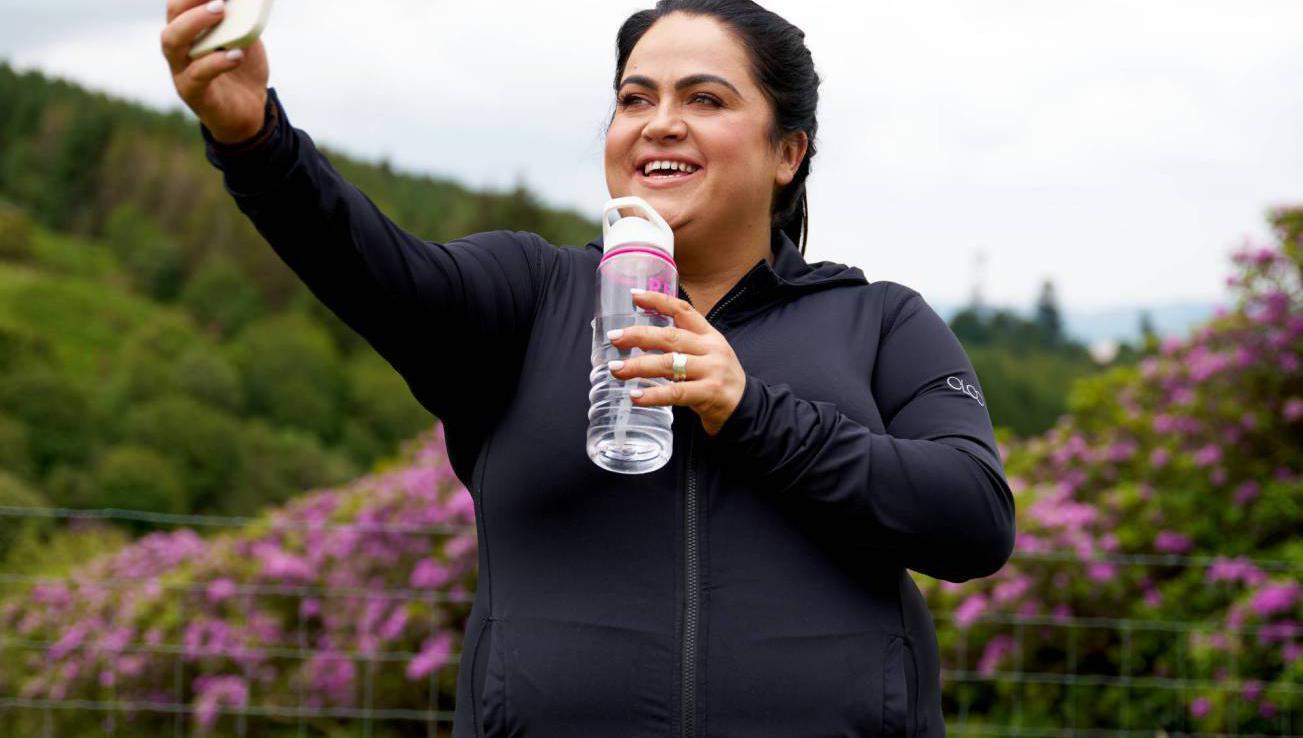
Trisha Lewis believes exercise is for people of all sizes. Picture: Louis Tang

For chef and author Trisha Lewis, boxing is “the best stress-buster”. She started it two years ago and trains with “local lad” Frank.

“OMG, I love it! I wanted something that would increase endorphins. When my trainer says ‘punch the pad’ or ‘jab’ or ‘hook’ or ‘upper-cut’, the only thing I’m thinking of is that moment, that move. It’s almost like mindfulness. It’s a lovely switch-off.”

From a cardiovascular viewpoint though, the 36-year-old finds her once-a-week boxing session the hardest thing she does: “In the middle of a session I can be roasting, sweating. It never gets easier.”

But her trademark positivity quickly chimes in: “You just get better. I don’t feel absolutely bate, which is always a great sign. My recovery’s really fast — 30 seconds of a break, and my breathing’s perfect again. I’m well able and I feel so lucky for that.” Plus, she says, her balance has been much better since she started boxing.

Lewis, who grew up in Co Limerick, one of nine girls, outlines how she faces any tough ask: “Anytime I go at a challenge, I pull it back a bit, then build it up slowly. I break it down, figure out why I’m doing the moves. And though I’m fitter now, I still have difficult sessions — I push myself more.”

About seven years ago, Lewis tipped the scales at 27 stone. A year or so later, and a couple of stone lighter, she started documenting her weight-loss journey on Instagram — she now has 253,000 followers. She was aware of weight from a very young age: “For too long — from around the time of my First Communion.”

She is upfront about still being on a weight-loss journey: “I still want to lose it. It’s something I’ll have to do for the rest of my life.”

And it does get harder, and quite repetitive, she says, to be constantly looking at a number on the scales: “So I have to ensure if I’m doing it, I’m enjoying it. I always believe you have to find something bigger than what the thing [you want to achieve]. What is my ‘why?’ I have to lose weight, but my why doesn’t have to be that.
“Because if it’s just about weight loss, I’m putting happiness on the long finger — ‘I’ll be happy when I get to that number’. My why is to be physically active — I look at fitness goals and health goals. Can I walk further than I could last year? And a by-product is weight loss.”

This approach is fun, she says, with “immediate benefits and rewards”. Her daily “non-negotiable” is 35-45 minutes of walking in the fresh air: “It’s for my head. There’s no pressure, no steps, no speed, just going outside walking, moving— and feeling better because the more I move, the better my mood.

“I absolutely adore walking. It’s free, it’s fun, it’s pretty — we’re blessed with walks in Ireland. At the start of a walk, I can be bothered, busy with work and deadlines. I sort things out in the fresh air. When I come back, everything’s that bit clearer. I’m thinking, ‘Oh, that was lovely — you actually needed that’. Walking gets the body out, the mind free, the lungs active.”

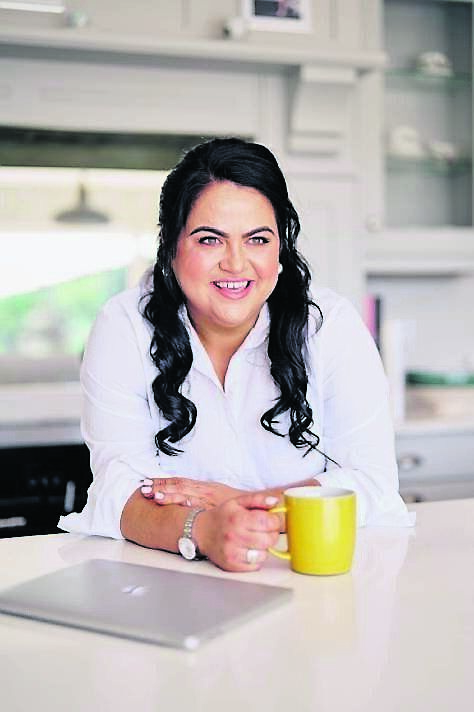
Trisha Lewis. Picture: Louis Tang

Lewis recalls when she used to see the gym as “punishment for the past — you go in, you sweat, you’re miserable, you work as hard as you can to lose weight”.

But about five years ago, she radically reframed what the gym could be: “I laid my soul bare. I didn’t go in saying I’ll be this weight by then. I honestly looked for help. I realised I had a long road ahead but it was about focusing on the present day. I changed my attitude — instead of looking for a short-term quick fix, I was going for a long-term mindset-change.”

Now she’s in the gym three times weekly: “I do strength training. I lift weights. Rather than punishment, when I walk into the gym now I do it as reward for the future. Weight-lifting will help my flexibility and decrease my injury risk. If my muscle is good, my legs are strong enough for walking. And I know I’m burning calories, body fat, helping my shape.”

Does she ever feel self-conscious in the gym, which can sometimes feel like a competitive place?

“I gave that up a long time ago,” she says. “If anybody makes a comment about weight or size, it’s not my business. I drown it out and think I’m so lucky I’m fit and able to be here.”

And there are times when she just doesn’t want to exercise: “There are days I don’t feel like it. Anyone who thinks they should be motivated every day is making their journey harder. But you have to choose your ‘hard’. Doing the session is hard — but not doing it is hard too, because you think about it, you say ‘I should have done it’, it’s on your mind.”

Yet she believes in listening to your body, which sometimes is saying ‘I’m absolutely wrecked’. On those days, she says, it might be best to park exercise for today and return to it tomorrow. She says: “But the vast majority of the time give yourself the nudge — ‘go do it’ — because you deserve it, you deserve to feel great.”

Bouncing back from summer

Her advice for anyone who went with the flow over the summer — had too many ice-creams, ate more crisps or chocolate than ideal ‘because the kids were having them and, oh, it’s the holidays’?

“Don’t be hard on yourself,” she says. “Life happens. I hope you enjoyed it. You deserved it. Now, simply reset — you know what you have to do. You deserve to start getting the balance back in your life. And do it from a place of love. Don’t be giving out to yourself.”

On the afternoon I chatted with Lewis, she was excited that within days she’d be leading a 100-strong group on a 120km Camino walk: “We’re landing in Santiago in Spain, driving to a little place called Sarria and then walking back to Santiago. When you’re doing that drive from the airport, you’re saying ‘OMG! Do I have to walk all this back?’ But like everything in life, it’s step-by-step.”

Lewis did this same trek a year ago: “I did the Camino with The Hike Life, with Roz Purcell. It was my first time, and I started to overthink things: Will I be the slow one? Will this go wrong? How will I talk to strangers? When you get older, you over-think…. I ended up having the best week. I loved it.”

And yes, it was hard in parts, she says: “I was surprised there were more hills than I’d expected. But it was all about breaking it down, going step-by-step. I believed I was going to get to the end, and I did. And it was the most magical feeling, finishing by the cathedral in Santiago, it was emotional.”

That she has 100 people joining her as she retraces her steps this year is “pretty cool”, she says. She knows from experience even a big crowd becomes small once you find friends.

“There’ll be people on this trip I know I’ll make friends with for life,” says the woman, who describes herself for years as hoping for hope.

“I hoped that someday someone would say, not ‘listen, Trisha has done it’, but ‘Trisha is doing it and she’s finding it hard, she’s finding it easy, she’s finding it fun’.”

Lewis’s top motivational tips:

  • Exercise is for people of all sizes — 100%. Everybody deserves to feel good and not label themselves with someone else’s opinion. I don’t think about myself in labels — ‘I’m too big, too old’. We’re alive and breathing: We’ve won the lottery. Giving that away to someone else’s opinion, I just can’t do anymore.
  • We put so much pressure on ourselves: ‘I’ll start on Monday and I’ll do x, y and z’. Instead, say, ‘I’m ready to rock now’. Make it about what I can add to life to feel absolutely brilliant. I can add in a walk, more water, a better sleep routine, more colour on my plate.
  • My biggest ‘why’ is to feel better. We give up on ourselves too fast, say ‘oh this isn’t for me, someone else can do it better’. You can’t turn back the clock but you can wind it up and go again. Regret for wasted time is wasting more time. Drop it, move on.
  • I meet people for whom something said in the playground when they were seven has become the narrative. It takes work, but you can change this. Your thoughts become a reality — the more you tell yourself you can’t do something, the more that becomes a reality. The more you change it up, the better your reality — ‘I’m going to do it, I’ll chance it, I’ll have a bit of fun with it’.

x

Celebrating 25 years of health and wellbeing

More in this section

Lifestyle

Newsletter

The best food, health, entertainment and lifestyle content from the Irish Examiner, direct to your inbox.

Cookie Policy Privacy Policy Brand Safety FAQ Help Contact Us Terms and Conditions

© Examiner Echo Group Limited